
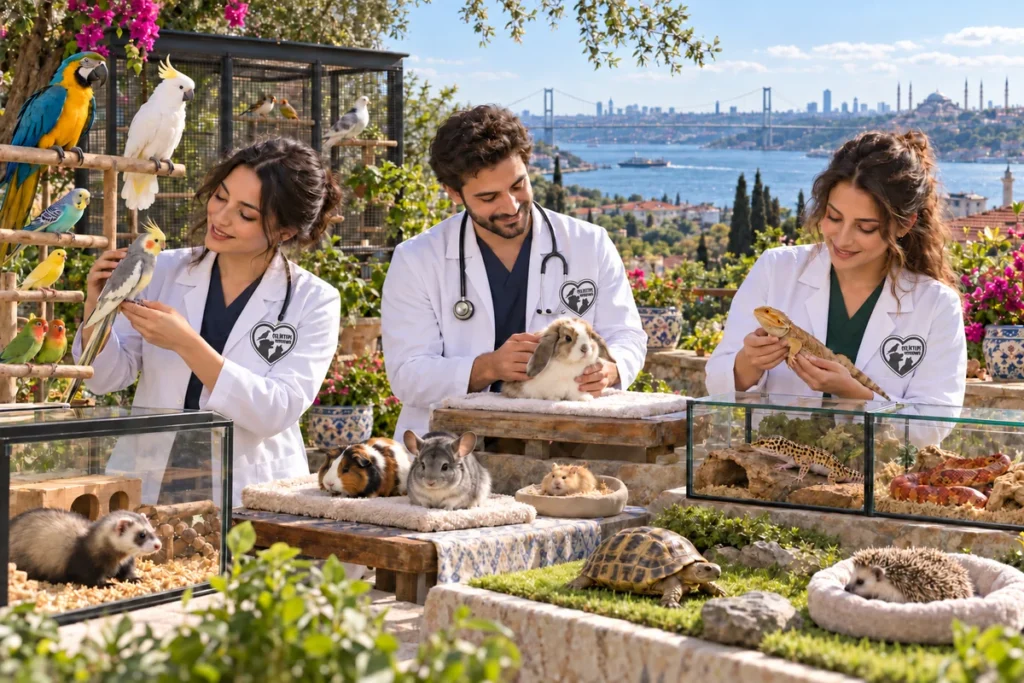
Bird and exotic animal veterinary care is a field of veterinary medicine that takes into consideration the unique body structures, nutrition, and living conditions of birds, rabbits, small mammals, and reptiles. The reason for different examinations and treatment isn't solely due to the small size of the animal. The mode of respiration, digestive system, regulation of body temperature, and response to medications determine how to approach them.
A budgerigar puffing up, a rabbit stopping its dry hay intake, or a turtle moving less does not indicate the same illness. Each case begins with understanding the normal behavior of the species, followed by investigating the cause of the change. If there is difficulty breathing, collapse, persistent bleeding, or marked weakness, an emergency veterinary evaluation is needed without attempting home treatment.
What animals are covered by exotic animal veterinary care?
The term "exotic" in daily veterinary usage refers to many pet species other than cats and dogs. Budgerigars, cockatiels, canaries, rabbits, guinea pigs, hamsters, ferrets, and various reptiles can be evaluated in this scope. However, these do not constitute a single biological group. Rabbits are not rodents; ferrets are carnivorous mammals. Mentioning them under the same heading does not imply they require the same care or treatment.
In bird veterinary care, the needs of a parrot and a small songbird are not entirely the same. In reptiles, the full name of the species is particularly important: the dietary and terrarium arrangements for aquatic turtles, terrestrial turtles, leopard geckos, and bearded dragons cannot be suggested as the same.
Therefore, during the consultation, it is useful to specify the species, approximate age, and complaint instead of simply stating "I have an exotic animal." Not every clinic may accept every species or procedure; the necessary equipment and referrals should be clarified in advance.
Why are the same symptoms evaluated differently in different species?
Respiration and energy balance in birds
The respiratory system of birds includes air sacs that work alongside the lungs. This structure increases the importance of the holding technique and anesthesia plan during the examination. Stabilizing the body by constriction is not safe. Prolonged holding attempts on a bird struggling to breathe, holding it for photographs, or forcing its mouth open may worsen the condition.
A decrease in food intake in small birds is also closely evaluated. The feeder appearing full does not prove that the bird has eaten sufficiently; accumulated husks on the top can be misleading. The bird's weight, the amount of droppings, and actual food consumption are monitored together. The bird picking up food with its beak and dropping it is not considered normal feeding.
Teeth and digestion are considered together in rabbits and guinea pigs
In rabbits and guinea pigs, fibrous feeding, chewing, and intestinal movements are interconnected. Tooth pain may reduce food intake; eating less can contribute to the slowing of digestive movements. Therefore, loss of appetite is not simply assessed as "an upset stomach."
Correct appearance of the front teeth does not indicate that the back teeth and root areas are healthy. Saliva, dropping food, or starting to select specific foods are significant in this context. Tooth elongation and oral diseases in rabbits should be evaluated alongside changes in appetite and droppings.
Guinea pigs also have a requirement for vitamin C that must be met through their diet. It is not appropriate to use the same feed under the assumption that "the rabbit eats it too." Supplement needs are determined based on the actual foods the animal consumes and its health status.
The needs of hamsters and ferrets are different
In hamsters, cheek pouches, incisors, droppings, and daily activity levels are important parts of the examination. Just because they carry food does not mean they have eaten it. Their resting during normal hours and being unresponsive during active hours are assessed differently.
In ferrets, the digestive structure suitable for a carnivorous diet, the possibility of foreign body ingestion, and age-related diseases are considered. Suitable fiber feeding recommendations for rabbits are not applicable to ferrets. If there are symptoms like vomiting, drooling, weakness, or behavior change, an examination is required instead of just expecting resolution by changing the food.
Environmental temperature affects evaluation in reptiles
The body temperature of reptiles is largely dependent on ambient conditions. An unsuitable temperature can affect mobility, digestion, and response to treatment. Therefore, instead of information like "the room is warm," values measured in the warm and cool areas of the terrarium are requested.
Humidity, light regulation, and species-appropriate UVB conditions are also evaluated. The mere presence of a lamp does not show that it provides the required UVB level. The model of the lamp, duration of use, distance, and barriers like glass or wire in between are important. In metabolic bone disease in reptiles, you can read in detail why diet and living environment are assessed together.
Why may symptoms of illness go unnoticed for a long time?
Especially birds and small mammals that are prey may not show their discomfort overtly. A brief reaction from the animal or eating a favorite treat does not prove that its overall condition is good. Becoming quieter, resting longer, or producing less droppings according to their daily routine may be significant.
It is helpful to monitor the following changes at home:
- Changes in food consumption, water intake, or droppings
- Inability to perch, increased hiding, or avoidance of movement
- Drooling, dropping food from the mouth, difficulty chewing and swallowing
- New changes in feathers, skin, shells, or body posture
- Shifts in weight patterns in animals accustomed to safe weighing
Keeping records under the same conditions is more meaningful than a single weighing. Additionally, do not chase a sick animal just to weigh it; if there are clear respiratory issues, do not delay consultation for the sake of weighing. Photos and short videos can provide insight into behaviors that are not seen in the clinic; however, they alone cannot provide a definitive diagnosis.
Why does the examination start with observation?
The veterinarian can observe the posture, breathing, interest in the environment, and movement of the patient without immediately taking it out of the carrier. This initial glance determines which procedures will be performed first. In a bird with respiratory distress, oxygen support and a calm environment may be needed before a detailed oral examination.
In physical examination, weight and body condition, mouth, eyes, skin or feathers, musculoskeletal system, and other areas appropriate for the species are evaluated. Supporting the back end of a rabbit, preventing a small mammal from falling, and not restricting the breathing movements of a bird require different holding techniques. The same stabilization method is not applied to every patient.
Only the weight of the small patient is not considered. Two birds of the same weight may have different muscle conditions; fluffed feathers can disguise weakness. Therefore, it is important to evaluate body condition during the examination.
When inquiring about our bird veterinary services and examination process, please mention the animal's species, the onset of symptoms, and any difficulty in breathing in advance. The initial approach required will vary based on the reason for the appointment.
What tests are performed, and why are they not the same for every patient?
The aim of test selection is to find answers to questions that will alter treatment. In a rabbit with a loss of appetite, oral and abdominal findings may be prominent, while in a bird with recurrent vomiting, the digestive system and possible infections can be investigated using different methods. Applying the same test package to every patient is not a correct approach.
Based on findings, the following examinations may be planned:
- Microscopic evaluation of droppings and appropriate parasite tests
- Sampling from necessary sites, cytology, or culture
- Tests related to blood cells, organ functions, and metabolic status
- X-rays and appropriate imaging for bones, teeth, or internal organs
- In selected cases, infection tests, endoscopy, or advanced examination
The amount of samples that can be taken is determined by the size of the patient and its general condition. Laboratory results are also interpreted according to species; normal values for a cat cannot be applied to a bird. A positive result does not always explain the cause of all symptoms, nor does a normal result rule out all diseases.
For instance, when vomiting in a budgerigar is observed, one cannot simply guess "fungus" or "bacteria" by looking at the color of the droppings. The form of vomiting, examination findings, and selected tests must be evaluated together. If the necessary procedure cannot be performed under the existing conditions, a referral to an appropriate center may be planned.
Why is anesthesia and medication treatment specific to the patient and species?
Anesthesia planning consists of more than just drug selection
Some imaging, detailed dental examinations, or painful procedures may require sedation or general anesthesia. The decision is made based on species, age, illness, procedure duration, and possibilities for safe stabilization. Generalizations such as "too small, anesthesia cannot be done" or "gas anesthesia is completely risk-free" are not correct.
Pre-procedure evaluation includes necessary fluid and respiratory support, pain control, maintaining body temperature, and monitoring plans throughout the procedure. Respiratory, circulatory, and anesthesia depth should be monitored with suitable methods for the patient. The recovery period is also significant; the animal's movement, body temperature, and return to eating should be evaluated separately.
Do not voluntarily fast your animal when bringing it in for examination or procedures. Rabbits and guinea pigs are generally not fasted prior to anesthesia like cats and dogs. The preparations for birds, ferrets, and reptiles are different. If fasting is required, the duration and water instructions should be determined by the team performing the procedure.
The same medication cannot be used in the same way across different species
Reducing the dose of a medication prescribed for a cat or dog does not make it safe for a bird or a hamster. The active ingredient, concentration, route of administration, the metabolism of the species, and existing health issues are evaluated together. Medication use in birds and exotic animals explains why these differences are significant. Some antibiotics can severely disrupt intestinal balance in animals such as rabbits, guinea pigs, and hamsters.
The milliliters on the prescription and the amount of active ingredient in the medication are different concepts. If the product has different concentrations, the previously used syringe measurements should not be applied. If you cannot administer the medication or if part of it spills out, consult the clinic instead of estimating a compensatory dose.
Treatment may sometimes require nutritional support along with medication, pain control, wound care, or surgery. Addressing issues in the care environment is also included in the plan. Especially in reptiles, relying solely on medication may not be sufficient while the wrong temperature persists.
In which situations should you consult a veterinarian without delay?
Call the clinic immediately and report the species and symptoms for urgent evaluation in the following findings:
- Difficulty breathing at rest, open-mouthed breathing in a bird
- Collapse, seizures, inability to perch, or marked unresponsiveness
- Severe injury, persistent bleeding, exposure to poisonous substances or smoke
- Stopping food intake and a marked decrease in droppings in rabbits or guinea pigs
- Weakness along with watery diarrhea in hamsters
- Severe abdominal swelling, inability to urinate, or protruding tissue
It is not advisable to wait for a certain time for a rabbit not to eat. There may be pain, blockage, or another illness. Forcing feeding and abdominal massages without veterinarian evaluation may be harmful.
Minimize unnecessary physical contact during transportation. Do not give water, food, or medication orally to an animal that has impaired consciousness or swallowing. The heating needs vary depending on the species and its condition; do not place a hot water bottle directly against the animal, and do not leave the carrier airtight.
What information should you prepare when coming for an examination?
Use a secure, well-ventilated, and escape-proof carrier. Slippery surfaces, heavy accessories that may fall, and water bottles that might bump during transport should be assessed in advance. Ensure that the used carrier is suitable for the animal's species and current mobility.
Preparing the following information can facilitate the examination:
- Species, age, known gender, and previous illnesses
- Onset of symptoms, changes in food consumption, droppings, and urination
- Names or packaging photos of foods, supplements, and medications
- General photos of the cage or terrarium
- Measured temperature and humidity in reptiles, information about the UVB lamp
- Previous tests and safely captured videos of the symptoms
If a droppings sample is requested, ask when and how to collect it. If there are similar findings in other animals, share this as well. In changes like shell softening in turtles, not only close-up photos but also images showing the aquatic area, dry area, and light arrangement are valuable for evaluation.
Çeliktepe Veterinary Clinic plans the examination, diagnosis, and treatment processes for birds and exotic animals according to species and the patient's condition in Kağıthane/Istanbul. You can review our exotic animal veterinary services; you can also get information about appointments and preparations before consultations.
Frequently asked questions about bird and exotic animal veterinary care
What does a bird and exotic animal veterinarian evaluate?
They assess the health and care needs of birds, rabbits, small mammals, and reptiles. Examination, selection of appropriate tests, planning of medication or surgical treatment, and preventive care are parts of this field; the approach varies according to the animal's species.
Is a rabbit an exotic animal or a rodent?
In clinical use, rabbits can be considered among exotic pets, but they are not rodents. They belong to the Lagomorpha group. Tooth, nutritional, and medication information should not be directly transferred from another small mammal.
My budgerigar is puffing up but eating; could it be sick?
It could be. Constant puffing up, drowsiness, becoming quieter, or decreasing droppings may indicate illness. Eating alone does not mean it is feeding adequately. If the changes persist, an examination is required; if there is difficulty breathing, emergency evaluation is necessary.
Can blood be drawn from a small bird or hamster?
It can be drawn if appropriate and necessary. The safe amount for sampling, the method to be used, and the priority of tests are determined based on weight and general condition. Being very small does not mean that all tests are impossible.
Can a diagnosis be made from a photo or video?
Images can help describe the symptoms and living environment. However, muscle loss, oral cavity issues, or internal organ diseases cannot be fully evaluated from an image. A physical examination and tests, if necessary, are required for a definite diagnosis.
Should I fast my bird before the examination?
Do not unilaterally decide to withhold food. Normal examination and procedures requiring anesthesia may not require the same preparation. Follow the instructions given by the clinic according to species, age, and illness; do not take the fasting duration from another animal as an example.
Do rabbits and guinea pigs fast before surgery?
Generally, no; it is preferred that normal feeding continues. Do not apply the overnight fasting instructions given to cats or dogs. If the animal is not eating, be sure to inform this beforehand and inquire about the specific preparation plan for the patient.
Is anesthesia dangerous for birds and exotic animals?
Every anesthesia has risks; the risk depends on the species as well as the patient's condition and the procedure. Proper preparation, equipment, pain control, and monitoring are important. No method can guarantee zero risk or a certain recovery.
Can I give a very small amount of human medication?
No. A small amount does not mean it is a safe amount. Some medications can cause serious poisoning in certain species. If accidentally administered, share the product packaging, approximate quantity, and timing with a veterinarian immediately.
Is it appropriate to add antibiotics to drinking water?
It should only be applied in situations explicitly described by the veterinarian for that patient. The amount consumed changes, so the dose taken may be unclear. Do not mix the medication into the water on your own; do not change the route of application described on the prescription.
Can I give guinea pig food to a rabbit?
It is not considered suitable as the main feeding plan. Guinea pigs have a separate requirement for vitamin C that must be met. While there may be some foods they can share, it does not mean that their commercial feeds can replace each other.
My hamster is storing food; is it getting enough nutrition?
Storing food does not indicate that it has eaten enough. The amount of stored food, droppings, weight, and daily behavior should be monitored together. If there is persistent swelling in the cheek pouch, wetness in the mouth, or inability to consume food, an examination is necessary.
Can rabbit care recommendations be applied to ferrets?
No. Ferrets are carnivorous mammals; their feeding, digestion, and common health issues are different. Diet, preventive care, and pre-procedure preparations are designed according to ferrets. Verify the clinic's acceptance of ferrets before consulting.
Can a turtle’s lack of movement indicate hibernation?
In some species, seasonal behavior changes may occur; however, not every lack of movement can be explained by this. Without evaluating the species, care temperature, weight, and other findings, it should not be assumed that a sick animal has gone into hibernation.
Does every reptile require the same UVB lamp?
No. Requirements vary according to species and lifestyle. The output of the lamp, distance, duration of use, and placement should be evaluated together. Just because a product is labeled “reptile lamp,” it does not prove that the current setup is sufficient.
Should I syringe feed a rabbit that isn’t eating?
Consult with the veterinarian first. Nutritional support may be necessary, but if there is blockage, significant abdominal swelling, or swallowing issues, improper application may cause harm. The food and method to be used should be determined after evaluating the patient.
Is it always correct to keep a sick bird warm?
Heat support can be beneficial for some patients; excessive heat can be harmful. Do not overheat an animal with compromised respiration or one that has been affected by a hot environment. Prepare the transport conditions suited to its species and condition by consulting the clinic.
Is it necessary to check even healthy-looking animals?
Yes. Regular check-ups ensure the recording of normal weight and examination findings as well as revisiting care. The initial assessment is important for newly adopted animals; the next check-up interval is determined based on species, age, and health status.
What determines the examination fee for birds and exotic animals?
The total cost varies based on needed tests, sedation, imaging, or treatment in addition to the examination. Inquire about the current examination fee from the clinic; discuss the purpose and cost of any potential additional procedures before implementation.
Is an appointment required when coming to Çeliktepe Veterinary Clinic?
Informing in advance about the species and reason for consultation allows for planning of the appointment and necessary preparations. The clinic is located in Kağıthane/Istanbul. If there is difficulty breathing, collapse, or severe injury, contact directly by phone instead of waiting for an online response.
This content is for general informational purposes; it does not replace a veterinarian examination.

