
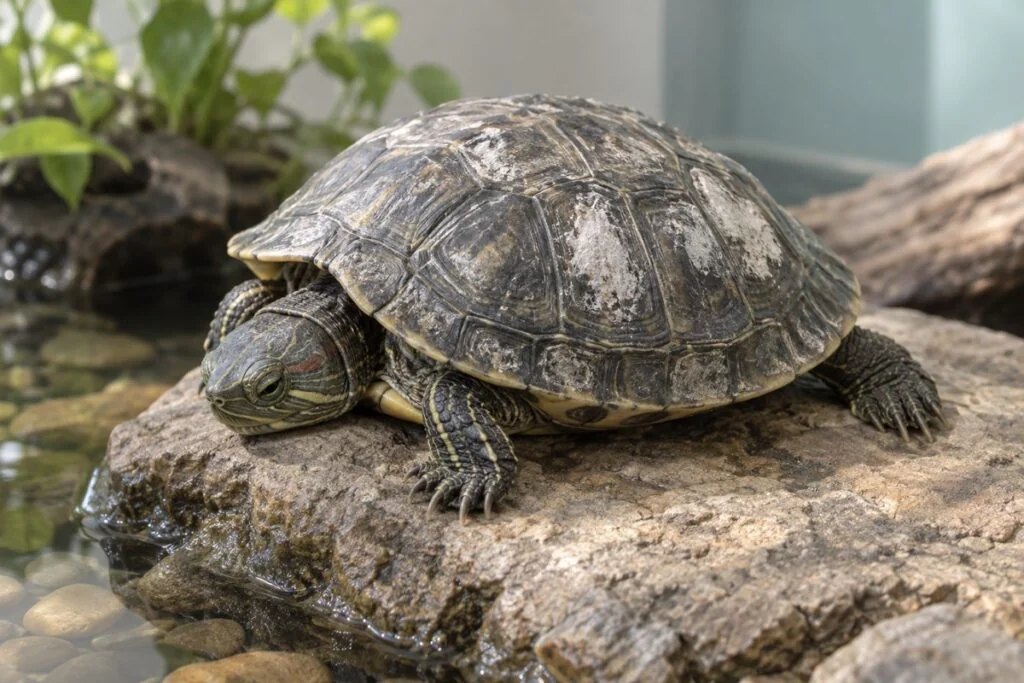
The softening of a turtle's shell, changes in shape, or significant color fading is not merely an aesthetic issue. Nutritional and care errors affecting shell development, metabolic bone disease, infections, or trauma can lead to these changes. Early assessment, especially in young turtles, is critical in preventing permanent shell deformities and life-threatening complications.
In this article, we address the questions of what causes shell softening in turtles, why does the shell color fade, what conditions should be monitored at home, and when should one consult a veterinarian?
Nutritional and UVB-related issues are discussed in detail in our article on metabolic bone disease in reptiles. If shell changes are accompanied by difficulty breathing or loss of appetite, you can also refer to our guide on open-mouth breathing and loss of appetite in turtles.
Why does a turtle's shell soften?
A turtle's shell is made up of living bone and keratin tissue connected to the spine and ribs. It should normally be of appropriate hardness for the species and age. In juvenile turtles, the edges may be somewhat flexible compared to adults; however, easily indented, wavering, bent, or increasingly softer shells are not considered normal.
Calcium and phosphorus imbalance
Unilateral diets, calcium-poor foods, or diets high in phosphorus disrupt bone and shell mineralization. Feeding only dried shrimp, random homemade meals, or commercial feeds unsuitable for the species can lead to serious deficiencies in the long run.
Insufficient UVB light and vitamin D
Many turtles require adequate UVB light and vitamin D metabolism to utilize calcium effectively. Window glass blocks a significant portion of UVB rays; therefore, placing the aquarium near a window is often insufficient. The type of UVB lamp, its distance, duration of use, and replacement timing are also crucial.
Inadequate heat and living space
Turtles, which depend on their environment for body temperature, have their digestion and metabolism functioning correctly within the proper temperature range. If the water or basking area is too cold, the animal may not be able to feed adequately and may not effectively utilize the calcium it consumes. Constantly remaining in water, being unable to access a dry basking area, and dirty water also negatively impact shell health.
What are the symptoms of metabolic bone disease?
- widespread softening or deformity of the shell
- collapse or wavering of the lower shell
- softening of the jaw bone
- weakness, trembling, or difficulty walking in the legs
- loss of appetite and growth retardation
- irregular growth in shell plates
- in advanced cases, fractures or loss of mobility
When these symptoms are observed, simply adding calcium powder is not sufficient. Blood values, dietary regimen, UVB, and heating conditions must be evaluated together. When necessary, digital radiography can assess bone density and potential fractures.
Why does a turtle's shell color fade or change?
Any change in shell color does not necessarily indicate illness. Growth, the natural renewal of shell plates, age, species, and moisture content can all influence appearance. However, if there is irregular whitening, dullness, dark spots, foul odor, or pitting on the surface, underlying causes should be investigated.
Natural plate shedding
In aquatic turtles, during growth, the upper shell plates may separate in thin layers. If a clean, hard, and odorless new surface emerges beneath, this may be a natural process. It is not appropriate to manually lift or peel these plates.
Calcification and superficial deposits in water
Minerals in hard water can leave a white and dull layer on the shell when dried. This appearance is mostly superficial. Nevertheless, if the shell is soft, the stain progresses into the tissue, or there is a foul odor, simple calcification should not be assumed.
Shell infection and shell rot
Dirty water, inadequate filtration, constant moisture, trauma, and an unsuitable living environment can create conditions for bacterial or fungal shell infections. Soft spots, pitting, foul odors, discharge, bleeding, and pink-red areas under the shell are significant indicators.
Trauma and burns
Falling from a height, bites from other animals, contact with a heater, or improper lamp distance can cause changes in color and texture on the shell. Cracked or separated shell pieces should not be glued at home.
What conditions should be monitored at home?
- a balanced diet program suitable for the turtle's species
- a UVB lamp that operates at the correct intensity and distance
- water and basking area temperatures appropriate for the species' needs
- a completely dry, easily accessible basking area
- regular water changes and adequate filtration
- a secure living space that does not present sharp edges or burn risks
The fact that UVB lamps continue to emit light does not necessarily mean they produce adequate UVB. The manufacturer's replacement schedule and recommended distance should be considered. Leaving a turtle in direct sunlight for hours in a glass or plastic container can lead to overheating.
Can calcium be given to turtles at home?
The dosage and method of calcium supplementation vary based on the animal's species, age, diet, and the severity of the illness. Random high-dose use can disrupt mineral balance. The most correct approach is for the veterinarian to assess the care conditions and diet first.
Applying calcium powder, oil, cream, vinegar, bleach, or human antifungal medication to the shell is not a treatment and can irritate the tissue.
What symptoms require emergency veterinary examination?
- significant softening or inward collapse of the shell
- foul odor, discharge, bleeding, or formation of deep pits
- pink or red discoloration beneath the shell
- loss of appetite, lethargy, or keeping the eyes constantly closed
- inability to walk, trembling, weakness in the legs
- shell cracks, falls, vehicle strikes, or bites
- rapidly progressing color change
Shell infections can progress to deep tissues, bone, and the circulatory system. Therefore, it is not appropriate to wait in cases involving foul odor or soft lesions.
How does the veterinarian evaluate?
During the examination, the shell's hardness, the depth of lesions, the structure of the mouth and jaw, muscle strength, nutritional status, and living conditions are thoroughly assessed. When necessary, radiography, blood tests, or microscopic or microbiological evaluations of shell samples may be conducted. Treatment may include adjustments to care conditions, appropriate nutrition, controlled calcium and vitamin supplementation, wound care, pain management, and medication based on the type of infection.
For detailed information about examining turtles and other exotic animals, please visit our Bird and Exotic Animal Veterinary Care page.
Frequently Asked Questions
Can a juvenile turtle's shell be somewhat flexible?
In very young turtles, the shell may not be as hard as in adults. However, shells that easily collapse, become increasingly soft, or deform are not normal and should be evaluated.
Does the sun in front of a window meet UVB needs?
Generally, no. Glass blocks a significant portion of UVB rays. A suitable UVB source for the species and safe basking conditions are required.
Is the whiteness on the shell a fungus?
Not every whiteness is fungal; mineral deposits or natural plate shedding can also produce a similar appearance. If there are signs of softening, foul odor, pitting, or spreading, an examination is necessary.
Can I peel the shell plates?
No. Forcing them off can damage the underlying living tissue and lead to infection.
Does giving only calcium correct shell softening?
Not always. UVB, vitamin D, heat, diet, and kidney-liver health should be evaluated together.
Does shell rot transmit to humans?
Turtles can carry some microorganisms without showing symptoms. Hands should be washed after contact; children, the elderly, and immunocompromised individuals should pay special attention to hygiene.
Conclusion
Shell softening in turtles often suggests metabolic issues related to nutrition, UVB, and heating conditions; color fading can stem from natural changes to superficial mineral deposits or infections. If there are foul odors, pitting, significant softening, lethargy, or loss of appetite, a veterinary examination should be planned instead of trying products at home.
Veterinarian Miraç Gürbüz
Çeliktepe Veterinary Clinic
This content is for general informational purposes; it does not substitute for a veterinary examination.

