
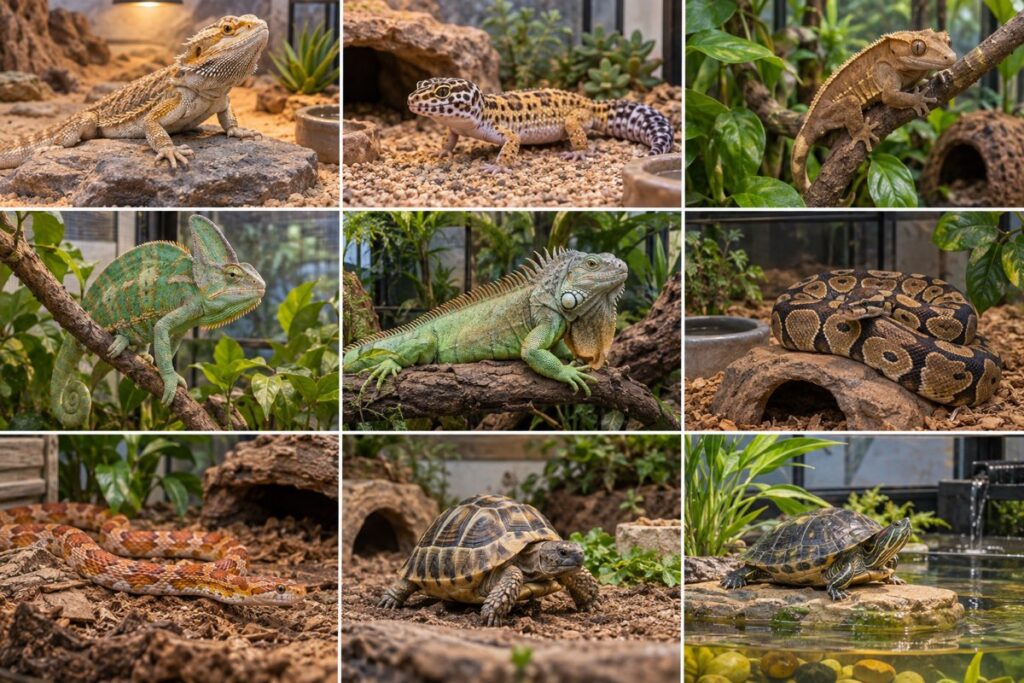
A chameleon that can no longer hold onto the branch it used to climb with ease, a bearded dragon that cannot lift its body off the ground while walking, or a turtle with a gradually softening shell... These changes should not merely be assessed as "not feeling well today." Metabolic bone disease in reptiles is one of the significant health issues that can arise during home care. Nutrition, calcium balance, UVB lighting, and terrarium temperature should be evaluated together.
What is metabolic bone disease, and is it common in reptiles?
Metabolic bone disease (MBD) is a collective term for a group of disorders that affect the mineral structure and strength of the bones. It is among the common nutritional and care issues faced by pet reptiles. The MSD Veterinary Manual defines secondary hyperparathyroidism, a form related to nutrition, as the most frequently seen bone disease in pet reptiles.
Insufficient calcium intake or the inability of the body to utilize calcium properly disrupts the mineral balance. To maintain this balance, calcium from the bones can be mobilized into the circulation. Over time, bones weaken; deformations may appear in the jaw, legs, or shell. Kidney diseases can also lead to a similar outcome, so the same supplementation program is not applied to every patient.
Why might simply giving calcium not be enough?
Adding calcium to the diet does not solve the problem on its own if the other aspects of care are not appropriate. For instance, even in a terrarium with the correct products, if the animal cannot access light or if the environment is too cold for the species, it can disrupt the care plan. The presence of a product on the shelf does not equate to meeting the animal's needs.
The nutritional balance between calcium and phosphorus, vitamin D metabolism, and appropriate environmental conditions are important together. The University of Illinois College of Veterinary Medicine's explanation details how dietary imbalances can lead to mineral loss from bones. Therefore, during the examination, we discuss not only the supplements given but also what the animal is actually eating and the conditions in which it is living.
What signs should you be suspicious of?
Decreased appetite and slowed movement may be the first noticed changes. However, these signs are not specific to MBD. Other findings that warrant an examination include:
- Struggling to walk, inability to use legs normally, or inability to support the body.
- Swelling, deformity, and shape change in the jaw or limbs.
- Decreased gripping strength, trembling, or spasms.
- Noticeable softening of the shell or developmental abnormalities in turtles.
- Suspicion of fracture after minor strain or sudden inability to move.
Do not test the animal's jaw or shell at home by applying pressure. Record the observed change with a photo; taking a short video of its walk can also be helpful during the examination. We also cover shell findings in turtles in our article on shell softening and color fading.
Is the care for bearded dragons, iguanas, geckos, turtles, and snakes the same?
No. "Reptile care" does not mean a single nutrition list or lamp setting. The species' natural habitat, age, growth phase, and reproductive status affect the care plan. Specialized attention should be given to nutrition-related bone issues, especially in rapidly growing herbivorous and insectivorous lizards and turtles.
The nutrition of an iguana is not the same as that of a bearded dragon, and the leopard gecko's nutrition is not the same as that of a crest gecko. A nutrition plan prepared for snakes should not be transferred to other reptiles. Do not assume that two products sold under the same title online are equivalent for different species. It is crucial to share the full name of the species, the food used, and the packaging of the supplements when coming for an appointment.
Why are terrarium conditions part of the examination?
UVB lighting, temperature, and nutrition cannot be evaluated independently. Just because the bulb is on does not mean it is providing sufficient UVB; daylight behind glass does not replace appropriate lighting. However, the correct product, arrangement, and usage plan should be determined according to the animal's species.
Instead of applying general temperature or supplement recommendations from the internet, it would be more accurate to evaluate your current terrarium along with your animal’s health condition. At Çeliktepe Veterinary Clinic, we will clarify a suitable care plan by discussing the dietary regimen, used lighting, and living space information during the examination. The Royal Veterinary College guide also supports this approach for the species-specific heating and lighting requirements.
How is a diagnosis made?
The evaluation is based on the combination of examination, care history, and interpretation of necessary tests. X-rays help assess bone structure and fractures. Blood tests provide information about mineral balance and accompanying issues. Not every test may be necessary for each patient; the choice of which examination to perform is determined by the findings.
You can get information about our bird and exotic animal veterinary care service for evaluation at our clinic. Depending on the need, diagnostic imaging and laboratory examinations are planned.
How does treatment and home follow-up progress?
Treatment is organized according to the cause and severity of the illness. In addition to mineral supplementation, improvements in nutrition and living environment are necessary; severe cases may require clinical support. The control dates proposed by the veterinarian remain important even when the animal begins to eat again. An improvement in appetite does not mean the bones have fully healed.
The frequency of follow-up and points to pay attention to at home are explained by the veterinarian after the examination. We assess the changes that arise during treatment together at control visits. Do not apply vitamins prepared for humans or doses given to another animal. Uncontrolled supplementation cannot replace proper treatment.
In what situations should you not wait?
If there are spasms, inability to stand, a significant suspicion of fracture, or rapid deterioration, do not postpone the evaluation. Reach out to the clinic without unnecessarily moving the animal and obtain information for transport conditions. Breathing difficulties should also be evaluated urgently; do not associate this solely with bone disease. You can contact Çeliktepe Veterinary Clinic to report the situation and the species of the animal.
Frequently Asked Questions
Is metabolic bone disease contagious?
Nutritional and care-related MBD is not contagious. Similar issues can be seen in multiple animals exposed to the same care mistakes.
I am using calcium; can the disease still develop?
Yes. In addition to the product used, total nutrition, UVB, temperature, and accompanying health issues should be evaluated. Supplement use does not automatically exclude the disease.
Does placing it by the window substitute for a UVB lamp?
Sunbathing behind glass does not guarantee adequate UVB. Leaving the animal in the sun uncontrollably also does not create a safe care plan.
Is the whiteness on the turtle's shell a sign of MBD?
Whiteness alone cannot diagnose MBD. The reason for the color change should also be evaluated; if shell softening, shape change, or lethargy accompany it, an examination becomes crucial.
Can the disease completely resolve?
The outcome depends on the cause of the disease, its duration, and the damage incurred. Early evaluation is essential; full recovery cannot be promised in cases of advanced deformities.
What should I bring to the examination?
Bring information about the food and supplements, the lamp model and usage duration, photos of the terrarium, temperature measurements, and any previous tests if available. This information facilitates a concrete evaluation of the care plan.
Source note: Prevalence, symptoms, and basic principles of treatment are based on MSD Veterinary Manual – Disorders and Diseases of Reptiles; clinical relevance of nutritional disorders is based on Update on Common Nutritional Disorders of Captive Reptiles and university sources within the text. This article is for general informational purposes; treatment will be determined based on the examination of the animal.
Reptile examination and detailed information in Kağıthane
If you have noticed decreased movement, changes in the jaw, or shell softening in your turtle, lizard, or other reptile, you can consult Çeliktepe Veterinary Clinic. For detailed information about examination and species-specific care assessment with Veterinarian Miraç Gürbüz, you can reach us through our contact page or by calling 0212 923 10 24.
Veterinarian Miraç Gürbüz
Çeliktepe Veterinary Clinic
Çeliktepe, Buhara Sk. No:8/A, Kağıthane / İstanbul

