
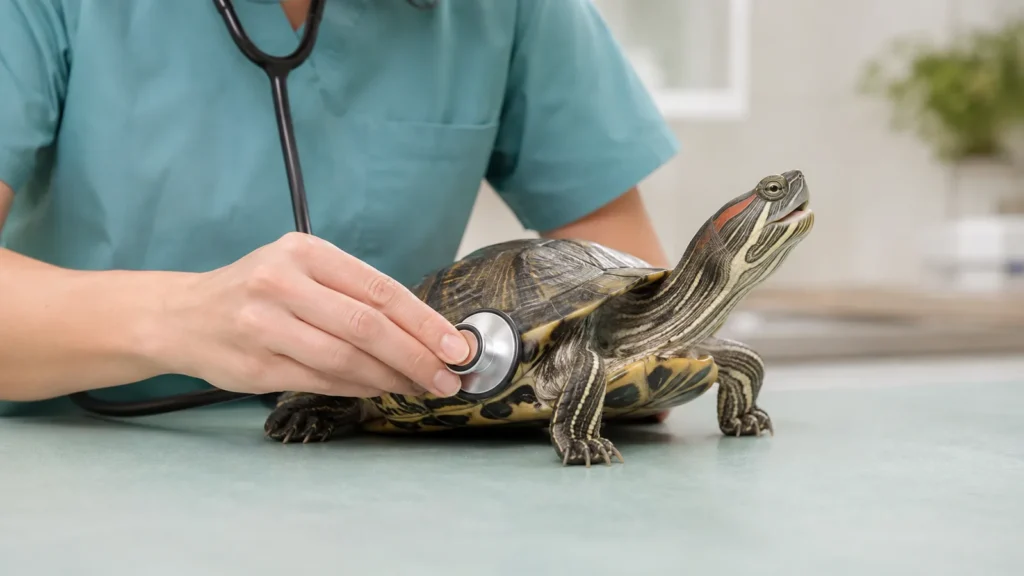
In turtles, open-mouth breathing and loss of appetite can be much more significant than mere discomfort. Low environmental temperatures can reduce metabolism and appetite; however, pneumonia, oral diseases, foreign bodies, heavy parasite burden, or systemic diseases can also cause the same symptoms. A turtle's open-mouth breathing while at rest should especially be considered a sign of respiratory distress.
If there is open-mouth breathing at rest, obvious difficulty breathing, or severe lethargy, consult a veterinarian without delay. You can contact our clinic.
In this guide, we thoroughly answer the questions of why a turtle opens its mouth, why it does not eat, what sounds or discharge from the nose signify, and in what situations emergency veterinary examination is necessary.
Why does a turtle breathe with its mouth open?
Turtles normally breathe quietly with their mouths closed. While it is possible for them to open their mouths during intense stress or short-term defense behavior, repeated open-mouth breathing while at rest is not normal.
Respiratory and lung infections
Bacterial, viral, or fungal infections can affect the nasal cavity, mouth, trachea, and lungs. Improper temperature, dirty water, inadequate ventilation, nutritional imbalances, and stress can weaken the immune system, predisposing to disease.
- Open-mouth breathing
- Bubble, fluid, or foam coming from the nose
- Wheezing, rattling, or whistling respiratory sounds
- Breathing with neck extension
- Lethargy and loss of appetite
- Swelling or discharge from the eyes
Oral infections and stomatitis
A turtle with redness, yellow-white plaques, bad odor, drooling, or tissue loss in its mouth may stop eating due to pain and may keep its mouth open. Plaques in the mouth should not be scraped off at home; this can cause bleeding and damage to the underlying tissue.
Foreign body or obstruction
A piece of food, substrate material, or another foreign object can cause problems in the mouth and throat region. In cases of sudden gagging, frequent mouth opening, head shaking, and inability to swallow, examination is needed without delay. Objects should not be pulled blindly.
Excess heat and stress
When a turtle overheats, it may open its mouth, become restless, and seek a cooler area. It is dangerous if the entire aquarium is at the same temperature, there is no cooler area available for escape, or the turtle is left in a closed container under direct sunlight.
Why does a turtle not eat?
Loss of appetite alone does not indicate a specific disease. Environmental conditions, age, species, season, stress, and illnesses should all be assessed together.
Low water or environmental temperatures
The digestive system of turtles depends on environmental temperature. When the heat is low, metabolism slows down and appetite decreases. Temperature should not only be estimated by hand but measured with a reliable thermometer and adjusted according to the species' requirements.
Inappropriate feeding
Feeding the same food continuously, meals that do not suit age and species, or spoiled foods can lead to appetite issues. Only dried shrimp is not a balanced main diet.
Eye and mouth diseases
Swollen or closed eyes can hinder seeing the food; pain in the mouth makes it difficult to hold and swallow. Vitamin A imbalance, infections, or environmental irritations may be associated with these findings. Uncontrolled vitamin administration can also cause toxicity, so it should not be used without examination.
Parasites and digestive system diseases
Internal parasites, constipation, foreign bodies, liver or kidney problems can lead to loss of appetite and weight loss. If there is decreased feces, abdominal swelling, vomiting-like movements, or noticeable weakness, evaluation is needed.
Reproductive system problems
In female turtles, egg retention can occur with restlessness, digging behavior, weakness in the hind legs, and loss of appetite. Females that have not been in contact with a male can also produce unfertilized eggs.
What does it mean if a water turtle swims tilted to one side?
Diseases affecting a portion of the lungs can disrupt the balance of a water turtle. If an animal is constantly lying to one side, unable to dive, or remains uncontrolled at the surface, this is a significant finding regarding lung problems. However, gas, weakness, and other conditions may also create a similar appearance, so it does not provide a diagnosis on its own.
A water turtle struggling to breathe may tire in deep water and be at risk of drowning. A safe arrangement should be made to easily keep its head above water until it can reach the veterinarian; however, sudden and extreme temperature changes should not be made.
What signs are considered emergencies?
- Constant open-mouth breathing while resting
- Breathing with neck extension or straining
- Foam or thick discharge coming from the nose or mouth
- Blue discoloration of the tongue or mouth
- Tilting to one side or inability to dive in a water turtle
- Lack of response, obvious lethargy, or inability to lift its head
- Inability to swallow, severe oral lesions, or bleeding
- Lack of appetite lasting several days accompanied by weight loss
Waiting in turtles with respiratory distress, performing stressful manual interventions, or forcibly providing fluids orally can worsen the situation.
What can be done until reaching the veterinarian?
- Keep the turtle in a quiet, safe, and draft-free environment.
- Measure the temperature of the water and basking area with a reliable thermometer.
- Maintain the appropriate temperature range for the species; do not allow sudden temperature increases.
- If it struggles in deep water, provide a safe area where it can easily keep its head above the water.
- Note the last food eaten, the condition of the feces, and when the symptoms began.
- If possible, take a short video showing the breathing pattern.
What should never be done at home?
- Administering human antibiotics, cough syrup, or painkillers
- Forcing water or food into the mouth
- Scraping plaques in the mouth
- Applying oil, drops, or random medications into the nostrils
- Placing the turtle in very hot water
- Administering uncontrolled and random vitamin injections
Medication dosages for turtles are calculated based on species, weight, and overall health status. Some medications can cause serious side effects in reptiles; therefore, dosages found online should not be used.
What is done during a veterinary examination?
The veterinarian evaluates the respiratory sounds, mouth and nasal cavity, eyes, body condition, shell, and movements. The temperature of the care environment, UVB regulation, nutrition, and water quality are questioned in detail.
Depending on the situation, digital radiography can be used to examine the lungs and the presence of eggs; blood tests, fecal examinations, and oral or nasal sampling can be performed. Treatment may include controlled heat and oxygen support, fluid therapy, nebulization, nutritional support, and medications relevant to the identified cause. The same antibiotic is not used for every case of open-mouth breathing.
For a detailed evaluation of turtles and other exotic animals, you can visit our Bird and Exotic Animal Veterinary Care page. If there is accompanying softening or discoloration on the shell, our article on shell softening and discoloration in turtles may also be helpful.
Frequently Asked Questions
Is it normal for a turtle to yawn?
A rarely seen brief open-mouth behavior might be yawning. However, if it is repeated and accompanied by respiratory sounds, nasal discharge, or loss of appetite, it should not be considered normal.
How many days can a turtle go without eating?
The duration varies depending on species, age, temperature, and health status. Therefore, there is no secure limit such as “so many days is normal.” Early examination is important in young, weak, or other symptomatic turtles.
Should a turtle that lacks appetite be force-fed?
Force-feeding should not be performed without veterinary guidance. Food may enter the airways; additionally, it can exacerbate any underlying obstruction or respiratory illness.
Is it normal for bubbles to come from the nose?
A single droplet may be observed in a turtle that has just emerged from the water. Repeated bubbles, mucous discharge, audible breathing, and loss of appetite may indicate the presence of disease.
Does a respiratory tract infection heal on its own?
Mild symptoms may progress. If there is especially open-mouth breathing, tilting to one side, or foamy discharge, it should not be expected to resolve on its own.
Is heating the aquarium water sufficient?
The correct temperature is part of the recovery support, but it does not treat infection, oral disease, or any other cause alone. Additionally, uncontrolled excessive heat is dangerous.
Conclusion
Open-mouth breathing and loss of appetite in turtles can be seen for various reasons, ranging from pneumonia, oral infections, foreign bodies, or systemic diseases due to low temperatures and care errors. If there is open-mouth breathing while at rest, foam from the nose, tilting to one side, blue discoloration, or obvious lethargy, the situation should be considered urgent.
Instead of using antibiotics at home, force-feeding, or causing sudden temperature changes, the best approach is to keep the turtle in a safe and appropriate temperature and consult a veterinarian experienced in bird and exotic animals.
Veterinarian Miraç Gürbüz
Çeliktepe Veterinary Clinic
This content is for general information purposes; it does not replace a veterinary examination.

