
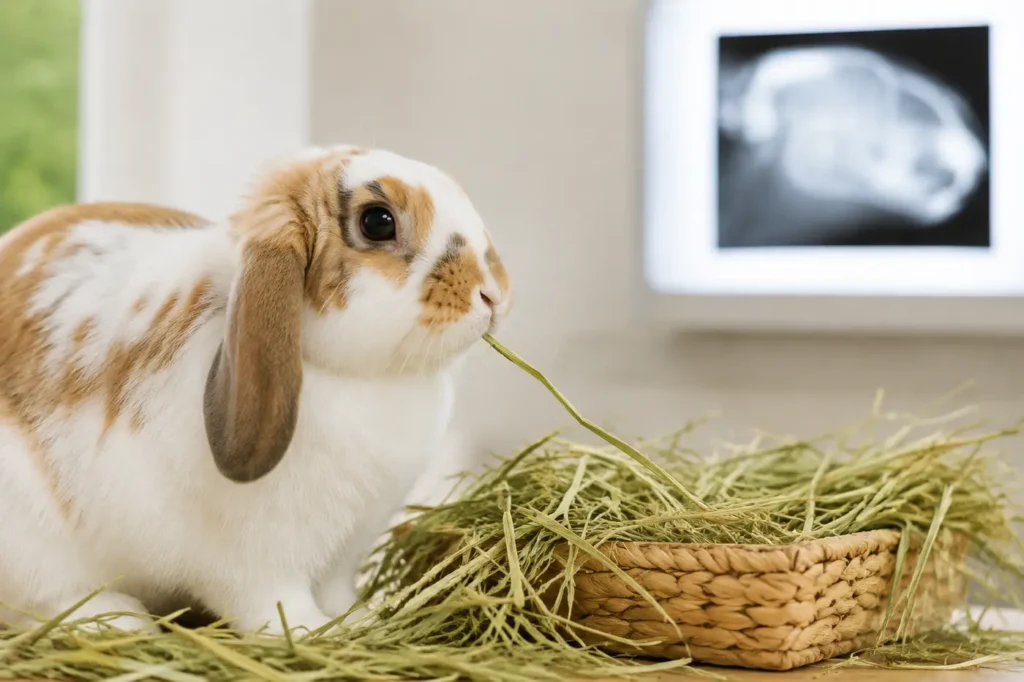
Rabbits' incisors and molars continue to grow throughout their lives. In a healthy rabbit, the long-term chewing of fibrous foods and the proper alignment of teeth creates a balance between growth and wear. When this balance is disrupted due to jaw misalignment, insufficient fiber intake, trauma, or diseases developing in the tooth roots, the teeth can grow excessively.
Dental diseases are not solely an issue within the mouth. Reduced food intake due to pain can lead to a gastrointestinal problem in rabbits known as gastrointestinal stasis, which can quickly become serious. Therefore, the possibility of a dental issue should be investigated early when there is a loss of appetite.
Why Do Rabbits' Teeth Continuously Grow?
Rabbits have a dental structure adapted to grinding fibrous plants for long periods. In addition to the incisors, the molars at the back of the mouth also continuously develop. Chewing on long-fibrous foods such as hay not only wears down the teeth but also supports the natural horizontal grinding motion of the jaw.
Excessive consumption of pellets, grains, or treats while consuming less quality hay can shorten the natural chewing time. However, it is not correct to attribute dental disease solely to diet. The genetic structure of the jaw, trauma, and root diseases also play significant roles.
What Are the Signs of Tooth Overgrowth in Rabbits?
The signs may vary depending on whether the issue is with the incisors or the molars at the back of the mouth, and how advanced the disease is.
Common Signs
- Decreased interest in food or complete refusal to eat
- Refusing hard food and only selecting soft foods
- Dropping food from the mouth or prolonged chewing
- Saliva, wetness, and fur loss around the jaw and mouth area
- Weight loss and muscle loss
- Smaller fecal pellets or reduced amount of feces
- Eye discharge, swelling around the eyes, or recurrent tear duct problems
- Swelling in the lower jaw or facial area
- Bad breath, pain, restlessness, or hiding
Since rabbits' molars are located at the back of the mouth, normal-looking incisors do not necessarily mean that all teeth are healthy.
If your rabbit has a decreased appetite, you can also check our article titled My Rabbit Isn't Eating: Causes and Emergency Signs.
Why Do Dental Problems Occur in Rabbits?
Inadequate Hay and Low-Fiber Diet
Insufficient intake of good-quality grass hay can reduce a rabbit's chewing time and the natural wearing of the teeth. High-calorie pellets and treat foods can quickly satiate the rabbit, further reducing hay consumption.
Jaw Misalignment
In congenital or acquired malocclusion, the upper and lower teeth do not meet properly. Dental problems related to jaw structure can be more common in certain dwarf and lop breeds.
Trauma and Tooth Fractures
Falling, hitting a hard object, or biting cage wires can cause tooth fractures or misalignment. When opposing teeth do not make balanced contact, growth can become irregular.
Root Diseases and Abscesses
In advanced cases, tooth roots can grow excessively, affect surrounding bone tissue, and develop abscesses. Rabbit abscesses can be dense, so merely draining them externally often does not provide a permanent solution.
How Is Dental Disease Diagnosed in Rabbits?
During a veterinary examination, the rabbit's body weight, jaw structure, incisors, mouth area, eyes, and general health status are assessed. A detailed examination of the molars at the back of the mouth may require special equipment and sedation in some rabbits.
X-rays of the skull are important for assessing the direction of the tooth roots, their growth, changes in the jawbone, and the likelihood of abscesses. Advanced imaging techniques may also be used if necessary.
Treatment of Overgrown Teeth in Rabbits
Treatment is planned according to the location and severity of the problem. Overgrown incisors or molars are corrected by the veterinarian using appropriate dental equipment. If the sharp molar points at the back of the mouth have caused sores in the tongue and cheek tissue, these areas are also evaluated.
Extraction may be necessary for repeatedly problematic or severely compromised teeth. If there is a root infection or abscess, a surgical procedure, appropriate antimicrobial treatment, pain control, and nutritional support can be planned together.
Merely shortening the visible part of the tooth does not resolve root and jaw disease. Some rabbits may need regular follow-ups and repeat corrections.
Can a Rabbit's Tooth Be Trimmed at Home?
No. Trimming teeth with nail clippers, pliers, or similar tools can cause the tooth to crack, damage the root, and lead to pain and abscesses. Correction procedures should be performed by a veterinarian using appropriate equipment and familiar with rabbit anatomy.
Why Is Lack of Appetite in a Rabbit with Dental Problems an Emergency?
When a rabbit stops eating due to pain, intestinal motility may slow down. The reduction in feces, gas in the abdomen, dehydration, and deterioration in overall health can occur. Thus, the approach of “the tooth is overgrown, we'll trim it in a few days” is not safe.
If a rabbit is not eating, not defecating, appears lethargic, or has abdominal swelling, it requires a veterinary examination on the same day. While treating dental disease, additional applications such as fluid therapy, pain control, and nutritional support may also be necessary.
How Can Dental Problems Be Prevented in Rabbits?
- The foundation of their diet should consist of quality and unlimited hay.
- The amount of pellets should be limited according to the rabbit's age, weight, and health status.
- Grains, seeds, sugary treats, and inappropriate chew items should not be given.
- The rabbit's weight and eating habits should be monitored regularly.
- Salivation, selective eating, eye discharge, or reduction in fecal size should be considered early warning signs.
- Rabbits that have previously had dental issues should not skip follow-up checks.
Wood chewing toys can provide environmental enrichment; however, they cannot replace the prolonged grinding motion created by hay.
For the evaluation of rabbits' dental, nutritional, and digestive system problems, you can utilize our exotic animal veterinary service.
Frequently Asked Questions
How Can You Tell If a Rabbit's Tooth Is Overgrown?
Signs may include lack of appetite, dropping food from the mouth, selecting only soft foods, salivation, weight loss, small feces, eye discharge, and jaw swelling. Even if the incisors appear normal, disease may be present in the molars.
How Fast Do Rabbit Teeth Grow?
Rabbit teeth continue to grow throughout their lives. Healthy teeth wear down naturally through chewing fibrous foods. If there is a misalignment, clinically significant overgrowth can recur quickly.
Can a Rabbit's Long Tooth Be Trimmed at Home?
No. Trimming with a nail clipper or pliers can crack the tooth and lead to root damage and abscesses. Teeth should be adjusted by a veterinarian using appropriate dental equipment.
Does Dry Bread Wear Down a Rabbit's Tooth?
Dry bread is not an appropriate solution for rabbits' dental health. Excess carbohydrates can disrupt the balance of the digestive system. The main food that supports natural wear is quality, long-fiber hay.
Why Does a Rabbit with Dental Problems Refuse to Eat?
Overgrown teeth, sharp molar points, mouth sores, or root diseases can make chewing painful. Lack of appetite should be assessed without delay because it can lead to slower intestinal motility.
Will a Rabbit's Tooth Grow Back After Being Trimmed?
If underlying alignment or root problems persist, regrowth can be observed. Some rabbits may need regular check-ups, while in advanced and recurring cases, extraction of the affected teeth may be considered.
Conclusion
Tooth overgrowth in rabbits can start with only mild signs such as selective eating; in advanced cases, it can lead to pain, weight loss, abscesses, and gastrointestinal stasis. Instead of trimming teeth at home, a detailed oral examination and imaging when necessary can help determine not only the visible part of the problem but also its cause.
At Çeliktepe Veterinary Clinic, issues regarding rabbits' teeth, nutrition, and digestive system are evaluated with an exotic animal veterinary approach.
Author: Veterinarian Miraç Gürbüz — Çeliktepe Veterinary Clinic
Editorial note: This content is for general informational purposes; it does not replace examination and individual treatment.
Hay is dried grass; straw consists of grain stalks. Straw does not replace good-quality grass hay in a rabbit’s diet.

