
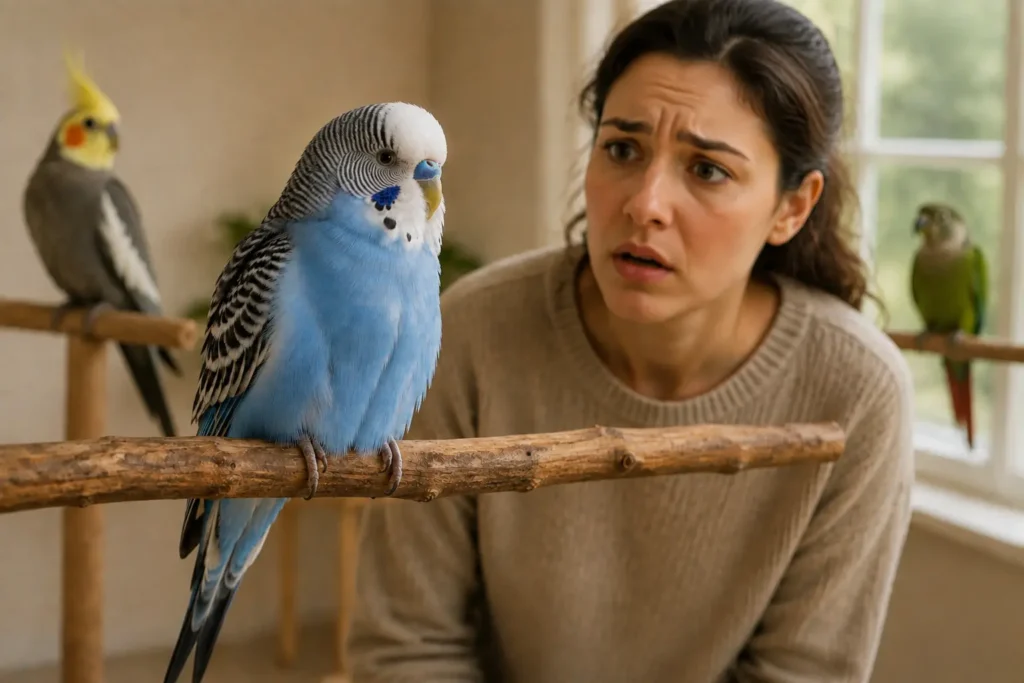
If a budgerigar, parrot, canary, or any other pet bird remains fluffed up for an extended period, especially if accompanied by signs of drowsiness, quietness, or lack of appetite, it should not be merely interpreted as "cold." Birds can fluff themselves briefly while resting, preparing for sleep, or after preening. However, prolonged fluffiness and lethargy often indicate that the body is fighting against illness, pain, or energy loss.
Birds in the wild tend to hide their weaknesses as much as possible. Symptoms such as persistent fluffing, closing their eyes, or descending to the bottom of the cage that are noticed by their owner may suggest that the problem has started earlier.
If a budgerigar or parrot appears fluffed up and lethargic, rather than waiting for the symptoms to resolve on their own, it is necessary to seek an evaluation by a bird veterinarian on the same day.
Why Do Birds Fluff Their Feathers?
Fluffing feathers is not a disease in itself. It can be a behavior used for thermoregulation, resting, grooming, or responding to discomfort. The important factors are the duration of fluffing and the accompanying changes.
Short-term fluffing during sleep, grooming, drying off after a bath, or temporary fluffing in cool environments can be normal. If the bird resumes normal feather condition, eats, sings, and has normal droppings when it becomes active, this behavior can be considered physiological. Remaining fluffed up throughout the day, closing its eyes, and decreased activity are signs of illness.
How Does Fluffing Help to Maintain Body Temperature?
Birds' metabolism is much faster than that of humans. Due to the demands of flight and continuous energy production in a small body, their heart and respiratory rates are high. The normal body temperature of many pet birds, including budgerigars and parrots, ranges from approximately 39 to 42°C, which is a few degrees higher than the average human body temperature of 37°C.
When a bird fluffs its feathers, a thick, stagnant layer of air forms between its skin and the external environment. This insulating layer reduces the loss of heat produced in the body to the surrounding environment.
In a sick, painful, or undernourished bird, the balance of energy production and maintenance of body temperature can be disrupted. The bird attempts to reduce heat loss by continually fluffing up. Therefore, fluffing does not simply mean "cold"; it may indicate that the bird is struggling to maintain its temperature due to infection, pain, low energy intake, or systemic disease.
Causes of Fluffing and Lethargy in Budgerigars and Parrots
Respiratory System Diseases
In bacterial, viral, or fungal respiratory diseases, the bird may initially appear quiet and fluffed up. Nasal or ocular discharge, sneezing, voice changes, and difficulty breathing may develop. Prominent tail movement with each breath, extending the neck, or breathing with an open mouth is an emergency situation.
Digestive System and Crop Problems
Crop infections, Candida overgrowth, bacterial diseases, parasites, foreign bodies, or slow crop emptying can lead to lack of appetite, vomiting, weight loss, fluffing, and lethargy.
For more information, you can check our article on Crop Mycosis in Budgerigars: Symptoms, Prevention, and Treatment Methods.
Malnutrition and Energy Loss
Feeding exclusively on seeds for a prolonged period can cause imbalances in vitamins, minerals, and amino acids. A decreased appetite can quickly create an energy deficit in small birds. In species with low body weight, such as budgerigars and canaries, even a few hours of noticeable not eating is significant.
Pain, Trauma, and Internal Injuries
Impact injuries, wing or leg injuries, cage accidents, and internal organ problems can cause pain. Rather than vocally expressing pain, a bird may become quiet, reluctant to move, and fluff itself up. If a wing is held low, one foot is not used, or there is swelling or a history of falling, examination should not be delayed.
Poisoning and Inhaled Toxins
Teflon/PTFE fumes, cigarette smoke, strong cleaning chemicals, room scents, aerosol products, heavy metals, and certain plants can lead to poisoning in birds. If multiple birds in the same environment suddenly appear fluffed up or show difficulty breathing, it strengthens the likelihood of environmental toxins.
Liver, Kidney, and Metabolic Diseases
Liver, kidney, heart, and other metabolic diseases can initially present with weight loss, feather fluffing, drowsiness, and changes in droppings. Abdominal swelling, excessive thirst, increased urination, or yellow-green droppings are additional clues.
Egg Binding
In female budgerigars, canaries, cockatiels, and other birds, egg binding may be observed with fluffing, straining, wide stance, tail movement, abdominal swelling, and waiting on the cage bottom. The abdomen should not be massaged, and attempting to remove the egg at home is discouraged.
Parasites, Stress, and Environmental Conditions
External and intestinal parasites, constant noise, inadequate sleep, sudden cage changes, and intense fear can lead to reduced activity. However, infections, pain, and organ diseases must be ruled out before making a diagnosis of stress. Randomly applying parasite medication to every fluffed bird can cause toxicity in small birds.
What Symptoms in a Fluffed Bird Are Emergencies?
- Open-mouth breathing or significant respiratory effort
- Visible tail movement with each breath
- Staying on the cage bottom or inability to perch
- Keeping eyes continuously closed
- Not eating or drinking
- Vomiting or scattering food
- Crop remaining full for an extended period or foul odor
- Bloody, black, very watery, or discolored droppings
- Rapid weight loss and prominence of the breastbone
- Tremors, loss of balance, head tilt, or seizures
- Bleeding, trauma, or exposure to toxic fumes
- Abdominal swelling, straining, or suspicion of egg binding
Why Do Birds Hide Their Illnesses?
Birds can hide symptoms of illness for an extended period to avoid appearing weak in the wild. A bird at home that seems to "suddenly get sick" may have been eating less or losing weight for days. Regular weigh-ins on a scale sensitive to grams performed at the same time can reveal early weight loss.
What Can Be Done at Home Initially?
- Place the bird in a calm, quiet, and draft-free environment.
- If there are multiple birds, observe the sick bird in a separate cage.
- Position food and water bowls within easy reach.
- Place white paper on the cage bottom to monitor droppings.
- Note its weight and the time the symptoms started.
- Record videos of respiratory difficulties, vomiting, or balance issues.
- Remove smoke, perfume, and cleaning chemicals from the environment.
Sick birds may benefit from supportive warmth. However, the entire cage should not be excessively heated, and there should be an area for the bird to escape the heat. Open-mouth breathing or keeping wings away from the body can indicate overheating.
What Should Not Be Done at Home?
- Do not give human antibiotics, pain relievers, or fever reducers.
- Do not use antibiotics, antifungals, or antiparasitic medications without a diagnosis.
- Do not force water or food into the mouth of a weak or lethargic bird.
- Do not massage the crop or hold the bird upside down.
- Do not place directly in front of a heater or hot air source.
- Do not say "let's wait one night" in case of noticeable lethargy.
What Can Be Done During a Bird Veterinary Examination?
During the examination, the bird's weight, body condition, mouth and crop, respiration, abdominal area, feathers, and droppings are evaluated together. For very weak or respiratory-distressed birds, oxygen and heat support may be needed before conducting detailed procedures.
Depending on the findings of the case, blood tests, microscopic examination of droppings and crop contents, Gram staining, bacterial or fungal cultures, and radiography may be utilized. Fluffing and lethargy are common in many diseases, so a definitive diagnosis cannot be made based solely on its appearance.
What Does It Mean if a Budgerigar Is Vomiting and Fluffed Up?
Fluffing accompanied by vomiting increases the likelihood of crop infections, Candida, bacterial diseases, parasites, foreign bodies, toxins, or systemic diseases. Distinguishing between behavioral regurgitation and true vomiting is essential.
For details, please read our article on My Budgerigar Is Vomiting: Causes and Emergency Symptoms.
Frequently Asked Questions
Is a budgerigar fluffing always a sign of illness?
No. Temporary fluffing during sleep, short resting periods, grooming, or coolness can be normal. Remaining fluffed up for hours, becoming quiet, closing eyes, or not eating suggests illness.
What should be done if the bird is fluffed up and sleeping?
If the bird has its eyes closed and remains fluffed up for an extended time outside of normal sleeping hours, veterinary evaluation is needed on the same day.
Why does a budgerigar stay fluffed up at the bottom of the cage?
Weakness to the point of being unable to perch, breathing difficulties, pain, trauma, or advanced systemic disease may be present. Remaining fluffed up on the cage bottom is an emergency warning.
Should a fluffed bird be kept warm?
A draft-free and moderate warmth can be provided; however, the entire cage should not be excessively heated. The bird should have the opportunity to move away from the heat source.
Does fluffing mean the bird is cold?
Not always. A sick, painful, or energy-deficient bird may also fluff up to maintain its body temperature.
Should antibiotics be given to a fluffed-up and lethargic bird?
They should not be given without a diagnosis. Fungal, parasitic, toxic, nutritional disorders, trauma, or organ diseases can also produce the same symptoms.
Can a bird's illness be understood from its droppings?
Changes in droppings provide valuable clues but do not alone confirm a diagnosis. The bird's diet can also alter the color of its droppings.
When is fluffing and lethargy in parrots an emergency?
If there is difficulty breathing, tail bobbing while breathing, not eating, vomiting, staying at the bottom of the cage, loss of balance, seizures, bleeding, or exposure to toxic fumes, it is an emergency.
Conclusion: Persistent Fluffing May Indicate a Disruption in Temperature and Energy Balance
Budgerigars, parrots, canaries, and other pet birds may fluff up briefly while resting. However, if fluffing is accompanied by lethargy, lack of appetite, closing eyes, changes in droppings, or respiratory difficulties, it is a sign of illness.
Birds' metabolism is faster than that of humans, and many pet birds have a body temperature of about 39-42°C. A sick, painful, or inadequately nourished bird fluffs its feathers to create an insulating air layer among its feathers; this helps maintain its body heat and reduce heat loss. This behavior is a significant sign that the bird is physiologically struggling.
Veterinarian Miraç Gürbüz
Çeliktepe Veterinary Clinic – Kağıthane / İstanbul
This content is prepared for general informational purposes; it does not replace a veterinary examination or treatment specific to the patient.

