
Veterinarian: Veterinarian Miraç Gürbüz — Çeliktepe Veterinary Clinic
If your budgerigar has settled at the bottom of the cage, straining with its legs spread apart and is unable to lay eggs, do not consider this merely as “preparation for laying eggs.” Egg binding in birds, meaning the inability to expel the egg through normal means, is a reproductive system problem that can become severe in a short time. Even if the egg is not visible from the outside, binding can occur.
In this article, we will discuss the signs of egg binding in budgerigars and other birds, interventions to avoid at home, and treatment options under the supervision of a veterinarian. For information on consultation and examination at Çeliktepe Veterinary Clinic in Kağıthane, İstanbul, you can check our Istanbul Bird Veterinarian service.
Signs requiring immediate attention: If repeated straining is accompanied by difficulty breathing, noticeable lethargy, inability to perch, bleeding, or tissue protruding from the cloaca, contact your veterinarian immediately. Do not attempt to pull the egg or press on the bird's abdomen.
What is egg binding in birds?
The inability of an egg to advance through the reproductive tract or be expelled is referred to as “egg binding”; the term dystocia is also used in veterinary medicine. The issue is not solely the size of the egg. The condition of the tract, the shape of the egg, and the overall health of the bird are evaluated together.
This condition, which can be observed in budgerigars, cockatiels, and budgerigars, may also occur in other female birds. The absence of a mate does not mean that eggs will not form: female birds can produce unfertilized eggs.
How can you tell if a budgerigar is unable to lay an egg?
The most notable change is the bird's deviation from its usual behavior. Constantly entering and exiting the nesting box alone does not confirm a diagnosis; it is more important for the following signs to be observed together:
- Repeated straining and a wide-legged stance,
- Sitting on the bottom of the cage, puffing up, and waiting with closed eyes,
- Difficulty or weakness in perching,
- Significant movement of the tail when breathing,
- Reduced appetite, changes in stool quantity, and fullness in the abdominal area,
- Swelling around the cloaca, visible egg, or protruding tissue.
Remember that these signs can also be seen in other illnesses. For puffing and lethargy, we discuss various possibilities in our article on puffing and lethargy in birds. Palpating the abdomen to search for an egg is not a reliable home test. The VCA guide on egg binding also emphasizes that delays in small birds can have serious consequences.
Why does egg binding occur?
Investigated causes include calcium and nutritional issues, frequent laying, malformed or underdeveloped eggshells, reproductive tract diseases, and general health problems. The belief that “there is a cuttlebone, so there cannot be a calcium problem” or “she laid eggs before, she will lay again” does not provide sole assurance.
During examination, the date of the last egg laying, the appearance of previous eggs, nutrition, supplements provided, and any similar issues experienced previously are important. Focusing on a single cause without knowing the type and history of the bird may overlook the main problem.
What should be done until you reach the veterinarian, and what should be avoided?
When calling the clinic, state that “My female bird is straining and cannot lay an egg”; describe when the symptoms started, and how her breathing and movements are. If available, a short video and photos of previous eggs can help with the evaluation. Do not delay your visit to take images.
- Do not pull, break, or attempt to puncture the egg.
- Do not apply pressure to the abdomen; do not place oil, tools, or other substances in the cloaca.
- Do not give human medication, antispasmodics, or egg-laying drugs; do not increase the supplement dose on your own.
- Do not force water or food into a weak or difficulty-breathing bird.
- Avoid unnecessary holding and stress during transport; follow the transportation instructions provided by the clinic for your bird.
Watching a video of egg extraction online does not mean that the same procedure can be performed at home. The position and condition of the tissues of the eggs of two birds that appear similar externally may differ.
How will the examination be conducted?
The primary aim is to determine whether the bird is in a condition to tolerate intervention. In patients requiring respiratory and circulatory support, stabilization can first be done. Then, with examinations, appropriate imaging, and blood evaluations as needed, the position of the egg and accompanying problems are investigated. In severely weakened patients, it may be necessary to proceed in stages rather than performing all procedures at once.
The mere visibility of the egg does not determine which treatment will be chosen. If there is an obstruction, adhesions, damage, or if the egg is located in an unusual place, the approach may change. The MSD Veterinary Manual also considers the patient's condition and these findings in treatment decisions.
Medical treatment and relaxation approach in egg binding
In our clinic, treatment is planned according to each patient's needs. In medical approaches, the evaluation of pain and spasms along with necessary supportive therapies is important. In appropriate cases, antispasmodic treatments, aimed at facilitating passage through the reproductive tract, can be assessed at the veterinarian's discretion.
The approach that pet owners refer to as “uterine relaxation therapy” does not mean that a single medication will be given for every case of egg binding. Relaxant applications are not the same as medications that increase contractions. In cases of suspected mechanical obstruction or tissue damage, it may not be suitable to simply wait for the medication to take effect. Thus, we do not provide names of medications, dosages, or home application instructions here.
When is inhalation anesthesia considered?
When medical approaches are insufficient or a controlled intervention is necessary, inhalation anesthesia can be considered in suitable patients. This method, commonly referred to as “gas anesthesia” or “inhaler anesthesia,” can assist in achieving the necessary relaxation and performing the procedure under controlled conditions.
Anesthesia alone does not guarantee that the egg will definitely be expelled. The bird's respiration, body temperature, and general condition are monitored; the status of the egg and the tract will dictate the choice of intervention. These procedures require experience in bird anesthesia and reproductive system diseases.
Is cesarean performed in birds?
Yes; the surgical removal of the egg, commonly referred to by pet owners as “cesarean in birds,” is an option in necessary cases. If medical treatment and appropriate anesthesia do not yield results, surgery may be evaluated. In some obstruction or damage cases, a direct surgical decision may need to be made without forcing other methods.
The scope of the surgery is not determined solely by examining the egg; findings in the reproductive tract are also important. Therefore, the same procedure name or healing duration cannot be promised for every patient. Treatment options, expected benefits, and risks are shared with the pet owner after the examination.
If the egg has cracked inside, can it cause “poisoning”?
If there is suspicion that the egg has cracked during intense straining or due to improper interventions, the situation should be further evaluated. Shell fragments, tissue damage, and the egg contents entering an area where they normally should not be present are significant. However, not every cracked egg results in the same scenario.
The situation commonly referred to as “the egg poisoned inside” may be medically related to inflammation caused by the egg contents and accompanying infections. If infection becomes systemic, it is a serious complication. VCA's explanation of coelomitis related to egg yolk describes the mechanism that develops when egg contents enter the body cavity; as the relevant page discusses chickens, the same treatment protocol should not be assumed across species.
The bird's expulsion of a certain amount of shell does not indicate that the entire problem has been resolved. Instead of attempting to collect or remove the fragments at home, clearly explain what has happened and the interventions performed to the veterinarian.
Our clinical experience with cases of egg binding
In our professional experience, we have treated over 500 cases of egg binding in four different bird species; we have restored their health through medical treatment, interventions under anesthesia, or surgical egg extraction (cesarean) methods tailored to the needs of the patient, without the development of life-threatening complications.
This experience also involves cases where the egg cracked after intense straining or improper interventions, where inflammation and infection risks related to the egg contents were present. In such cases, we do not only focus on the removal of the egg but also on evaluating accompanying damage and follow-up after the procedure.
This information narrates our experience with previous cases; it does not guarantee safety or definite recovery for a newly presenting bird. Egg binding itself can pose a life-threatening risk. Therefore, early presentation and appropriate intervention for the patient are crucial.
Follow-up and prevention of recurrence after egg laying
The follow-up does not always end with the expulsion of the egg. Appetite, activity, respiration, and defecation are reevaluated; the timing for control is determined according to the bird's condition. Observations by the owner are valuable in monitoring recovery.
If there is a problem with frequent egg laying, factors such as nutrition, light regulation, nesting boxes, and stimulating interactions are addressed together. Randomly removing existing eggs can encourage re-laying in some birds. The Royal Veterinary College's information note on chronic laying also clarifies the importance of environmental adjustments. Clarify the appropriate plan for your bird during the control examination.
Frequently Asked Questions
My budgerigar is straining but not laying eggs; can I wait until morning?
If there is noticeable lethargy, difficulty breathing, or inability to perch, do not wait. Immediately contact your veterinarian, reporting how long the straining has been occurring; there is no safe standard waiting time that applies to all birds.
Can it be said that there is no binding if the egg is not visible?
No. The visibility of the egg from the outside is not a requirement. Suspicion is evaluated through examination and necessary investigations.
Can egg binding occur without a male bird?
Yes. A female bird can produce unfertilized eggs even without a mate. The absence of a mate does not exclude this possibility.
Can I extract the egg at home with olive oil, massage, or antispasmodic medication?
Do not attempt these methods at home. Pressure and application of medications, when done without understanding the condition, can cause harm and delay necessary interventions.
Does every bird require anesthesia or cesarean?
No. Medical treatment, intervention under anesthesia, and surgery are different options. The necessity of each is determined by the position of the egg, the condition of the tract, and the overall health of the bird.
Is examination required after removing a cracked egg?
If there is cracking, missing shell, bleeding, or ongoing straining, veterinary evaluation is necessary. Simply looking at the pieces removed does not mean that there are no remaining issues inside.
Can egg binding recur?
If the underlying cause continues, it can recur. In birds that lay eggs frequently, the focus is not only on removing the current egg but also on the care and follow-up plan for the next period.
Consultation for a bird unable to lay eggs in Istanbul
If you suspect your bird is experiencing egg binding, please contact us at 0212 923 10 24 to report the symptoms and the timing of their development. Çeliktepe Veterinary Clinic is located at Çeliktepe Mahallesi Buhara Sokak No:8/A, Kağıthane / İstanbul. You can use our Contact page for updated contact information.
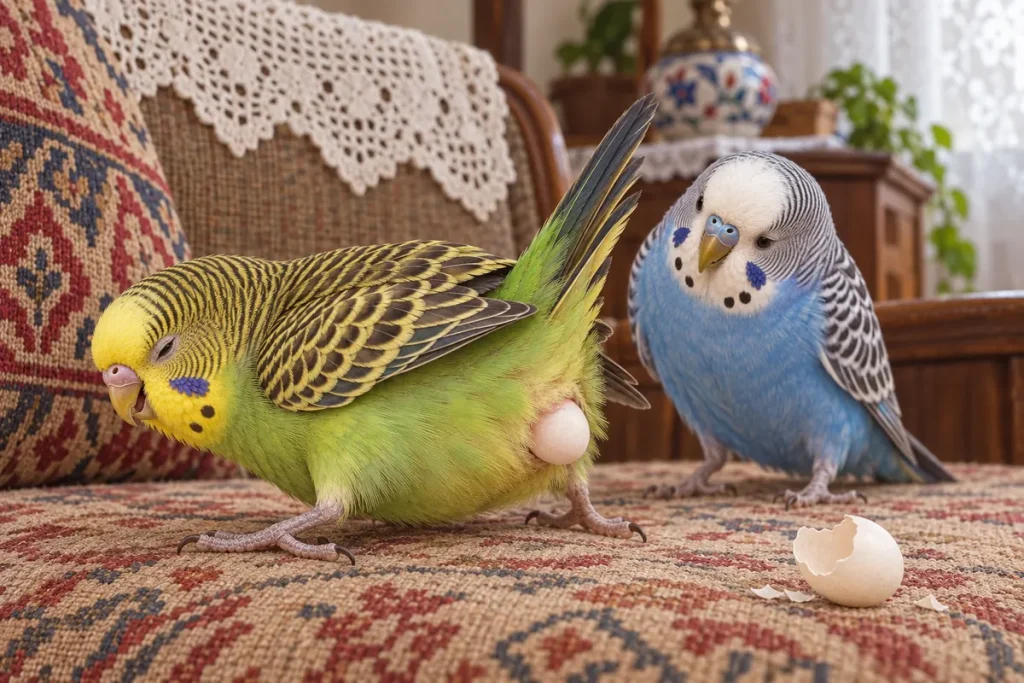
This content is for general informational purposes; the diagnosis and treatment specific to your bird will be determined through examination. The cover image is a representative illustration of the topic.

