
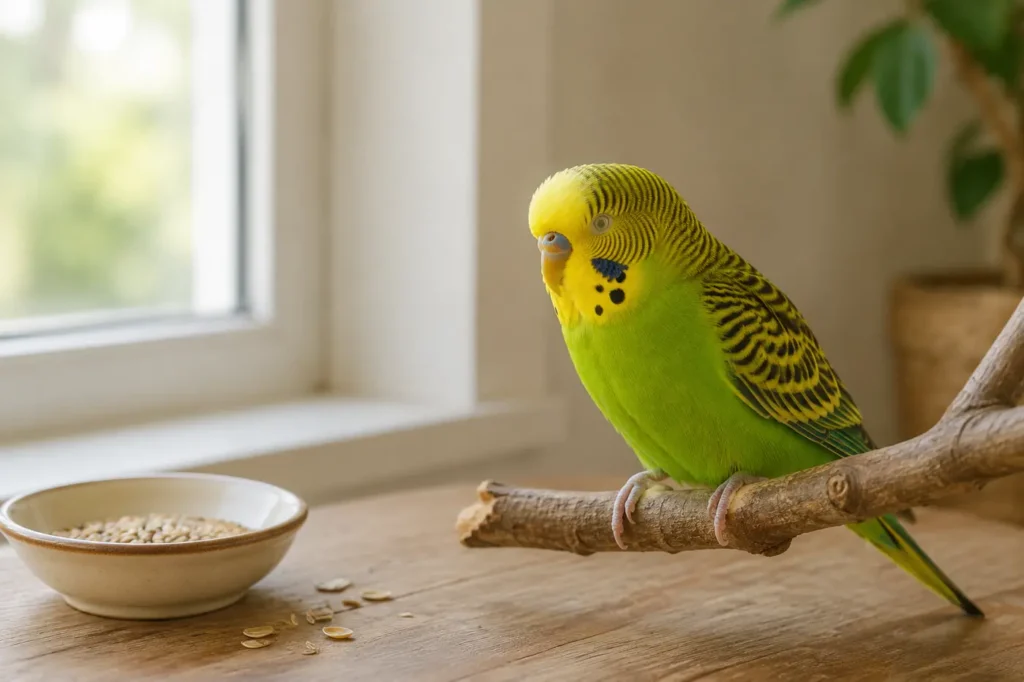
In budgerigars, the presence of food or liquid coming from the mouth is one of the most common concerns for owners. However, not every instance of regurgitation indicates illness. Birds may intentionally regurgitate food for their mates, a favored toy, or a mirror during courtship behavior. In contrast, true vomiting could be a sign of an infection, crop disease, poisoning, a foreign body, or a more serious problem related to the digestive system.
Due to the ability of birds to hide signs of illness for extended periods, persistent vomiting, lethargy, or weight loss are not conditions to "wait a few days to observe." Especially in small birds, loss of fluid and energy can quickly lead to a decline in their overall condition.
Is Vomiting the Same as Regurgitation in Budgerigars?
No. There are some significant differences between behavioral regurgitation and true vomiting.
How Does Behavioral Regurgitation Appear?
During courtship or bonding behavior, the bird is usually lively and active. It rhythmically moves its head back and forth and releases food towards a specific target: its mate, the mirror, a toy, or its owner. This behavior is often repeated in the presence of the same person or object. The bird's appetite, droppings, and overall energy are usually normal.
How Does True Vomiting Appear?
In true vomiting, food and liquid may be sprayed around the cage, on the head feathers, and face due to the rapid shaking of the head from side to side. Other signs may also be observed in the bird, such as puffing up, lethargy, loss of appetite, wet or dirty head feathers, abnormal droppings, and weight loss.
| Observation | Regurgitation in Courtship Behavior | Conditions Associated with Vomiting |
|---|---|---|
| Direction | Generally directed towards the mate, toy, or a specific target | Food and liquid spread around |
| Overall Condition | Usually lively and with a normal appetite | Lethargy, puffing up, or loss of appetite may accompany |
| Head Feathers | Spillage to the surroundings may be less pronounced | Wetness and soiling may be observed |
This table does not provide a definitive diagnosis. These two situations cannot always be clearly separated by appearance alone. If unsure, consulting an avian veterinarian should not be delayed.
Why Do Budgerigars Vomit?
Vomiting is not a disease in itself but a common symptom of many different problems. Identifying the underlying cause is necessary for appropriate treatment.
Crop Fungal Infection and Candida Overgrowth
Species of Candida can overgrow, especially in birds with weakened immune systems, inadequate hygiene conditions, or those treated with inappropriate antibiotics for long periods. Vomiting or regurgitation, delayed crop emptying, white plaques in the mouth, loss of appetite, and weight loss may be seen.
The presence of Candida in the crop does not always indicate disease on its own. The findings should be evaluated along with examination and necessary laboratory tests.
For more detailed information on Candida infection in budgerigars, you can refer to our article titled Crop Fungal Infection in Budgerigars: Symptoms, Prevention, and Treatment Methods.
Bacterial Gastrointestinal Infections
In some bacterial infections, vomiting may accompany watery or discoloring droppings, lethargy, loss of appetite, and rapid weight loss. Random use of antibiotics can delay the correct diagnosis and disrupt the balance of microorganisms in the digestive system.
Trichomonas and Other Parasitic Diseases
Trichomonas can particularly cause increased salivation, difficulty swallowing, regurgitation, and crop issues in budgerigars. While white-yellow lesions may be visible in the mouth or throat, not every case will present with detectable lesions.
Crop Stasis, Obstruction, and Foreign Body
Failure of crop contents to pass normally may be related to fibers, toy parts, unsuitable cage bottoms, dense or spoiled food, etc. Prolonged fullness of the crop may present with bad odor, vomiting, loss of appetite, and deterioration in general condition.
Poisoning and Irritants
Heavy metals like lead and zinc, certain house plants, pesticides, cleaning products, fumes, and improperly used medications can cause vomiting. Symptoms may also include abnormal droppings, balance issues, tremors, seizures, or marked lethargy.
Liver, Kidney, and Other Systemic Diseases
Some metabolic or organ diseases developing outside the digestive system can also manifest with vomiting and loss of appetite. Therefore, the bird's overall condition, weight, droppings, and other systems should be evaluated together rather than solely focusing on the crop.
Which Symptoms Are Emergency?
If there is severe respiratory distress, open-mouthed breathing, seizures, collapse, or marked loss of responsiveness, immediate emergency veterinary assessment is required. Also consult an avian veterinarian on the same day for the following other symptoms; do not wait if the overall condition deteriorates:
- Recurrent vomiting or the bird's inability to retain water
- Puffing up, closing eyes, sitting on the cage floor, or marked lethargy
- Difficulties in breathing, tail bobbing during respiration, or open-mouthed breathing
- Refusal to eat, rapid weight loss, or prominence of the breast bone
- Soiling of the head and face feathers with vomit
- Prolonged fullness of the crop, swelling, or foul odor
- Bloody, black, very watery, or markedly discolored droppings
- Tremors, loss of balance, seizures, or other neurological signs
- Suspicion of ingestion of metal, chemicals, toxic plants, or foreign bodies
If the bird is very lethargic, a small, safe, and warm carrier box should be used during transport. However, overheating should be avoided.
What Can Be Done During a Veterinary Examination?
During the examination, the bird’s body weight and condition, oral cavity, crop, respiratory system, and droppings are evaluated. Depending on the findings of the case, microscopic examination of the crop contents, Gram staining or culture, droppings analysis, blood tests, and radiography may be required.
Diagnosis cannot be made solely based on the appearance of vomiting. Treatments for infections, fungi, parasites, foreign bodies, and toxic causes are different from each other.
What Should Be Done at Home, and What Should Not Be Done?
- The bird should be kept in a calm, draft-free environment at an appropriate temperature.
- The timing, frequency of vomiting, changes in droppings, and possible substance exposure should be noted.
- If possible, the behavior should be recorded in a short video.
- The mirror or toy triggering courtship behavior in the cage can be removed temporarily.
- Antibiotics, antifungal drugs, or human medications should not be administered without veterinary advice.
- Forced feeding of water or dense food should be avoided; there is a risk of aspiration into the respiratory tract.
- No home massage should be done on the crop, and the bird should not be held upside down.
How Can Vomiting in Budgerigars Be Prevented?
Although not all cases can be prevented, regular cleaning of cages and bowls, using fresh and suitable food, preventing access to toxic metals and plants, introducing new birds into the flock in a controlled manner, and avoiding unnecessary medication can reduce the risk. Weighing the bird a few times a week on a gram-sensitive scale can help catch unnoticed weight loss early.
For assessments of gastrointestinal problems in budgerigars and other pet birds, you can utilize our avian veterinary services.
Frequently Asked Questions
Why is my budgerigar regurgitating what it has eaten?
Courtship behavior, crop fungal infection, bacterial or parasitic infections, crop stasis, foreign bodies, exposure to toxic substances, and some systemic diseases can cause food to be regurgitated. The cause should be identified in cases of recurring situations through examination and, if necessary, laboratory testing.
Is it normal for a budgerigar to regurgitate food to a mirror?
A lively, hungry bird with normal droppings regurgitating food towards a mirror or a favored toy may be displaying courtship behavior. However, if the behavior becomes frequent, the bird is losing weight, or food is being scattered, the possibility of illness should be assessed.
What should be given to a regurgitating budgerigar at home?
Medications or forced feeding should not be administered before a diagnosis is made. The bird should be kept calm and at an appropriate temperature, symptoms should be recorded, and especially if there is lethargy, loss of appetite, or repeated vomiting, a veterinary examination should be arranged.
Does crop fungal infection cause vomiting?
Yes. Candida overgrowth can lead to vomiting or regurgitation, delayed crop emptying, white plaques in the mouth, loss of appetite, and weight loss. Evaluation of the crop contents may be necessary for a definitive diagnosis.
When is vomiting in a budgerigar an emergency?
Recurrent vomiting; along with puffing up, lethargy, difficulty breathing, refusal to eat, weight loss, abnormal droppings, crop swelling, or neurological signs requires urgent evaluation.
Conclusion
While regurgitation in budgerigars can sometimes be behavioral, true vomiting can be the first sign of a serious illness. If symptoms recur or the overall condition of the bird deteriorates, it is essential to consult an avian veterinarian without applying random treatments at home.
At Çeliktepe Veterinary Clinic, health problems related to the crop, gastrointestinal system, and overall well-being of budgerigars and other pet birds are addressed through evaluation by a veterinarian.
Author: Veterinarian Miraç Gürbüz — Çeliktepe Veterinary Clinic
Editorial Note: This content is for informational purposes only and does not replace an examination or individual treatment.

