
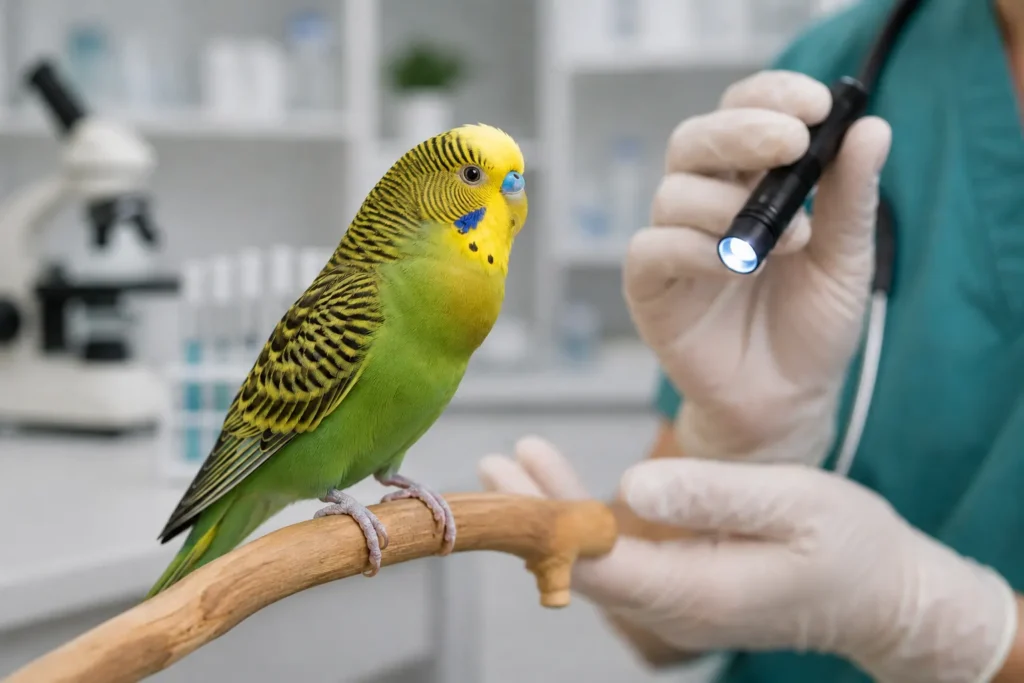
Crop fungus in budgerigars and other pet birds is a digestive system problem that can initially progress with mild appetite, behavioral, or weight changes, and when it becomes evident, it can seriously disrupt the bird's ability to empty the crop and absorb nutrients from food. When the term "crop fungus" is mentioned among the public, it often refers to the excessive proliferation of Candida species in the crop.
Healthy birds can have low amounts of Candida in their digestive systems. Therefore, the mere presence of fungal cells does not always indicate disease. Clinical signs, the condition of the crop, and microscopic findings should be evaluated together.
If there is delayed emptying of the crop, swelling noticeable externally, weight loss, bad odor, mucous content, and vomiting, a bird veterinarian examination should not be delayed.
What is the Crop and What Does It Do?
The crop is a part of the digestive system located between the neck and chest of birds, where the swallowed food is temporarily stored. The food is moistened here and prepared before passing to the stomach. In a healthy bird, the crop can fill and empty throughout the day; the food taken at night is expected to have progressed significantly by morning.
When crop movements slow down, food, liquid, and mucus begin to accumulate in this area. The content waiting there creates a favorable environment for microorganisms to multiply. Thus, the initial stagnation can lead to fungal proliferation, and the fungus and inflammation can worsen the disturbances in crop movements.
How is Crop Fungus Detected in a Budgerigar?
It is not possible to definitively identify crop fungus by appearance alone. However, the following findings increase suspicion:
- Delayed emptying of the crop
- Swelling in the lower neck that can be seen externally
- Accumulation of liquid, mucus, or undigested food in the crop
- Bad or sour odor from the mouth-crop
- Weight loss despite eating
- Dull feathers, a fluffed-up posture, and lethargy
- Whitish plaques in the mouth
- Difficulties in swallowing and extending the neck
- Food expulsion or pronounced vomiting in later stages
- Changes in the quantity, consistency, or color of feces
Why Might There Be Weight Loss Despite Increased Food Consumption?
In some birds with crop fungus, weight loss can occur despite increased food consumption. The bird frequently visits the feeder, cracks seeds, and appears to be eating; however, the utility of food decreases because crop movements and digestive regulation are disrupted.
The feathered structure of birds can mask the decrease in body condition, making this loss difficult to detect externally. As the breast muscles shrink, the feathers can maintain the bird's appearance for some time. Therefore, it is important to regularly weigh the bird on a gram-sensitive scale at the same time.
Can Crop Swelling Be Seen Externally?
Yes. As liquid, mucus, and undigested food accumulate in the crop, a swelling noticeable from the outside may develop in the upper part of the neck-chest area. The crop can remain full for a long time, and a different content may be felt upon touch.
However, squeezing the crop, massaging it, or trying to expel the content orally is dangerous. The content may enter the respiratory passages, leading to aspiration and sudden breathing difficulties.
Does Vomiting Indicate the Stage of Disease?
Vomiting may occur at different times and does not, by itself, indicate the stage of disease. Weight loss, fluffed feathers and delayed crop emptying can occur without vomiting. Food or fluid scattered on the head feathers or around the cage warrants veterinary assessment.
However, not every bird shows symptoms in the same order. Waiting for the onset of vomiting may cause the disease to progress.
What Does Mucous Crop Content Indicate?
When crop movements slow down, thick, mucus-containing material may accumulate and crop emptying may be impaired. Its appearance alone does not determine the disease stage or cause. The content can become permanent in the crop; the natural emptying pattern of the crop is disrupted, and the utility of food decreases. The bird may continue to eat but gradually lose weight.
In advanced cases, the crop can clearly expand with mucus, undigested food, and other residues. The development of complete crop and digestive system stagnation is a serious condition. Accumulated content should be evaluated in a controlled manner at the clinic; attempts to induce vomiting or emptying at home should not be made.
What Causes Crop Fungus to Develop?
Unnecessary or Prolonged Use of Antibiotics
Antibiotics can disrupt the normal balance of microorganisms in the digestive system and pave the way for the excessive proliferation of Candida. Therefore, antibiotics should not be used without examination and diagnosis.
Weakening of the Immune System
The likelihood of opportunistic fungal overgrowth increases in young, old, undernourished, or birds with other diseases. Candida often develops as a secondary infection following an underlying problem rather than as a disease that starts on its own.
Hygiene and Incorrect Hand Feeding
Dirty waterers, stored soft foods, unclean feeding equipment, and improperly heated hand feeding foods can increase the risk. Especially for chicks, the consistency, temperature, and amount of the soft food are important for crop health.
Other Diseases that Disrupt Crop Movements
Foreign bodies, obstruction, bacterial infections, parasites, heavy metal poisoning, and some systemic diseases can slow down crop emptying. Candida may proliferate secondarily in the waiting content.
What Diseases Can Mimic Crop Fungus?
Vomiting, crop swelling, and weight loss are not exclusive to Candida. Trichomonas, bacterial crop infections, foreign bodies, heavy metal poisoning, Macrorhabdus, proventricular diseases, and behavioral food expulsion can create similar appearances.
In particular, a bird that expels food in a controlled manner to the mirror, toy, or mate, with normal energy, weight, and feces may be suspected of being in a breeding condition. In true vomiting cases, however, the content can be spilled into the environment with head movements, and the bird's facial feathers can become soiled.
For other causes of vomiting, you can check out our article My Budgerigar is Vomiting: Causes and Emergency Symptoms.
How is Crop Fungus Diagnosed?
In a veterinary examination, the bird's body weight and condition, oral cavity, crop fullness, crop emptying rate, feces, and general condition are evaluated. Samples taken from the crop content can be examined under a microscope; Gram staining, cytology, and cultures may be utilized in necessary cases.
The presence of a small number of Candida cells alone does not indicate clinical disease. Budding yeast cells, hyphal structures, signs of inflammation, and the bird's symptoms are interpreted together. Radiography and blood tests may be required in suspicion of foreign bodies or organ disease.
Which Symptoms Require Emergency Evaluation?
- Crop not emptying for hours or continuously growing
- The bird being unable to hold food or water
- Repeated or spilled vomiting
- Sitting fluffed up at the bottom of the cage
- Breathing with an open mouth or tail bobbing
- Rapid weight loss and prominent breastbone
- Strong, sour, or foul odor from the crop
- Widespread white plaques in the mouth
- Very watery, black, or bloody feces
- Tremors, loss of balance, or seizures
What Can Be Done at Home?
- Keep the bird in a calm, draft-free, and appropriately warm environment.
- Record food consumption, vomiting, and changes in feces.
- Weigh the bird on a gram-sensitive scale.
- Take short videos of crop swelling and vomiting behavior.
- Keep the waterer, feeder, and cage bottom clean.
- Inform the veterinarian about any recently used medications and changes in feeding.
What Should Not Be Done at Home?
- Do not massage the crop or try to induce vomiting.
- Do not force weary birds to drink water or eat dense food.
- Do not use human medications, random antifungal agents, or antibiotics.
- Do not give vinegar, baking soda, or similar mixtures for treatment purposes.
- Do not hold the bird upside down.
- Do not wait until vomiting begins.
Can Crop Fungus Be Prevented?
- Clean feeders and waterers every day.
- Avoid leaving soft foods in the cage for extended periods.
- Do not use damp or spoiled foods.
- Clean hand feeding equipment properly after each use.
- Do not use antibiotics without veterinarian recommendation.
- Provide balanced, species-appropriate nutrition.
- Regularly monitor the bird's weight.
For evaluating swelling and changes in general condition, you may also want to check our article Why Do Budgerigars and Parrots Puff Up and Become Lethargic?.
Frequently Asked Questions
Can crop fungus be identified by observation?
Crop swelling, bad odor, white plaques, delayed emptying, and weight loss raise suspicion; however, for a definitive diagnosis, the crop content must be evaluated by a veterinarian.
Does a bird with crop fungus eat a lot?
Some birds may visit the feeder more frequently and appear to consume more food. Nevertheless, weight loss can occur due to impaired utilization of food. In some cases, appetite may decrease.
Does crop fungus cause vomiting?
Yes. Regurgitation or vomiting may occur, but this sign alone does not indicate the stage of disease. Do not wait for vomiting to begin before seeking assessment.
Can the crop swell in crop fungus?
Yes. Accumulation of mucus, liquid, and undigested food can cause the crop to swell enough to be noticeable externally.
Does crop fungus resolve on its own?
As long as the underlying cause continues and the crop content cannot be emptied, there is a risk of the condition worsening. Treatment should be planned by the veterinarian based on the bird's species and diagnostic findings.
Can crop fungus spread to other birds?
Candida is an opportunistic yeast. Shared dirty waterers, foods, and feeding equipment can contribute to the transmission of microorganisms. The hygiene of the same environment must be improved, and other birds should be monitored for symptoms.
Is vinegar given at home for crop fungus?
No. Uncontrolled mixtures can cause irritation, dosage errors, and delays in treatment. Since similar symptoms can occur in different diseases, a diagnosis should first be established.
Conclusion
Crop fungus in budgerigars and other birds cannot be identified with vomiting alone. Early alerts of weight loss despite food consumption, muscle wasting hidden under feathers, delayed emptying of the crop, external swelling, bad odor, and mucus-containing content accompany the condition. Vomiting may occur at different times and does not, by itself, indicate the stage of disease.
When the content in the crop reaches a dense mucus-containing state, it cannot be sufficiently expelled by spontaneous vomiting or digestion. This condition can further deteriorate crop emptying and utilization of food. Instead of trying to empty the crop at home, a visit to a bird veterinarian should be ensured.
At Çeliktepe Veterinary Clinic, bird and exotic animal veterinary services are available for evaluating crop and digestive system problems in budgerigars, parrots, canaries, and other pet birds.
Veterinarian Miraç Gürbüz
Çeliktepe Veterinary Clinic – Kağıthane / İstanbul
This content has been prepared for general informational purposes; it does not replace veterinarian examination and patient-specific treatment.
This article focuses on signs and differential assessment. For treatment and care, see our guide to crop candidiasis prevention and treatment in budgerigars.

