
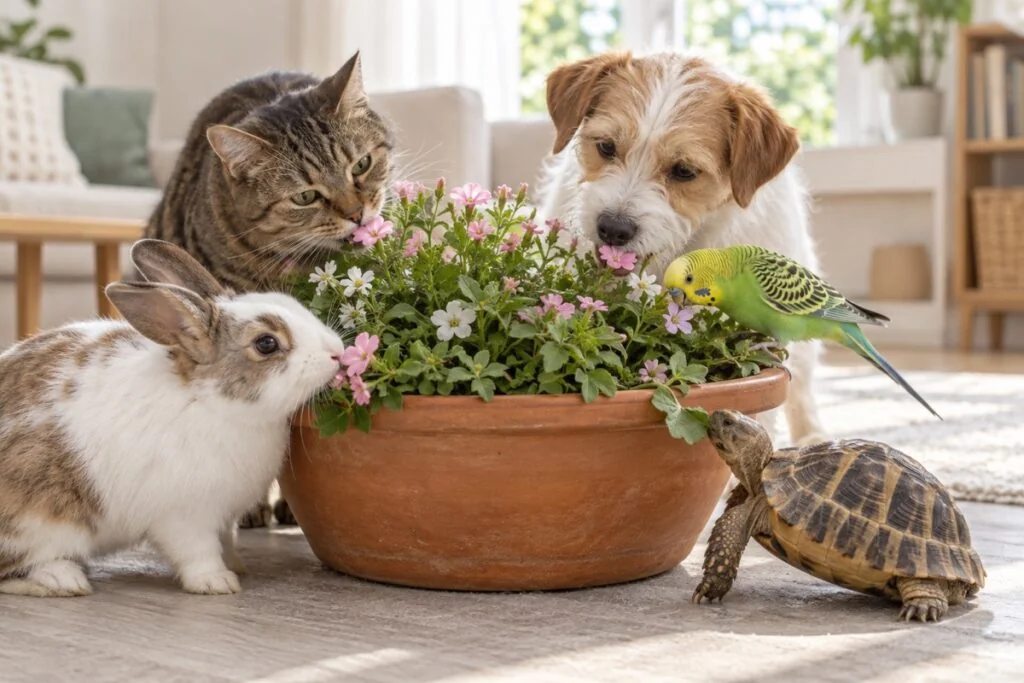
A few bite marks on the edge of the pot, a leaf fallen to the ground, or a flower plucked from a bouquet… The contact of pets with plants is sometimes only indicated by these small traces. In such cases, it is not only the amount ingested that is important. The type of plant, which part was contacted, and the species of the animal at home also alters the assessment.
If you suspect a potentially poisonous plant has been ingested, consult your veterinarian without waiting for symptoms. Especially in cats, contact with true lilies requires urgent evaluation, even if the animal appears normal at the time. FDA
Is the same plant equally dangerous for all animals?
No. A risk identified for cats cannot be similarly transferred to dogs, birds, or rabbits. Moreover, different parts of the plant, such as leaves, bulbs, seeds, and sap, can carry different risks. Descriptions like “natural,” “houseplant,” or “air-cleaning plant” do not indicate safety for animals.
The plant should be identified, if possible, by its scientific name. For example, true lilies and peace lilies are different plants. Deciding based solely on the common name or the result of a photo application can be misleading. The ASPCA's plant database is also categorized by animal species; the lists for cats and dogs are not a complete safety list for birds or rabbits. ASPCA plant database
| Plant | Animal Species | Significant Risk |
|---|---|---|
| True Lily (Lilium, Hemerocallis) | Cat | Severe kidney damage; contact with pollen and vase water is also important. Do not wait for symptoms. |
| Peace Lily and Calla Lily | Cat and Dog | Oral irritation and difficulty swallowing; these are not the same plants as true lilies. |
| Avocado | Especially birds; rabbits and guinea pigs are also sensitive | Weakness, refusal to eat, and difficulty breathing; risk of severe poisoning. |
This table does not cover all poisonous plants. A plant not listed should not be assumed to be safe.
Which plants should be watched out for at home and on balconies?
The following examples summarize common risks. A plant not listed should not be concluded as safe.
True Lilies: A Special Danger in Homes with Cats
Lilium and Hemerocallis species can cause severe kidney damage in cats. Not only ingestion of the flower, but also licking pollen that contaminates the fur and drinking vase water is significant. Therefore, placing the bouquet on a high shelf is not sufficient; it is safer to not bring these plants into a home with cats.
Peace lily (Spathiphyllum) and calla lily (Zantedeschia) are not evaluated with the same kidney toxicity. However, this does not mean they are harmless; they can cause oral irritation and difficulty swallowing. FDA's lily guide
Dumb Cane, Monstera, Philodendron, and Pothos
Dumb cane (Dieffenbachia), monstera (Monstera deliciosa), philodendron (Philodendron), and pothos (Epipremnum aureum) can cause issues due to insoluble calcium oxalate crystals that irritate oral tissues when chewed. Increased salivation, bringing a paw to the mouth, oral pain, and difficulty swallowing may be seen in cats or dogs. Saying “It took a bite and immediately dropped it” does not indicate the contact was insignificant. University of Florida plant guide
Sago: Even a Small Potted Plant Can Carry Serious Risk
Sago or sago palm (Cycas revoluta) may be mistaken for an ordinary ornamental palm due to its appearance. Especially ingesting its seeds or other parts can lead to severe poisoning in dogs. All parts of the plant are risky; its seeds are particularly important. Along with vomiting, diarrhea, and weakness, severe liver damage can develop. Do not waste time observing at home with suspected ingestion. ASPCA sago warning
Oleander, Azalea, and Kalanchoe
Oleander (Nerium oleander), grown on balconies and in gardens, contains substances that can affect heart function. It should not be assumed that dried leaves are safe. Gastrointestinal symptoms in cats and dogs can occur, along with heart rhythm disturbances. ASPCApro oleander guide
Azalea/rhododendron (Rhododendron) and kalanchoe (Kalanchoe) should not be seen merely as ornamental plants that cause mild stomach upset. Although they contain different toxic substances, they can have effects on circulation and the heart in serious cases. MSD Veterinary Manual
Tulip, Daffodil, Hyacinth, and Cyclamen
Animals that dig in the potting soil may reach the bulbs or tubers underground rather than the visible flower. The toxic substances in tulips (Tulipa) are especially concentrated in the bulb; vomiting, diarrhea, and increased salivation can be seen in cats and dogs. ASPCA tulip entry
Daffodil (Narcissus), hyacinth (Hyacinthus), and cyclamen's (Cyclamen) underground parts are also important. The severity of symptoms varies depending on the plant and the amount ingested; some exposures can be serious. It is necessary to keep bulbs waiting for planting and tubers emerging from the pot away from animals. MSD Veterinary Manual
Aloe Vera and Snake Plant
The use of aloe in human care products does not mean that a cat or dog will safely eat the aloe leaf in the pot. Some components of the leaf can cause vomiting, diarrhea, and weakness. ASPCA aloe entry
Snake plant (Dracaena trifasciata, formerly Sansevieria trifasciata) can also cause gastrointestinal complaints when ingested. The common presence of the plant in households is not a sign of safety. MSD Veterinary Manual
Which symptoms are important in cats and dogs?
Oral irritation and increased salivation, vomiting, diarrhea, pronounced weakness, staggering, tremors, seizures, or difficulty breathing should be taken seriously when poisoning is suspected. However, these alone do not indicate which plant was ingested. The absence of symptoms does not rule out dangerous exposure. Cornell Feline Health Center
The cat's chewing on the leaf should be considered as much as swallowing the substance while grooming its fur. In dogs, information about roots, bulbs, or seeds that have been taken out of the pot can be particularly helpful. When calling the clinic, instead of saying “the flower was eaten,” share the plant's photo and the details of the contact.
You can find the general first approach in our article what to do first in cat poisoning.
Birds and Plant Safety: Don’t Forget Avocado
For a budgerigar or parrot flying freely at home, a high shelf does not mean an inaccessible area. Keeping the pot away from the cage does not prevent the bird from pecking at the leaves during flight. When evaluating plants, all areas accessible to the bird should be considered.
Avocado (Persea americana) grown from seed at home requires special attention. The leaves and other parts of the avocado are associated with toxicity in birds. Weakness, refusal to eat, and difficulty breathing may develop; severe cases can be fatal. It is important not only to refrain from giving the fruit to the bird but also to prevent access to its leaves. Rabbits and guinea pigs are among the sensitive species to avocado as well. Merck Veterinary Manual – avocado toxicity
If your bird fluffs up, stays at the bottom of the cage, or has difficulty breathing after contact with a plant, do not attribute it only to feeling cold. Fluffing and weakness in birds can also be seen in other diseases; always inform the veterinarian about the history of plant contact.
Rabbits and Guinea Pigs: Being Herbivorous Does Not Provide Protection
Just because a rabbit is used to eating plants does not mean it can safely eat every leaf. RSPCA lists tulip, foxglove, and holly among risky examples for rabbits. Do not offer ornamental plants as food; do not leave fallen leaves and pruning waste accessible. RSPCA rabbit nutrition guide
Signs of poisoning in rabbits can vary. If there is a refusal to eat, changes in feces, and noticeable behavioral changes, do not delay assessment. Rabbits cannot vomit; attempting to induce vomiting can be dangerous. Do not administer medication or homemade mixtures without a veterinarian's suggestion. RSPCA rabbit poisoning guide
For situations like decreased feces alongside lack of appetite, you can read our article my rabbit is not eating. Plant selection for guinea pigs and other small mammals should also be done according to their species.
How should turtles and other reptiles be approached?
A tortoise eating greenery does not mean that all houseplants can be food. In turtles, nutrition is adjusted according to the species' natural diet; different species have different needs. MSD Veterinary Manual – turtle nutrition
Before placing a plant in the terrarium or roaming area, both the identity of the plant and its suitability for the relevant reptile species must be verified. Do not directly apply a list made for cats and dogs to turtles. Do not use leaves from uncertain sources, florist bouquets, or ornamental plants that may have been treated with pesticides as food. In cases of suspected ingestion, consult with a bird veterinarian and exotic animal veterinarian by sharing the full species name of the animal and a photo of the plant.
If you suspect a plant has been ingested, what should you do first?
- Prevent new exposure. Remove the animal from the plant; prevent other animals from accessing the same plant.
- Prepare information. Take photos of the entire plant, its leaves, flowers, and, if available, the label. Note the approximate time of exposure, the part that may have been eaten, and any symptoms observed.
- Call the veterinarian. Inform them of the animal's species, approximate weight, and any existing medical conditions. If safe to do so, bring a sample of the plant in a sealed bag; do not delay leaving to collect a sample.
- Do not try home treatments. Do not give salt or hydrogen peroxide to induce vomiting. Do not decide to use milk, yogurt, oil, human medications, or activated charcoal on your own. Forcibly giving liquids or food orally may also be inappropriate.
The aim in the initial steps is to seek help with correct information without increasing exposure. The treatment decision varies according to the plant and the patient. ASPCA initial approach, Cornell poisoning guide
If there is difficulty breathing, seizures, fainting, or inability to stand, reach the nearest veterinary clinic without delay. If toxic plant consumption is known, do not wait for symptoms to worsen. ASPCA emergency assistance guide
A small check to reduce risk at home
You can keep a list of the names of the plants in your home, along with pot labels if available. When a new plant or bouquet arrives, first check for suitability for the species of animal in your home. High shelves may not create a reliable boundary for cats and flying birds; a separate area that is physically inaccessible is a better arrangement.
Consider not only the leaves but also the vase water, fallen flowers, and bulbs waiting for planting. Keep packaging for fertilizers, insecticides, and plant care products. When there is a problem, the name of the product used is as important as the plant itself. ASPCA pet-friendly gardening guide
Frequently Asked Questions
My cat didn’t eat the lily, just touched the pollen. Should I still call?
Yes. If true lily pollen has contaminated the fur, the cat may ingest it while grooming. Consult with your veterinarian immediately while trying to prevent licking; seek guidance for cleaning. Do not wait for symptoms. FDA
Is peace lily as dangerous as true lily?
It does not have the same toxic effect. However, it can cause oral irritation, increased salivation, and difficulty swallowing. The name of the plant and the condition of the animal should be assessed together. FDA
My dog ate a leaf but looks fine. Can I wait at home?
It is not correct to say a safe waiting period without identifying the plant. Consult your veterinarian by sharing a photo and the time of exposure. Appearing normal does not exclude all poisoning risks. ASPCA
Is it enough to put the plant on a high shelf for my bird?
If a freely flying bird can reach that shelf, it is not sufficient. Keep the plant in an area inaccessible to the bird; do not use unverified branches suitable for its species as perches or toys in the cage.
Does a rabbit instinctively distinguish harmful plants?
Do not trust this; do not leave ornamental plants accessible. The rabbit's living and exercise area must be cleared of toxic plants. RSPCA
Is aloe vera considered safe because it is natural?
No. The content of a care product and the ingestion of the leaf in the pot are not the same situation. Aloe leaf can cause gastrointestinal symptoms in cats and dogs. ASPCA
Should I give milk or yogurt in case of suspected poisoning?
No; do not use these as antidotes at home. What to give must be decided by the veterinarian based on the plant, animal species, and clinical condition. ASPCA initial approach guide
Is identifying a plant from a photo sufficient?
A photo is helpful; if possible, the pot label and scientific name should also be shared. Do not take the name given by an application as definite due to visual similarities. Representative visuals in the article should also not be used for plant diagnosis purposes.
Veterinary Assessment for Suspected Plant Poisoning in Kağıthane
Çeliktepe Veterinary Clinic offers examination services for cats and dogs, as well as birds, rabbits, turtles, and other exotic animals. Sharing the species of the animal, the symptoms you observed, and a photo of the plant can facilitate the initial assessment in cases of suspected plant contact. Necessary examinations, follow-up, and laboratory evaluations will be planned according to the patient's condition.
Veterinarian Miraç Gürbüz — Çeliktepe Veterinary Clinic
Çeliktepe Mahallesi, Buhara Sokak No:8/A, Kağıthane / İstanbul
Phone: 0212 923 10 24 · Contact and Directions
This article is for informational purposes only and does not replace examination and a patient-specific treatment plan.

