
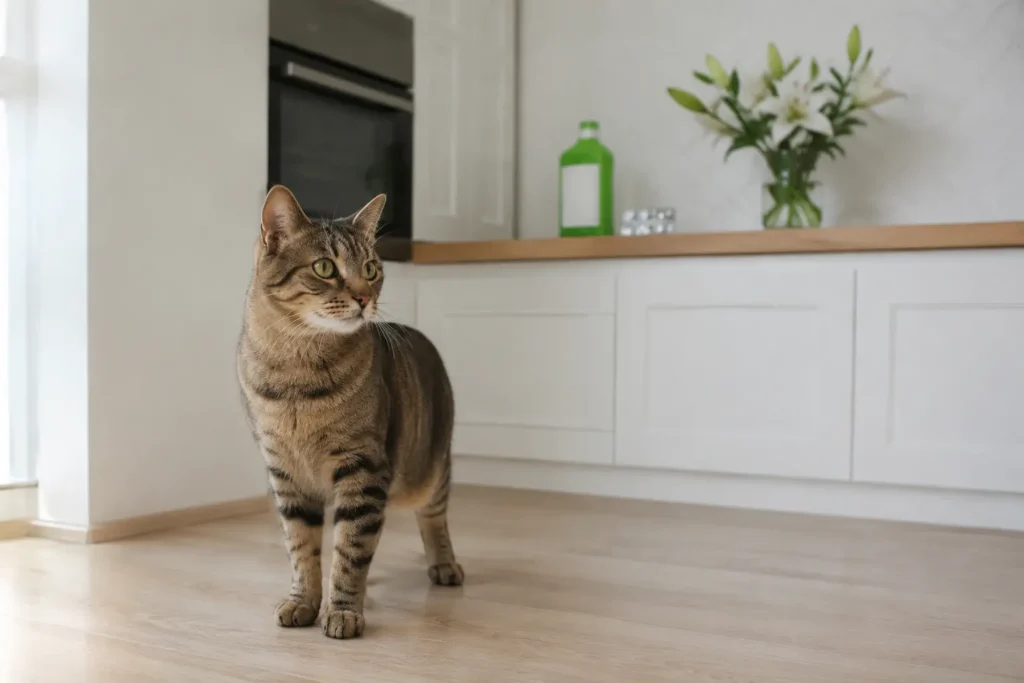
When you notice that your cat has swallowed a medication, chewed on a poisonous plant, or had a chemical substance spilled on it, the most valuable element is time. However, acting quickly does not mean intervening randomly at home. An incorrect attempt to induce vomiting, milk given unconsciously, or uncontrolled use of activated charcoal can lead to more severe consequences than poisoning itself.
If the theme is plants, you can examine the distinctions in our article about toxic plants at home and their risks according to the types of animals. You can find information about emergency evaluation on our emergency veterinary and critical care support page; do not delay contacting us while reading the article.
Cats cannot metabolize certain substances like dogs and humans can. Therefore, a medication that appears harmless to humans, a topical parasite product made for dogs, or just a little lily pollen can pose a life-threatening risk to cats.
Do not wait for symptoms to appear in case of suspected poisoning. First, terminate the cat's contact with the substance, gather product information, and contact the veterinary clinic.
What Should Be Done in the First Five Minutes?
As soon as you suspect poisoning, follow these steps:
- Remove the cat from the area where the toxic substance is present.
- Check its breathing, consciousness, and ability to stand.
- Safely remove the substance from the environment without touching it with bare hands.
- If possible, prevent the cat from licking itself.
- Keep the product packaging, label, or a sample of the plant.
- Note the estimated time of contact and the amount that may have been ingested.
- Call the veterinary clinic without wasting time.
- Do not attempt to induce vomiting, give medication or food unless directed by the clinic.
If the cat is trembling, having seizures, struggling to breathe, or has lost consciousness, do not delay going due to the phone call. Safely place the cat in a carrier and take it to the nearest veterinary clinic.
Should a Cat Be Induced to Vomit When Poisoned?
A cat should not be induced to vomit at home unless explicitly recommended by a veterinarian.
Some vomiting methods that are sometimes used in dogs can be ineffective or dangerous for cats. Specifically, hydrogen peroxide, saltwater, mustard, soapy water, and similar methods should not be applied.
Inducing vomiting can lead to much more serious consequences in the following situations:
- If caustic substances such as bleach, drain cleaners, or acids have been ingested
- If contact was made with products that risk aspiration into the lungs such as gasoline, kerosene, or thinner
- If the cat is disoriented
- If there are seizures, tremors, or balance loss
- If the swallowing reflex is weakened or if there is difficulty breathing
- If a sharp or cutting object was ingested
- If a long time has elapsed since contact
The decision to induce vomiting can only be made after evaluating the type of substance, the amount ingested, the time that has passed, and the cat's clinical condition. Safe vomiting in cats, if deemed necessary, is performed in the veterinary clinic under appropriate medication and supervision.
What Are the Signs of Poisoning in Cats?
Signs of poisoning vary depending on the substance ingested. Some toxins may show symptoms within minutes, while others may not display any noticeable signs until liver or kidney damage has progressed.
- Excessive salivation from the mouth, vomiting, or diarrhea
- Lack of appetite, lethargy, and hiding
- Scratching around the mouth with its paw
- Loss of balance and stumbling
- Muscle twitching, widespread shaking, or seizures
- Rapid, slow, or irregular breathing and open-mouth breathing
- Abnormal enlargement or constriction of the pupils
- Pale, yellowing, or bruised gums
- Increase or decrease in body temperature
- Irregular heart rhythm and abdominal pain
- Excessive restlessness or unusual lethargy
- Increased, decreased, or completely ceased urination
- Sudden collapse and loss of consciousness
The absence of symptoms does not indicate that there is no danger. Especially in cases involving lilies, acetaminophen, and antifreeze, the early period may appear calm.
What to Do if a Toxic Substance Is on the Fur or Skin?
If a chemical substance is on the fur, the cat should be prevented from licking and swallowing it. Wearing gloves during intervention protects both the cat owner and the cat.
If a powdered substance is on the fur, pouring water directly may cause some products to dissolve and spread more. Excess powder should be carefully removed to prevent inhalation.
If there is contact with liquid chemicals or topical parasite products containing permethrin made for dogs, the veterinary clinic should be contacted. Washing may be required with lukewarm water and a suitable cleanser under the direction of the veterinarian.
If the cat is already trembling, having seizures, or extremely agitated, do not waste time washing at home. Washing a cat with neurological signs can increase the risk of falling, hypothermia, and aspiration.
What to Do If a Chemical Substance Gets in the Eye?
The eye that has been exposed to a chemical must be rinsed immediately with plenty of lukewarm water or sterile saline. During rinsing, the cat's face should be held in a way that prevents the fluid from running into the other eye or the mouth.
Even if there is no redness, squinting, excessive tearing, or cloudiness, a veterinary examination is required. Human eye drops, ointments, or neutralizing chemicals should not be applied.
Is Milk, Yogurt, or Oil Given to a Poisoned Cat?
No. Milk, yogurt, buttermilk, olive oil, eggs, or lemon juice are not a general antidote for poisoning.
- They may not prevent toxin absorption.
- They may increase the absorption of some toxins from the intestine.
- They may trigger vomiting.
- They may end up in the lungs of cats with altered consciousness.
- They may complicate procedures to be done at the veterinary clinic.
For the same reason, randomly giving activated charcoal at home is also not correct. Activated charcoal does not bind every toxin, and it should not be used for certain substances. Administering it orally to unsuitable patients can pose an aspiration risk.
Particularly Dangerous Substances for Cats
Medications containing acetaminophen
Acetaminophen is extremely toxic to cats. Cats have limited capacity to metabolize this medication safely. Exposure may impair the ability of red blood cells to carry oxygen and can lead to serious liver damage.
Swelling in the face and paws, rapid or labored breathing, lethargy, vomiting, a brownish or purplish appearance of the gums, and jaundice can be observed. Under no circumstances should acetaminophen be given to a cat without a veterinarian's recommendation.
Types of lilies
True lilies, known as Lilium and Hemerocallis, can cause severe kidney damage in cats. In addition to eating the leaves or flowers, pollen getting on the fur, the cat licking the pollen-coated fur, chewing on the stem, or drinking the water from the vase can also pose a risk.
Even if the cat appears completely normal after contact with lilies, an emergency veterinary evaluation is necessary. Early intervention increases the chances of success when done before kidney failure develops.
Permethrin-containing external parasite products for dogs
Some dog external parasite drops may contain high concentrations of permethrin. Cats cannot metabolize this substance quickly enough. It is risky to apply it directly to a cat or even to have contact with a dog that has been treated with the product before it dries.
Muscle twitching, trembling, excessive salivation, agitation, loss of balance, seizures, and increased body temperature may be observed. The product packaging should be taken to the clinic.
Antifreeze
Ethyleneglycol found in antifreeze can cause serious kidney damage even in small amounts. In the early period, symptoms such as stumbling, vomiting, and lethargy may be observed, while the cat may appear to improve for a while. This temporary appearance does not mean that kidney damage has stopped. Because the time frame for treatment is limited, symptoms should not be awaited.
Human painkillers and other medications
Ibuprofen, naproxen, certain antidepressants, ADHD medications, sleeping pills, and other prescription or over-the-counter products can lead to poisoning in cats. The medicine's packaging and the number of missing tablets, if possible, should be brought to the clinic.
Cleaning products and volatile substances
Bleach, drain cleaners, surface cleaners, disinfectants, detergent capsules, paint solvents, and concentrated essential oil products can harm through the mouth, eyes, skin, respiratory system, or digestive system. Trying to neutralize the substance with another chemical can lead to additional burns and toxic gas formation.
Rodent and insect poisons
Not all rodent poisons contain the same active ingredient. Some can cause bleeding, some brain and nervous system damage, and others can lead to serious kidney problems. Simply knowing that a cat "ate rat poison" is not sufficient for selecting treatment; seeing the active ingredient on the packaging is crucial.
What Should You Bring When Going to the Clinic?
- The original packaging of the product and active ingredient information
- A photo of the plant or a safely collected sample
- The approximate time of contact and the amount of product that is missing
- The cat's current weight
- A short video of the initial symptoms
- Information about any treatments done at home
- The regular medications used by the cat and known illnesses
Do not examine the cat's vomit with bare hands. If necessary, use gloves to place it in a closed and leak-proof container to take to the clinic.
How Is Poisoning Diagnosed in Cats?
There is no special test that produces rapid and conclusive results for every toxin. Diagnosis is often made by evaluating the contact history, clinical signs, and laboratory results collectively.
Depending on the case, physical and neurological examinations, blood count, liver and kidney values, blood sugar and electrolytes, urine analysis, coagulation tests, blood gas, radiography, ultrasonography, heart rhythm, and blood pressure monitoring may be performed.
Normal initial blood results do not completely rule out some poisonings. In substances that may cause delayed organ damage, tests may need to be repeated at specific intervals.
How Is Treatment Planned in the Veterinary Clinic?
There is no single and standard treatment for poisoning. Treatments are determined based on the substance ingested, the time that has passed, and the general condition of the cat.
- Controlled vomiting in suitable patients
- Safe cleaning of fur and skin
- Activated charcoal under veterinary supervision
- Substance-specific antidote
- Intravenous fluids and oxygen support
- Control of seizures and tremors
- Monitoring of body temperature, heart rhythm, and blood pressure
- Support for liver or kidney
- Blood products, intensive care, and hospitalization for observation
Early intervention can reduce toxin absorption and enable treatment to begin before organ damage develops.
What Should Absolutely Not Be Done at Home?
- Attempting to induce vomiting with saltwater or hydrogen peroxide
- Poking fingers or objects in the throat
- Giving milk, yogurt, oil, or raw eggs
- Using human medications
- Giving activated charcoal without a veterinary recommendation
- Giving water or food to a disoriented cat
- Holding a cat that is having seizures tightly
- Attempting to neutralize a chemical with another product
- Waiting for symptoms to appear
In poisonings, the correct first aid is often not to "give something at home," but to avoid incorrect interventions and promptly take the cat to the clinic.
What to Do if a Cat Is Having a Seizure?
Remove any hard and sharp objects from around the cat. If it's on a high surface, prevent it from falling, but do not attempt to forcibly hold it down. Do not put your hand or any object in its mouth.
Time the duration of the seizure and, if you can safely record a short video from a safe distance, do so. Keep the environment dim and quiet and urgently take the cat to the clinic.
How Can Poisoning Be Prevented?
- Store human medications in locked cabinets.
- Keep bags and weekly medication containers out of the cat's reach.
- Check the scientific name of the plants brought into the home and do not bring lily species into a home with cats.
- Do not apply dog topical parasite products to cats.
- Immediately close the lids of cleaning products after use.
- Thoroughly clean areas where antifreeze and automotive chemicals have spilled.
- Do not give any medications to the cat without veterinarian recommendation.
If your cat is vomiting or retching fruitlessly, you may also want to check our article entitled Hairballs in Cats: When Is It Normal, When Is It Dangerous?.
Frequently Asked Questions
What should I do first if I suspect my cat has been poisoned?
Remove the cat from the toxic substance, check its breathing and consciousness status, keep the product packaging, and call the veterinary clinic. Do not wait for symptoms to appear and do not attempt to induce vomiting on your own.
Is milk safe for a poisoned cat?
No. Milk is not a general antidote for poisonings. It may increase the absorption of some substances or lead to the risk of vomiting and aspiration.
Can a cat be induced to vomit at home when poisoned?
It should not be induced to vomit unless clearly directed by a veterinarian. Salt, hydrogen peroxide, soapy water, or throat stimulation can cause dangerous outcomes in cats.
Is touching lily pollen dangerous for a cat?
Yes. Pollen can be ingested after getting on the fur. Contact with true lilies and day lilies can require emergency evaluation, including pollen, leaves, flowers, and vase water.
Can dog topical parasite drops harm a cat?
Some products containing permethrin are highly toxic to cats. They can cause muscle twitching, salivation, trembling, and seizures. If applied accidentally, prompt attention must be sought at the clinic along with the packaging.
How soon do poisoning symptoms appear?
The time frame can vary from minutes to several days depending on the toxin. Some cats may appear healthy in the first hours only to later develop kidney or liver damage.
Will a poisoned cat recover?
The prognosis depends on the type of toxin, amount ingested, the timing of the treatment, and whether organ damage has occurred. Early presentation usually increases the success of treatment in most cases.
Can I give activated charcoal to my cat at home?
No. Activated charcoal does not bind every toxin and is not suitable for every patient. There is a risk of aspiration in cats with altered consciousness. It should only be administered by a veterinarian's decision.
Conclusion
Suspected poisoning in cats should be taken seriously, even if the symptoms are mild or no symptoms have yet appeared. At-home treatments like inducing vomiting, giving milk, or using random medications can complicate treatment.
The safest approach is to remove the cat from the toxic substance, gather information on the product and contact, communicate with the veterinary clinic, and take the cat for examination without delay.
Çeliktepe Veterinary Clinic handles suspicions of poisoning in cats from medications, plants, chemicals, and external parasite treatments with clinical examinations, laboratory evaluations, and individualized supportive treatments.
Veterinarian Miraç Gürbüz
Çeliktepe Veterinary Clinic – Kağıthane / İstanbul
This content is prepared for informational purposes only. It does not replace veterinary examination and individualized emergency treatment.

