
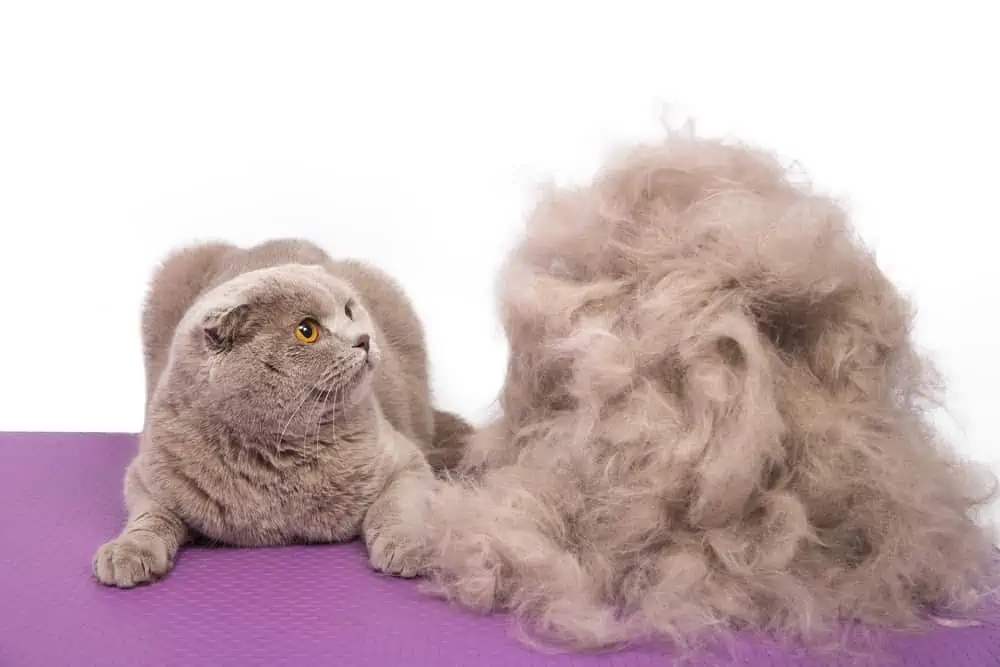
Your cat may occasionally gag and produce a long, furry mass, and you might think it's a hairball. Most of the time, this is indeed the case. Cats spend a significant part of the day grooming themselves and during this process, they swallow some of the loose fur that falls out.
However, not every gagging or vomiting means "hairball".
More importantly, frequently recurring hairball problems can sometimes signal another issue related not just to fur but to your cat's digestive system, skin, or overall health.
How Does a Hairball Form?
Cats are extremely meticulous animals. While grooming themselves, they swallow loose fur thanks to the small, backward-facing structures on their tongues.
Most of the swallowed fur passes through the digestive system and is excreted in the stool. However, some may accumulate in the stomach and, over time, adhere together to form a hairball.
This formation, known in veterinary medicine as trichobezoar, is often not truly round. It typically takes on a long, cylindrical appearance.
Is Every Hairball Normal?
No.
It may not be a serious problem for a healthy cat to expel a hairball occasionally. However, an increase in frequency, ongoing gagging, or attempts to vomit repeatedly without bringing up a hairball should not be considered normal.
Particular attention should be paid to the following signs:
- Repeated gagging or vomiting
- Constant attempts to vomit without producing a hairball
- Lack of appetite
- Weakness
- Changes in bowel habits
- Signs of discomfort or pain in the abdomen
- Decreased desire to play
- Increased hiding behavior
If your cat shows one or more of these signs, it may not be wise to wait and assume "it's just a hairball."
Can Hairballs Cause Intestinal Blockage?
Though rare, yes.
A large mass of fur accumulating in the stomach can cause an obstruction in the intestines when it cannot move through the digestive system. Intestinal blockage is a serious and life-threatening condition. In some cases, surgical intervention may be required.
Therefore, if your cat is gagging repeatedly but not bringing anything up, or if this is accompanied by a lack of appetite and weakness, you should not delay consulting a veterinarian.
Beware If You Think “My Cat Is Coughing”!
Gagging in cats can be mistaken for coughing.
If your cat is crouching, extending its neck forward, and gagging repeatedly, a hairball might come to mind. However, repetitive coughing, especially if it continues without producing any hairball, could be a sign of another respiratory issue.
For example, some respiratory diseases may be mistaken for a hairball.
Thus, it is important for a veterinarian to evaluate any "repeated hairball attempts." The Cornell Feline Health Center also notes that persistent and unsuccessful gagging may not always be hairball-related.
How Can You Reduce Hairballs in Cats?
It is not always possible to completely prevent the formation of hairballs. However, you can reduce the amount of fur swallowed with regular grooming.
1. Groom Regularly
One of the most effective and simple ways is regular grooming.
Removing loose and fallen fur during grooming can decrease the amount of fur your cat swallows while cleaning itself. This is even more important for long-haired cats.
2. Pay Attention to Shedding Seasons
Your cat may swallow more fur than normal during periods of increased seasonal shedding.
Increasing grooming frequency during these times can help reduce the amount of fur in your home and allow you to control the loose fur your cat swallows.
3. Don’t Ignore Excessive Licking
If your cat is constantly licking itself and you notice reduced fur in specific areas, don’t just explain it by saying it's "very particular about cleanliness."
Excessive licking may be related to itching, skin issues, parasites, allergies, or certain pain conditions.
If you see significant fur loss, especially around the abdomen, legs, or tail, a veterinary check-up would be advisable.
Should I Use Hairball Paste?
Various products aimed at reducing the formation of hairballs are available on the market.
However, it is not correct to give your cat any product, especially one that you will use regularly, without consulting your veterinarian.
This is because recurring vomiting or gagging may not only be related to hairballs. The underlying issue must be identified first.
When Should You See a Veterinarian?
It is important to consult your veterinarian in the following situations:
If your cat is constantly gagging, but not bringing anything up.
If there is recurring vomiting.
If it has stopped eating.
If it has noticeably become weak.
If there are changes in bowel habits.
If you notice pain or tenderness in the abdominal area.
If there is excessive licking or noticeable fur loss.
Especially if there are signs like recurrent and unproductive gagging, lack of appetite, or weakness, a veterinary evaluation is necessary instead of waiting.
Conclusion: Not Every Gagging is a Hairball
It may not be concerning for your cat to expel a hairball from time to time. However, frequent occurrences or manifestations alongside other signs should not be regarded as normal.
Observing your cat's daily behavior is crucial in early detection of health issues.
Because cats can hide their discomfort for a long time. Therefore, even small changes in their appetite, movements, bathroom habits, or grooming behavior can be significant.
Remember:
A hairball is sometimes just a hairball. But sometimes it is your cat's way of telling you "something is not right."
If you notice recurrent vomiting, gagging, lack of appetite, or behavioral changes in your cat, do not neglect to seek evaluation from your veterinarian.
For recurrent vomiting and gagging, a general examination and internal medicine assessment is necessary. For itching associated with excessive licking, flea control in cats should also be evaluated. You can contact our clinic for a check-up.
If there is open-mouth breathing or significant respiratory distress, seek emergency veterinary evaluation without waiting for it to expel the hairball.
Author: Veterinarian Miraç Gürbüz

