
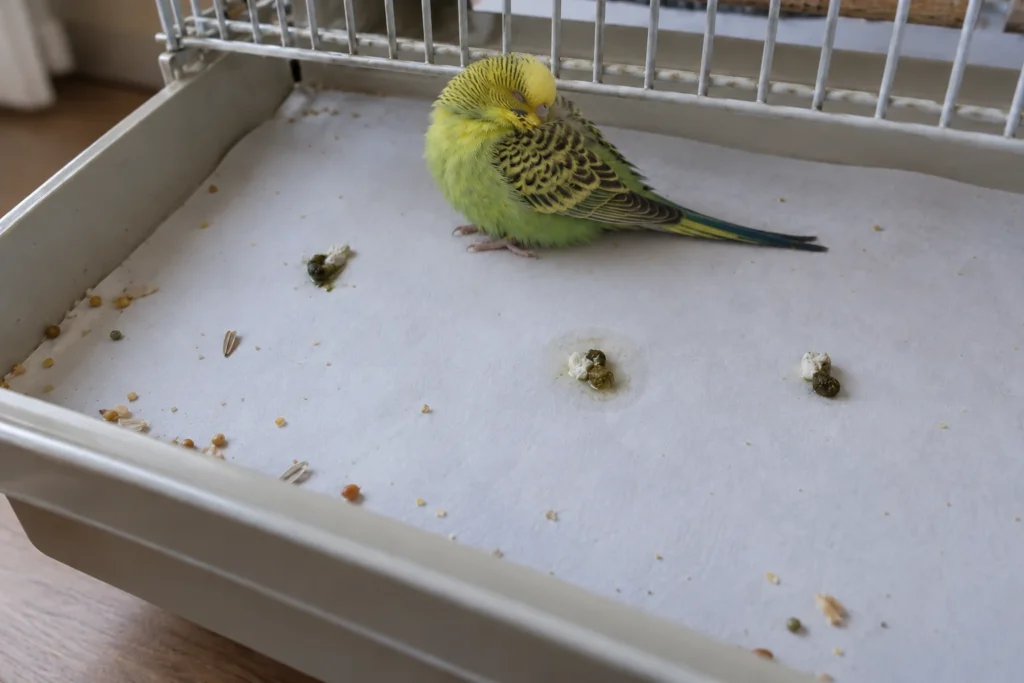
Seeing runny droppings on the bottom of a budgerigar's cage, noticing a change in the color of the parrot's droppings, or finding whole seed pellets in the droppings can be concerning. However, not all of these findings mean the same thing. Factors such as diet, water intake, the species of the bird, and overall health should be assessed together.
The color of the droppings or a photograph alone does not provide a diagnosis. What is important is to understand which part has changed and whether the change is accompanied by loss of appetite, lethargy, vomiting, or weight loss.
What does normal bird droppings look like?
Birds excrete droppings and urine from the same opening. Typically, a dropping seen on the bottom of the cage consists of three sections:
- Droppings: The section that comes from the digestive system, usually shaped and in green-brown tones.
- Urate: The section that is generally white or cream-colored and appears denser.
- Urine: The clear liquid that can be seen around the other sections.
This appearance can vary between species and dietary habits. Therefore, a single “normal stool photo” is not a criterion for all birds. Knowing the bird's usual appearance makes it easier to notice any new changes. Observing fresh droppings on clean, light-colored paper also helps differentiate the sections.
Is diarrhea the same as runny droppings in birds?
Not every runny dropping is diarrhea. In diarrhea, the main section that changes is the droppings themselves: they lose shape and become loose or liquid. In polyuria, the amount of urine increases; a wider area of fluid can be seen surrounding the formed droppings. Both conditions can occur simultaneously.
This distinction is important; the investigation of a problem originating from the digestive system may not proceed in the same way as an increase in urine volume. Simply saying “diarrhea” based on excessive dampness of the cage paper can lead to a misinterpretation of the finding.
Why does a budgerigar have runny droppings?
After consuming fruits and vegetables with high water content, the liquid section may increase. Temporary stress can also affect the appearance of droppings. Conversely, prolonged runniness without a significant dietary change, increased thirst, changes in appetite, or weight loss requires examination. Kidney-related issues, certain infections, and other systemic diseases may also need to be evaluated.
What is stress droppings in birds?
The appearance referred to as “stress droppings” by bird owners is when droppings appear temporarily more runny after fear or excitement. It can occur in situations that stress the bird, such as capture, transport, or unusual environments. This term does not, by itself, constitute a disease name or a definitive diagnosis.
During stress, the amount of urine may increase; a greater amount of clear liquid can be seen around the formed droppings. This is not the same as true diarrhea. In diarrhea, the section of droppings loses its consistency and shape. Therefore, assessment should consider not only how wet the paper is but also the appearance of the droppings.
When the bird calms down, the droppings returning to their usual appearance may support the effect of temporary stress. However, one should not conclude “it was due to stress” based solely on a photo or thinking the bird was scared recently. Stress and illness can occur simultaneously.
It is advisable not to capture the bird unnecessarily, provide a calm environment, and ensure access to clean water. If the runny appearance persists, occurs frequently, or if there is excessive thirst, loss of appetite, puffing up, lethargy, vomiting, or blood, a veterinary evaluation is necessary. Do not expect a sick-looking bird to improve simply because it has calmed down.
What do changes in droppings color indicate?
Green droppings
Green hues can be normal in some birds depending on diet. A newly introduced food can change the color of the droppings. However, if the bird is not eating, is puffing up, or if the change in the appearance of the droppings continues, it should not be attributed solely to diet. Different possibilities, including issues related to the digestive system and liver, should be investigated.
Here, the first question should not be “What disease causes green droppings?” but rather “Is it the droppings section that is turning green, or is it the urate section which is normally white?” Color alone does not indicate the name of a disease.
Red or black droppings
Some foods and pigments in seeds can produce red or dark colors. However, visible blood, recurring redness, or tar-like black droppings should be evaluated immediately for bleeding. It may not be safely discerned at home which source the blood is coming from, such as the digestive, urinary, or reproductive systems.
Why is a change in the color of urates important?
Urates that are normally light-colored turning yellow, green, or another color also require attention. Sometimes, the mixing of droppings pigments affects appearance; sometimes there is indeed a change in the urate section.
This finding alone does not prove a specific organ disease. It should be evaluated along with dietary history, products used, examination findings, and blood tests if necessary. If a lack of appetite or general health deterioration accompanies the change, it should not be ignored.
Is excessive droppings always a sign of illness?
It can be observed that the first dropping in the morning is larger than those throughout the day, or that a bird that holds droppings for a while during the egg-laying period produces more droppings. A single large dropping is not the same as an increase in volume and frequency throughout the day.
When there are continuous changes, the bird's diet, weight, digestive status, and accompanying symptoms are examined. Intestinal diseases and some parasites are also among the possible causes. If the bird appears to be eating a lot but is losing weight, this should also be further investigated.
Presence of undigested food in the droppings
It should first be ensured that the seeds spilled on the bottom of the cage did not later mix with the droppings. The presence of whole or notably undigested seeds in fresh droppings may suggest that there is an issue in the digestion process.
Diseases associated with factors such as Macrorhabdus and other gastrointestinal issues may be evaluated; however, this appearance does not alone mean “there is a fungus.” If accompanied by weight loss or vomiting, examination becomes even more important. To differentiate between vomiting and regurgitating food, you can refer to our article on vomiting in birds and emergency signs.
As some factors can be intermittently excreted with droppings, their absence in the initial sample does not guarantee their exclusion. A veterinarian may recommend taking samples at different times or additional tests if deemed necessary.
How to evaluate foul-smelling droppings?
The smell of fresh droppings should be distinguished from the smell of droppings that have been sitting on the cage bottom mixed with water and food residues. A distinct and recurring foul smell; the consistency of the droppings, whether blood is present, and the general condition of the bird should all be taken into account.
The smell alone cannot distinguish between bacteria, fungus, or parasites. If straining, blood, or soiling around the cloaca accompany the droppings, examination is necessary.
What signs should you not wait for?
If any of the following accompany a change in droppings, contact a veterinarian without delay:
- Visible blood or tar-like black droppings.
- Pronounced lethargy, not eating, or inability to perch.
- Recurrent vomiting or difficulty breathing.
- Significant weight loss.
- Continuous straining, inability to defecate, or swelling around the cloaca.
It is not correct to wait for self-resolution of droppings in a sick-looking bird.
What tests can be done for diagnosis?
The evaluation begins with the bird's species, diet, medications and supplements used, duration of symptoms, and examination findings. If necessary, macroscopic and microscopic examination of the droppings, parasite investigation, appropriate staining, bacterial or fungal cultures, and if indicated, antibiotic sensitivity testing can be performed. Complete blood count, biochemical tests, imaging, and PCR tests targeting specific agents can also be utilized.
Not every bird requires all tests to be performed. The examinations are selected to differentiate possible causes. Laboratory and advanced diagnostics are used to complement rather than replace the examination.
What can you do at home until the examination?
Ensure the bird has access to familiar food and clean water. Do not restrict water intake to dry out the droppings. Do not initiate antibiotics, anti-diarrheal medications, or any other drug on your own; treatment for birds is planned based on many factors, including species and body weight. You can also find more information about medication use in birds and exotic animals.
Note the foods given recently and the products used. Take a photograph of fresh droppings on a clean, light-colored surface; if you are bringing a sample, ask the clinic about storage and transport conditions. If there are emergency signs, do not delay the visit to collect samples. Keep the bird in a calm environment; prevent sharing feeders and waterers with other birds.
Evaluation of changes in droppings in birds
At Çeliktepe Veterinary Clinic, changes in droppings are evaluated by considering the bird's species, diet, examination findings, and necessary tests together. The aim of our bird veterinary service is not only to change the appearance of the droppings but to determine the reason for this change.
Frequently Asked Questions
Why does a budgerigar get diarrhea?
Changes in diet, intestinal diseases, and certain infections can alter the consistency of droppings. However, not every runny dropping is diarrhea; the increase in urine surrounding formed droppings can create a similar appearance. The cause is investigated with the bird's general condition and examination findings.
What to do when a budgerigar has diarrhea?
Ensure the bird has access to clean water and familiar food; provide a calm environment. Do not restrict water, and do not administer medications on your own. It is helpful to take a photo of the droppings and note recent dietary changes. If there are signs of loss of appetite, lethargy, vomiting, or blood, do not delay the visit.
How does diarrhea resolve in a budgerigar, and how is treatment determined?
Treatment is planned according to the cause of the change in droppings. Dietary and care adjustments, necessary support, and, in suitable cases, disease-specific treatments are evaluated together. The same medication or the same list of tests is not appropriate for every bird.
Is anti-diarrheal medication given to budgerigars?
Without a veterinary assessment, anti-diarrheal medications, antibiotics, or any other medications should not be initiated. Antibiotics may not be effective in non-bacterial issues; unnecessary use can also disrupt intestinal flora. Medication choice is made based on the species, weight, and diagnosis of the bird.
Can diarrhea be fatal in a budgerigar?
A change in droppings alone does not indicate the severity of a disease. However, it may indicate a serious illness; especially if accompanied by not eating, significant lethargy, vomiting, bleeding, or inability to perch, emergency evaluation is required. It is not correct to expect self-resolution in a sick-looking bird.
How to differentiate between stress droppings and watery droppings due to illness?
The onset of droppings after a stressful event that returns to normal in a calm environment may suggest temporary stress effects; however, it does not provide a definitive distinction. Persistent or recurrent changes with loss of appetite, lethargy, and other signs of illness require examination.
This content is for informational purposes only; it does not substitute for a veterinary examination.

