
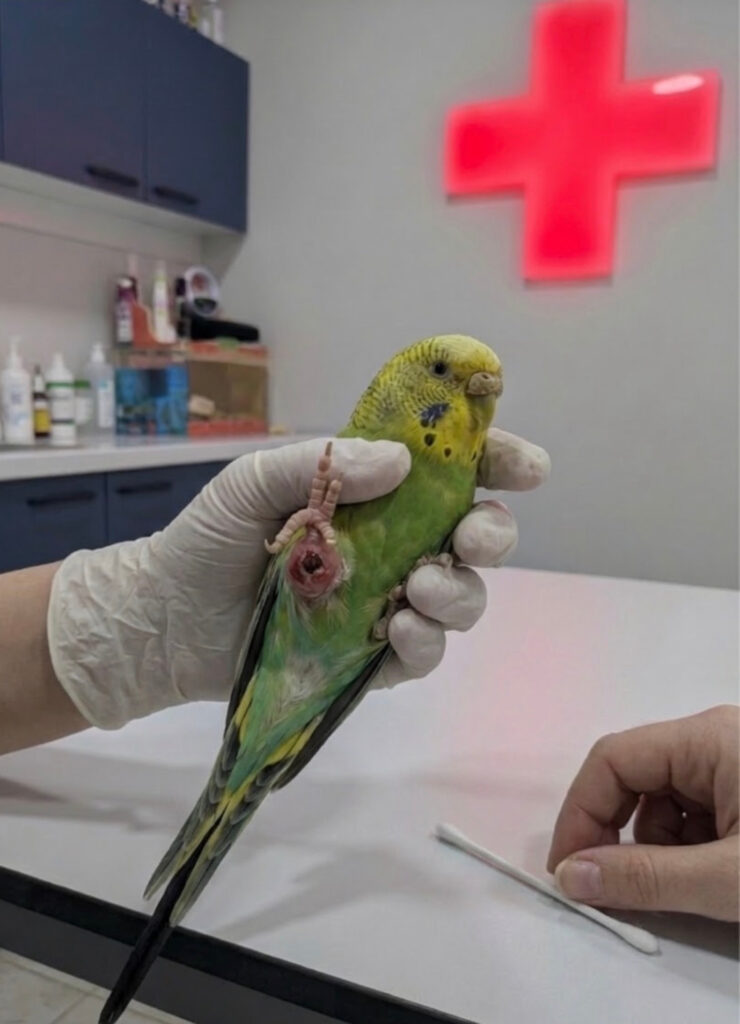
If your bird is constantly lifting one foot, changing places on the perch, or unable to perch comfortably as before, there may be a painful issue in the footpad. The presence of redness, shininess, scabs, or open wounds on the foot should not be dismissed with the thought of “it's just a callus, it will pass.” In birds, pododermatitis is a condition that develops due to damage and inflammation of the tissues on the footpad, sometimes accompanied by an infection. It is referred to as "bumblefoot" in English sources.
The issue can be seen in budgerigars, cockatiels, and other parrots. Initially, there may only be a slight surface change, but in progressed cases, it may become difficult to land and grasp the perch. Since there are other diseases that can lead to limping, the entire leg and the bird's overall condition are examined during the examination.
How can you tell if there is a footpad injury?
The first change is not always a bleeding wound. A portion of the footpad skin that normally appears textured may become smooth, shiny, or reddened. Later, thickening of the skin, dark scabs, swelling, or open wounds may develop. One foot may appear different from the other; it is also possible for both feet to be affected simultaneously.
The bird may put less weight on the painful foot, reduce its movement, or frequently change positions on the perch. The absence of noticeable limping does not indicate that the footpad is healthy. Even if the bird is walking normally, pay attention to any new redness or scabbing on the footpad. Do not force the bird to pose for photographs; a short video showing its natural posture can also assist in the examination.
What causes pododermatitis in birds?
Continuous pressure applied to the same spot
A bird that spends most of its day on the same type of perch may have pressure concentrated in certain areas. Unsuited thickness, excessive hardness, or abrasive surfaces add friction to this pressure. Sandpaper perches can irritate the sensitive skin on the footpad. Just labeling a perch as “natural” or “plastic” is not sufficient to declare it suitable for the bird; its diameter, surface texture, cleanliness, and how well it is grasped must be evaluated together.
Moisture, contamination, and skin damage
Surfaces contaminated with droppings or leftover food that remain constantly moist negatively affect skin health. When the protective integrity of the skin is compromised, bacteria can reach the underlying tissues. An injury that starts with pressure damage may later be accompanied by infection. Therefore, it would not be correct to label the redness in the early stages as an abscess.
Nutrition, weight, and another leg issue
Excess weight increases the load on the feet. Insufficient and unbalanced nutrition can also affect skin health. Additionally, a bird that has pain or an old injury in one leg may put more weight on the other foot, potentially leading to problems there as well. It is important to check the other leg during the examination and observe how the bird is stepping.
What signs should you not ignore?
If the bird cannot put any weight on its foot, cannot stand on the perch, or has significant swelling or open wounds, it requires veterinary evaluation on the same day. Seek help immediately in the case of active bleeding, rapid deterioration, significant lethargy, or decreased food intake. Even if the foot issue seems minor, deterioration in the overall condition is significant.
Progressing infection can affect not only the skin but also the tendons, joints, and bone. When deep damage occurs, treatment becomes more challenging, and the foot's functionality can be permanently affected. The size of a dark scab does not solely indicate the depth of the underlying issue.
What can you do at home until examination?
Keep the bird in a calm environment. Place food and water where it can reach easily; if it is losing balance, create a secure setup to prevent it from falling from a height. Clean and dry any contaminated surfaces, and remove abrasive perches from use. Temporary adjustments are not meant to postpone the examination but are instead to reduce additional pressure and the risk of injury.
Do not tear off the scab, press on the swelling, or attempt to clean the wound by cutting. Avoid using pain relievers made for humans, random creams, caustic disinfectants, or antibiotics. Do not apply tight bandaging without being shown how; improper wrapping can create new pressure and circulation issues. If you have any used products, bring their packaging to the examination.
How is diagnosis and treatment planned?
The veterinarian evaluates both feet, nails, posture, and body condition. Photos of the cage and perches, daily feeding information, and when the symptoms started can be helpful. In cases of suspected deep infection or bone involvement, an X-ray; in suitable cases, bacteriological culture and antibiotic sensitivity testing may be considered. Investigations are selected based on the depth of the wound and examination findings. You can find the reasons for a species-specific approach in our article on bird and exotic animal veterinary care.
The goal of treatment is to reduce pressure, control pain, and manage any existing infection. Improving care conditions may be essential in early and superficial lesions; in more advanced cases, wound care, appropriate bandaging, medication, or surgical cleaning may be planned by the veterinarian. The need for antibiotics will be determined based on the signs of infection. The depth of the wound also changes the extent of care that will be applied.
How can the risk of recurrence be reduced?
Use clean and dry perches that offer appropriate diameter and surface variety. Provide resting areas where the bird can grasp comfortably. Check worn or contaminated materials. Plan nutrition and weight management according to the bird's species; do not suddenly deprive it of food to lose weight. Instead of forcing exercise during painful periods, establish a movement plan with the veterinarian.
Even if the wound shrinks, it is essential not to skip follow-up checks. Safe weight-bearing, skin healing, and resolving the conditions that led to the issue should be monitored together.
For appointments and preparation information for an examination at Çeliktepe Veterinary Clinic, please visit our bird veterinary service page.
Frequently Asked Questions
My budgerigar is lifting one foot; is it definitely sick?
It may be normal for it to tuck one foot while resting. However, if it is constantly protecting the same foot, accompanied by redness, swelling, or difficulty gripping, it should be evaluated for pain.
Is the wound on my budgerigar’s footpad a fungus?
A diagnosis of fungus cannot be made based solely on the appearance of the wounds or scabs on the foot. In pododermatitis, skin damage caused by pressure and friction, care conditions, and any secondary infection are investigated. Beak and foot mites and fungal infections can also be distinguished during the examination; samples may be taken if needed. Do not apply antifungal medication without a diagnosis.
Can I remove the black scab on the footpad?
No. There may be sensitive or infected tissue beneath the scab. Tearing it off at home can result in bleeding and additional tissue damage; necessary cleaning will be planned by the veterinarian.
Are foot wounds in birds the same as gout?
No. Pododermatitis primarily concerns tissue damage on the footpad; joint gout involves the accumulation of urate. Both can cause pain and difficulty in stepping. The distinction cannot be made by simply looking at the swelling photo.
If I just change the perch, will that be sufficient for healing?
Perch adjustment is an important part of treatment, but if there is a deep wound or infection, it alone will not be sufficient. The depth of a seemingly superficial lesion should be evaluated through examination.
How many days does a footpad wound take to heal?
It is not correct to provide a specific time frame. The depth of the wound, presence of infection, the bird's overall health, and the ability to reduce pressure affect the healing process. If deterioration is seen during follow-up, treatment should be reassessed.
This content is for informational purposes only and does not replace a veterinary examination.

