
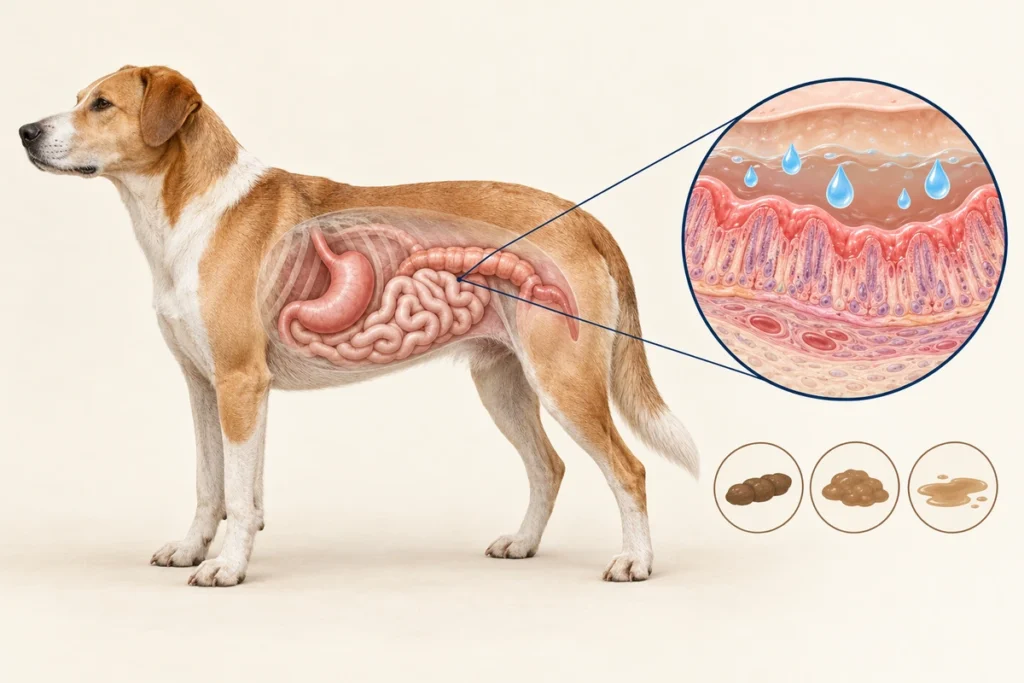
Diarrhea in dogs can develop after sudden changes in diet or ingestion of inappropriate food, but it can also be a sign of parasites, infections, foreign bodies, and other diseases. To understand how serious it is, the consistency of the feces, along with the dog's age, appetite, energy level, whether it has vomited, and its ability to drink water are evaluated.
If there is bloody stool, repeated vomiting, marked lethargy, or diarrhea in a puppy, consult a veterinarian before trying a home remedy. Collapse, severe abdominal pain, inability to hold even water, or black and tarry stools require emergency evaluation. Fluid loss can quickly become significant, especially in puppies and dogs with other illnesses.
When is diarrhea in dogs considered an emergency?
A dog may behave normally after having soft stools just once; another dog might pass multiple watery stools in a single day and lose significant fluid. It is not appropriate to base the decision to seek help solely on the question, "How many days has it been diarrhea?"
The following situations require immediate veterinary assessment:
- Difficulty standing, collapse, fainting, or marked unresponsiveness
- Repeated vomiting and inability to hold down water
- Severe abdominal pain or noticeable abdominal swelling
- Large amounts of bloody diarrhea or black, sticky, tarry stools
- Pale gums, rapid deterioration, or pronounced signs of dehydration
- Suspicion of ingestion of toxic substances, medications, bones, or foreign bodies
Even a small amount of bright red blood in the stool should be reported to a veterinarian; the urgency is determined by the amount of blood and the dog's overall condition. Puppies, unvaccinated dogs, older dogs, or those with chronic illnesses require earlier consultation. The approach of "waiting a few days" is not appropriate for these groups.
In a generally well adult dog that can drink, has not vomited, and has no blood in its stool, a mild episode can be closely monitored for a short time. However, if the frequency increases, new symptoms appear, or there is no significant improvement by the next day, consult your veterinarian. This is not a guaranteed safe waiting period for a risky patient.
What causes diarrhea in dogs?
Diarrhea occurs when the intestines cannot absorb water or move contents forward properly. Since different causes can produce similar fecal appearances, diagnosis cannot be made solely by consistency.
Changes in diet and inappropriate foods
A sudden change in food, unusual treats, greasy table scraps, or eating food from the trash can lead to diarrhea. Some dogs may also exhibit adverse reactions to certain foods, resulting in recurring digestive issues.
Just because it seems to be related to diet does not mean the issue is necessarily mild. Vomiting and abdominal pain accompanying the intake of fatty foods may indicate the need for assessment of a different condition. Similarly, if a dog eats something outside and its content is unknown, the possibility of poisoning or foreign body ingestion should not be overlooked.
Parasites and infections
Intestinal parasites and pathogens like Giardia can cause diarrhea. Viral and bacterial diseases are also potential causes. Age, vaccination status, exposure to other dogs, shared water bowls, and contact with surrounding feces are important factors in this assessment.
Even if an anti-parasitic treatment has recently been administered, it does not rule out all possible parasites or infections. The scope of the product used, the timing of administration, and the likelihood of re-exposure vary. When necessary, fecal examination and targeted tests are performed; randomly repeating previous medications is not advisable.
Stress, medications, and other diseases
Travel, environmental changes, or intense stress can affect the intestinal balance in some dogs. Some medications can also lead to gastrointestinal symptoms. Instead of stopping any prescribed medications on your own, report the time of onset of diarrhea and other symptoms to your veterinarian.
In cases of prolonged or frequently recurring diarrhea, chronic intestinal diseases, pancreatitis, and conditions outside the intestines may be investigated. Weight loss, changes in appetite, and recurrent vomiting are particularly significant. Merely changing the diet to suppress symptoms in each episode can delay finding the underlying issue.
What do bloody, mucusy, or differently colored stools indicate?
Bright red blood typically suggests bleeding from the lower parts of the intestines. It may be accompanied by frequent bowel movements and straining. Black, sticky, and tarry stools should be evaluated for digested blood. While certain foods and medications can change the color of the stool, unexplained black stools should not be dismissed as normal at home.
Mucus is a slippery substance secreted by the intestines. An increase in mucus may occur alongside intestinal irritation; it does not, on its own, indicate a specific parasite or infection. Yellow, green, or light-colored stools may result from various factors, including diet and transit time in the intestines. Color alone does not provide a reliable diagnosis without other symptoms.
Bloody diarrhea is not always indicative of parvovirus. Parasites, intestinal inflammation, acute hemorrhagic diarrhea syndrome, and other causes can also lead to bloody stools. In cases of sudden onset of severe bloody diarrhea, the presence of visible blood and significant fluid loss are also important. Conversely, a lack of blood in the stool, especially in a puppy, does not rule out the possibility of parvovirus.
Diarrhea in puppies and the risk of parvovirus
Diarrhea in puppies should be approached with greater caution. Their resilience to fluid and energy loss is not the same as in adults; if their vaccination program is incomplete, their protection against serious infections may also be inadequate. If diarrhea accompanies vomiting, loss of appetite, and lethargy, they should be evaluated on the same day; there should be no waiting for obvious deterioration.
Parvovirus can be transmitted through infected feces and contaminated environments or objects. Even if a dog has not had direct contact with another dog, the risk is not entirely eliminated. If in doubt, minimize contact with other dogs and report symptoms over the phone before visiting the clinic. This helps to plan appropriate reception for infectious diseases.
Diagnosis involves assessing symptoms, vaccination history, fecal tests, and necessary blood examinations together. A single test result does not provide absolute certainty in every circumstance; the timing of the disease and the characteristics of the test can influence the results. In cases of strong suspicion, further evaluation may be necessary.
Vaccines are a fundamental part of protection against parvovirus, but being vaccinated does not eliminate every potential cause of diarrhea. For planning age-appropriate and risk-specific vaccinations, information about the dog vaccination program can be obtained. Evaluation of a sick puppy should not be postponed until the next vaccination date.
What can be done at home when a dog has diarrhea?
Home support should only be assessed in mild cases where the general condition is good and there are no warning signs. Maintain access to clean water and monitor how much it drinks. If the dog is repeatedly vomiting or unable to hold water, instead of trying to force it to drink, seek veterinary assessment.
Stop offering new treats, fatty foods, and table scraps. Discuss with your veterinarian what food, how much, and how often should be given based on your dog's condition. In appropriate cases, a digestible feeding plan and smaller meals may be preferred. The same period of fasting should not be applied to all dogs just because of diarrhea; puppies and dogs with other illnesses should not be randomly starved.
Chicken and rice may be suggested as a short-term option in some cases, but this is not suitable for every dog and does not provide balanced nutrition when used long-term. Choices may vary for dogs with food sensitivities or other illnesses. Do not try to manage diarrhea with the same method for days if there is no improvement with home-cooked meals.
Record the frequency of defecation, vomiting, appetite, and energy levels. If possible, take a photo of the feces and prepare a fresh sample as the clinic requests. Waiting to collect a sample should not delay the emergency visit. Keep the dog clean; collect feces with gloves or a bag and wash your hands afterward.
What medications should not be used for diarrhea?
Diarrhea medications prepared for humans, pain relievers, or leftover antibiotics should not be given without veterinary advice. Some medications can be harmful depending on the dog's breed, existing illness, and the cause of diarrhea. Their temporary alleviation of symptoms does not mean the underlying cause has resolved.
Antibiotics are often not necessary in mild to moderate acute diarrhea cases. The presence of blood in the stool alone is not a reason to start antibiotics. If there is a risk of severe systemic disease, specific infections, or bacterial complications, the veterinarian may plan a different treatment. This differentiation is made through examination and necessary testing.
The effects of probiotics can vary depending on the product, ingredients, and the patient's condition; not every product has proven benefits. Yogurt should not be considered equivalent to a probiotic product intended for veterinary use. Dairy products can increase digestive complaints in some dogs. Supportive products should not delay the evaluation of fluid loss and underlying disease.
How is diagnosis and treatment planned during the examination?
The veterinarian primarily evaluates fluid loss, circulation, abdominal pain, and general condition. The time diarrhea began, frequency of bowel movements, diet changes, medications used, and any history of exposure to foreign bodies or toxic substances guide the diagnostic plan.
Not every dog requires the same tests. Fecal and laboratory examinations may include parasite tests, parvovirus tests, blood counts, and biochemical assessments chosen based on findings. Imaging may be necessary in cases of abdominal pain, vomiting, or suspicion of foreign bodies. In cases of recurrent diarrhea, a more detailed dietary and disease investigation may be planned.
In treatment, it is important to restore fluid-electrolyte balance, provide appropriate nutrition, and control nausea and pain if present. If a parasite or another cause is identified, targeted treatment will be applied. In severe cases, hospitalization may be required; in mild cases, a plan for home care and monitoring might suffice. Monitoring the dog's eating, drinking, and overall condition is just as important as collecting feces.
Reducing the risk of diarrhea recurrence
Gradually planning diet changes, preventing access to trash and spoiled food, and continuing vaccinations and parasite treatments according to an individual plan are beneficial. If a problem develops after introducing a new product, note the product's name and quantity. Instead of trying different foods each time, share this information during an examination.
Review risks in the home and garden as well. Certain plants can cause poisoning symptoms, including vomiting and diarrhea, if swallowed; you can refer to information about toxic plants for pets. Taking a photo to identify a suspicious plant can be helpful, but do not delay seeking help for suspected poisoning.
Frequently asked questions about diarrhea in dogs
My dog has diarrhea but seems fine; can I wait?
A mild episode in an adult dog that can drink, hasn't vomited, and has no blood in its stool can be monitored for a short time. If symptoms worsen or there is no significant improvement by the next day, consult your veterinarian. Puppies and chronically ill dogs require earlier evaluation.
How many days does diarrhea in dogs last?
The duration depends on the cause and the patient's condition. Some mild episodes are brief, while infections or other diseases require treatment. Instead of waiting for a specific number of days, rely on the general condition and alarm signs.
What should I do if I see a small amount of blood in the stool?
Report it to your veterinarian on the same day; explain the amount, frequency of bowel movements, and whether there are any other symptoms. If there is significant bleeding, lethargy, vomiting, pale gums, or rapid deterioration, seek assessment immediately.
Is bloody diarrhea always parvovirus?
No. There are various causes of bloody diarrhea. However, in a puppy or an unvaccinated dog, parvovirus should be particularly considered. The appearance and smell of the stool alone do not provide a definitive diagnosis.
Is it always the case that there is bloody diarrhea in parvovirus?
No. The absence of blood does not rule out the disease. If a puppy has diarrhea along with vomiting, lethargy, and loss of appetite, quick assessment is required even if the stool's color appears normal.
Is parvo not considered in vaccinated dogs that have diarrhea?
Vaccines are crucial for protection, but they do not eliminate every possible infection. The timing and program of vaccinations are evaluated. Additionally, many other causes can also lead to diarrhea besides parvovirus.
Will starving a dog stop diarrhea?
This is not an appropriate method for every dog. Especially puppies, older dogs, or those with chronic illnesses should not be randomly starved. The feeding plan is developed considering vomiting and the general condition.
Is chicken and rice recommended for a dog with diarrhea?
This may be suggested for a short duration in some mild cases; however, it is not suitable for every dog. It does not provide balanced nutrition when used long-term. Food sensitivities, age, and other illnesses change preferences.
Does yogurt help with diarrhea?
Yogurt is not guaranteed to resolve diarrhea in every dog. Dairy products may increase symptoms in some dogs. Identifying the cause of diarrhea and selecting an appropriate diet is more beneficial than trying different foods at home.
Can I give human anti-diarrheal medications?
Do not give these without clear advice from your veterinarian. The safety of the medication depends on the cause of the illness, the dog's characteristics, and other medications. A randomly chosen dose from the internet cannot be considered safe.
Is an antibiotic always required for bloody diarrhea?
No. The presence of blood is a reason for examination, but not an automatic reason for antibiotics. If there are severe systemic findings or risks of specific infections, antibiotics may be considered; the decision will be guided by examination and tests.
Is using probiotics sufficient?
Probiotics can be considered as support in some cases, but the effects of each product vary; it should not be assumed that they treat fluid loss, parvovirus, foreign bodies, or other serious causes. Delays in examination when alarm signs are present should not occur.
What does yellow or green diarrhea indicate?
Color can change due to diet, intestinal passage, and other factors. It does not indicate a specific infection or organ disease on its own. Duration, frequency, presence of blood, vomiting, and overall condition should be evaluated together.
Why is black stool more significant?
Black and tarry stools may suggest digested blood. Some substances can also darken the stool, but this appearance should not be considered normal at home without a known cause. If it occurs alongside lethargy or vomiting, emergency evaluation is needed.
Does the presence of mucus in the stool indicate parasites?
An increase in mucus can be seen in various intestinal issues, including parasites, but it is not a diagnosis of parasites on its own. Continuous or recurrent mucus, blood, straining, and weight loss may necessitate fecal examination.
My dog is vomiting and has diarrhea; should I give him water?
Do not restrict water, but do not force water into a dog that is repeatedly vomiting or cannot hold it down. Rapid veterinary evaluation is needed for fluid loss and underlying causes. Especially in puppies, it is important not to wait.
How should I bring a stool sample?
Collect a fresh sample in a clean, leak-proof container. Learn the required amount, storage conditions, and how soon it needs to be delivered from the clinic. In an emergency, do not wait to collect a sample before seeking help.
Can diarrhea be transmitted from dogs to humans?
The risk of transmission varies based on the underlying cause. It is important to quickly collect feces, wash hands, and properly clean contaminated areas. It is safer for immunocompromised individuals to avoid cleaning up feces.
Can I take my dog with diarrhea to the park?
Until the cause is clarified and the condition improves, it is advisable to limit close contact with other dogs, shared water bowls, and crowded play areas. Immediately collect feces during short bathroom breaks, and do not exhaust the dog.
Is simply changing food enough to address persistent diarrhea?
No. Recurrence, weight loss, or changes in appetite should be evaluated for underlying disease. Uncontrolled changes in diet can complicate the situation. Detailed dietary history and examinations planned by the veterinarian are more beneficial.
This content is for informational purposes only; it does not substitute for a veterinary examination.

