
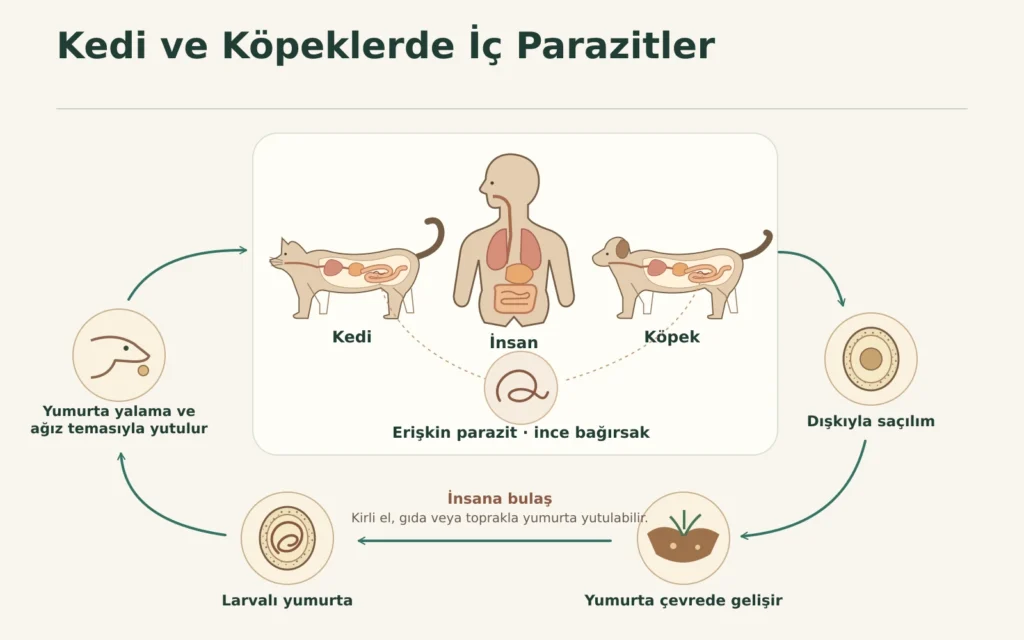
Your cat never goes outside. The most active moment of the day is when you come home and it greets you at the door. As you take off your shoes, it rubs against your leg. A little later, it wanders around the hallway and licks its paws. This raises the question, “If my cat doesn’t go outside, where could it get internal parasites?” Even if your cat doesn't go outside, soil and dirt from outside can cling to your shoe soles or soiled clothes and make their way into your home. If there are infectious parasite eggs in this dirt, it is possible for them to be ingested during paw cleaning.
Now, think about this familiar scene. You live on the top floor of a tall building, and in the morning, you spot a spider in the corner of your window. That tiny guest produces eggs that can be transported by air currents, clinging to a fine silk thread. You water the flower by the window with tap water, and a few days later, small flies start buzzing around the pot. The pot flies, which thrive in damp soil, can also sustain their life cycle inside the house. On one side is the corner of the window, and on the other is the pot you pass by every day. Both make you ponder how a living creature can reach an enclosed home and live there unnoticed.
The answer to the same question for internal parasites depends on which parasite we are talking about. For most intestinal worms, the main risk is contact with infectious eggs or larvae through the mouth or skin rather than inhalation from the air. Some parasites may need fleas, prey animals, or other intermediate hosts for their transmission. The microscopic size of the eggs makes it difficult to detect them with the naked eye. For infection, the parasite must be in a live, infectious stage and enter the body through the appropriate route. Staying indoors reduces many risks. Regular internal parasite control helps manage the remaining risks according to the real living conditions of cats and dogs.
What intestinal parasites are seen in cats and dogs?
Among intestinal worms, nematodes (roundworms), cestodes (tapeworms), and some trematodes (flatworms) can be found. Giardia and coccidia are unicellular parasites that can cause disease in the intestines. This distinction is important. Just because a product is effective against ascarids does not mean it is effective against tapeworms or Giardia.
Nematodes: Ascarids, hookworms, and whipworms
Ascarids. The main examples are Toxocara canis in dogs and Toxocara cati in cats. They can be transmitted by swallowing mature eggs in the environment or eating an infected prey animal. T. canis can also be transmitted to puppies before birth. T. cati can be transmitted to kittens through their mother’s milk. Young animals may show abdominal swelling, poor growth, vomiting, and diarrhea. Sometimes, white, spaghetti-like worms can be seen in vomit or feces. Adult animals can shed eggs without showing symptoms. After Toxocara eggs are excreted in feces, they develop in the environment and become infectious. Therefore, collecting feces promptly helps break the cycle.
Hookworms. Species such as Ancylostoma and Uncinaria live in the small intestine. Depending on the species, infectious larvae can be acquired orally or can enter through the skin. Especially blood-sucking species can cause severe anemia, weakness, and black, tarry feces in young animals. Some animals’ hookworm larvae can penetrate human skin, causing itchy, progressive lines.
Whipworms. Trichuris vulpis especially affects the large intestine in dogs. Mucusy or bloody diarrhea, which occasionally improves and then recurs, can be observed. Eggs can remain viable in the environment for a long time. The absence of eggs in a single fecal examination does not always rule out infection. Strongyloides species can also be among the other possible parasitic causes of diarrhea, especially in puppies and crowded living conditions.
Cestodes: Tapeworms resembling grains of rice and related species associated with hydatid cysts
Tapeworm (Dipylidium caninum). If a cat or dog swallows an infected flea while grooming itself, the tapeworm can develop in the intestine. Rice-like segments seen under the tail, on the feces, or in the bed may be tapeworm segments. In humans, especially in small children, these can cause infection through hand-to-mouth contact after handling them. If flea control is not included in the treatment, the animal may become reinfected. You can refer to our guide on flea control in cats and home flea control to understand the household cycle.
Tape worms acquired from prey. Some Taenia species in dogs and Hydatigera taeniaeformis in cats can be acquired through prey or infected tissues. Therefore, a cat that hunts mice has different risks compared to a cat that lives indoors and does not hunt.
echinococci and hydatid cyst. The causative agent of cystic echinococcosis is the Echinococcus granulosus species group. A dog can carry the intestinal tapeworm when it eats raw organs containing the parasite's larvae. It can shed microscopic eggs via its feces without showing symptoms. These eggs can contaminate soil, water, vegetables, fruits, or the fur of an animal.
Imagine you pet a dog and then bring your hand to your mouth. If the dog’s fur has come into contact with feces that contain parasite eggs either directly or through contaminated soil, the eggs can transfer from the fur to your hand. When you bring your hand to your mouth or touch food without washing, you might ingest the eggs unknowingly. In humans, larvae that emerge from ingested eggs most commonly form cysts in the liver and lungs. Another species, E. multilocularis, leads to alveolar echinococcosis. Foxes and dogs play an important role in the life cycle of this species. Cats can also be infected by this species.
Avoid giving raw offal to dogs to reduce their risk of acquiring the parasite through this route. Even if people do not feed their pets raw meat, they can still be exposed to the eggs through fur, dirt, water, or food that have been contaminated by the feces of other animals. Washing hands with soap after contact with animals and before eating, thoroughly washing raw vegetables and fruits, picking up dog feces, and implementing appropriate tapeworm control are parts of prevention.
Trematodes: Flatworms that can affect the intestines, liver, and lungs
Multiple intermediate hosts are typically involved in the transmission of trematodes. Depending on the species and geography, raw freshwater fish can be a source of some intestinal or biliary trematodes. Species like Paragonimus can be lung trematodes that can be transmitted by consuming raw infected freshwater crabs or crayfish in some areas. Prolonged coughing or respiratory distress may be observed. A veterinarian will inquire about the animal's travel history, hunting behavior, and contact with raw food when evaluating the possibility of these infections. Certain methods, such as sedimentation, may be required in addition to routine fecal flotation for the eggs of some trematodes.
Giardia and other intestinal protozoa
Giardia can be transmitted by swallowing cysts from dirty water, surfaces, or fur. It can lead to soft or recurrent diarrhea, especially in puppies and animals living in groups. Asymptomatic carriers are also possible. Most types of Giardia identified in dogs and cats are compatible with their hosts. The likelihood of transmission from animals to humans varies by type and is generally low.
Cystoisospora species can cause diarrhea, particularly in puppies. Tritrichomonas is suspected in young cats living in multiple-cat environments and is associated with protracted, sometimes mucoid, large intestinal diarrhea. For these agents, the veterinarian selects the appropriate method, such as fecal microscopy, antigen testing, or PCR. Treatment is also planned according to the identified agent.
How do heartworms, lungworms, and eye worms transmit?
Heartworm (Dirofilaria immitis). This nematode, transmitted by mosquito bites, primarily settles in the pulmonary arteries. In severe infections, it can extend to the right chambers of the heart. In dogs, coughing, rapid fatigue, and in advancing cases, respiratory distress may be observed. Even a small number of parasites in cats can lead to severe lung disease. Since mosquitoes can enter the house, the risk for indoor cats is also assessed in relation to the area they live in. Antigen and microfilaria tests are used for diagnosis in dogs. In cats, blood tests and imaging may need to be evaluated together. It is also checked whether the preventive used covers heartworms.
Lungworms. Aelurostrongylus abstrusus in cats and Angiostrongylus vasorum and Crenosoma vulpis in dogs are different examples of lungworms. Snails and slugs may play a role in their life cycles. Cats can also acquire the parasite by eating an infected prey. Coughing and rapid breathing can be seen. In some dogs with A. vasorum infection, a tendency to bleed may also develop. In appropriate cases, the Baermann technique can be used to search for larvae in the feces.
Eye worm (Thelazia callipaeda). Transmitted by certain flies that feed on tears. It can cause watering of the eyes, redness, frequent blinking, discharge, or damage to the corneal surface. Thin, white worms may sometimes be seen under the eyelid. An animal that squints, cannot open its eye, or has cloudiness in its eye should be examined the same day. Attempting to intervene at home on the surface of the eye can increase the damage.
How do we recognize if there is an intestinal parasite?
Repeated diarrhea, mucus or blood, vomiting, weight loss, growth retardation, and worms or tapeworm segments seen in feces require evaluation. The same findings can also be seen in nutritional issues, infections, and other digestive system diseases. In some animals, there may be no external signs of parasite presence.
Microscopic examination of fresh feces, and if necessary, antigen testing or targeted PCR can aid diagnosis. The veterinarian may request samples from different days because the parasite may not have shed eggs yet, or there may be intermittent shedding or the routine test may not be adequate for that species. If you see a suspicious piece in the feces, you can take a photo and ask the clinic how to bring the sample. You can obtain information about Laboratory and Advanced Diagnostics.
Bloody diarrhea, black, tarry feces, repeated vomiting, marked lethargy, or pale gums in puppies should be evaluated without delay. Difficulty breathing or fainting is an emergency. Connecting these symptoms to parasites at home can delay treatment.
Internal parasite management and home prevention
You can find information about the role of antiparasitic applications in the preventive healthcare schedule in our articles on cat vaccination program and dog vaccination program.
The purpose of regular check-ups is to protect the health of the animal and reduce the shedding of eggs from some species into the environment. When determining the application interval and product, the veterinarian considers the animal's species, age, weight, living area, hunting behavior, raw feeding, travel history, and other pets in the house. The plan for puppies differs from that of adults. Always consult a veterinarian before applying a product intended for dogs to a cat.
- Collect the feces from the litter box every day. Pick up your dog's feces without delay during walks.
- Wash your hands with soap after cleaning the litter or feces and after gardening. Prevent animals from accessing children's play sand.
- Limit your cat's access to areas where outdoor shoes are stored. Mechanically clean visible dirt and soil.
- When fleas are detected, evaluate the animals and the environment in the house together. Create a suitable product plan based on species and weight.
- Do not give your cat and dog raw meat. If hunting, raw feeding, or access to raw freshwater organisms is possible, mention this during the examination.
- During a preventive healthcare consultation, determine together how often fecal checks, flea prevention, and, if necessary, heartworm protection should be done.
Frequently asked questions
My cat has diarrhea. Could it have internal parasites?
It could. Giardia, coccidia, and some intestinal worms can cause diarrhea. Changes in food and other digestive system issues can also appear similar. If diarrhea is recurrent, prolonged, or if the animal is a puppy, consult a veterinarian. If there is blood, repeated vomiting, marked lethargy, or inability to drink water, do not wait.
My cat never goes outside. Does it need internal parasite treatment?
Indoor cats are also included in risk assessments. Prior exposure before adoption, other animals in the home, fleas, and the risk of dirt brought into the house are factors in the risk plan. The frequency of treatment or fecal checks is determined according to the living conditions of the cat.
How often is internal parasite treatment done in cats and dogs?
The procedure commonly referred to as “internal parasite vaccination” is the application of antiparasitic medications. In the first application or if more than two months have passed since the last application, the veterinarian may plan two doses with an interval of 14 days if the target parasite and selected product are suitable. If worm or tapeworm segments are seen in the feces before or after the application, report this finding to the veterinarian. The appearance of worms after treatment can also be part of the response to the treatment. After examination and, if necessary, fecal analysis, the veterinarian can choose a plan that includes three consecutive applications and then a repeat on the 14th day with a suitable product. After that, if the animal is found to be at risk, the routine treatment may be transitioned to every two months.
Imagine your cat had its internal parasite treatment today. Tomorrow, while licking the dirt that has stuck to its paw in the hallway, it could ingest an infectious egg. Many intestinal worm medications target parasite stages that are sensitive to the medication present in the animal at the time of administration. Immunity generated by vaccination or lasting effects of some external parasite products between applications are not expected. Some larvae that do not respond to the medication may continue developing during the first treatment. The purpose of reapplication is to target these larvae when they reach the sensitive stage to break the cycle and reduce the shedding of eggs into the environment.
Regular application helps keep the parasite load under control, even though reinfection can occur the very next day. For details on the preventive healthcare schedule, you can refer to our cat vaccination program and dog vaccination program articles.
I see rice-grain-like things in my cat's or dog's feces. Is it a tapeworm?
Parts resembling grains of rice, sometimes mobile, may be tapeworm segments. Check the area around the tail and the bed as well. A photo or sample can help make a diagnosis. If a tapeworm is suspected, flea control is also included in the treatment.
I don’t see any worms in the feces. Could there still be a parasite?
Yes. Many eggs, cysts, and larvae cannot be detected by the naked eye. Some parasites are not detected with every defecation. Even if the first test is negative, the veterinarian may request another sample or a different test based on symptoms and risks.
Can internal parasites infect humans?
Some species can transmit. A human can ingest Toxocara eggs from contaminated soil or hands. Some hookworm larvae can enter through the skin. For tapeworms, an infected flea must be swallowed. Echinococcus eggs can also spread from contaminated fur to hands and then to the mouth. Preventative steps target these different routes.
Does swallowing cat hair cause cysts? What is commonly referred to as a "hair cyst"?
A hydatid cyst can develop if Echinococcus eggs are swallowed. The role of the hair is to transport the eggs that have contaminated it from feces or dirty soil. For example, bringing an unwashed hand to the mouth after touching a dog fur contaminated with eggs can lead to infection. The same risk applies to other surfaces, water, and food contaminated with eggs. The primary source of eggs for cystic echinococcosis is infected dogs and other suitable hosts. “Hair cyst” is an everyday term. Medical evaluation is required to determine what a radiological finding indicates.
Can a hydatid cyst develop in the lungs? Does every lung cyst result from a parasite?
A hydatid cyst can develop in the lungs. The liver is also a common site. There are other causes for cystic images in the lungs. Diagnosis is made by the physician based on the person's exposure history and imaging findings. If a cyst is detected along with coughing, chest pain, or bloody sputum, evaluation should not be delayed.
Do internal parasite medications affect Giardia, heartworms, or eye worms?
This depends on the active ingredient of the product and the target parasite. A separate evaluation is required for Giardia. Heartworm prevention serves a different purpose than treating an established heartworm infection. In suspected cases of eye worms, an eye examination is performed first.
Can reinfection occur after internal parasite treatment?
Yes. Fleas for tapeworms, contaminated environment for ascarids, or dirty surfaces or water for Giardia can all be sources for reinfection. Therefore, it is important to implement suitable environmental cleaning and follow the control plan recommended by the veterinarian.
Veterinarian Miraç Gürbüz
Çeliktepe Veterinary Clinic
This content is for informational purposes only and does not replace a veterinary examination.

