
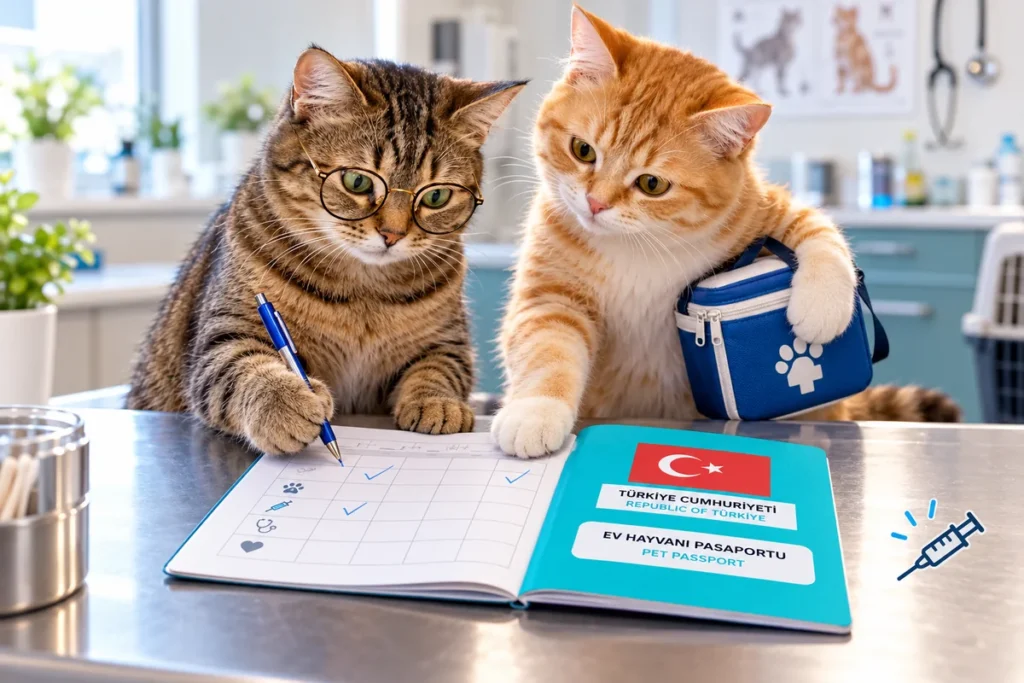
Your cat’s vaccination schedule begins with an initial examination. Whether your cat is a two-month-old kitten or an adult that has never been vaccinated, the programme is planned after assessing their health and previous records. At Çeliktepe Veterinary Clinic, combination, feline leukaemia and rabies vaccinations are managed alongside internal and external parasite care.
The first visit involves more than setting vaccination dates. We also assess your cat’s nutrition, development, previous living environment, contact with other animals and medical history. Vaccinations and parasite treatments are then planned in line with the examination findings and the approved conditions of use for the selected products.
What is checked at the first examination?
Your cat’s weight, temperature, mouth and teeth, ears, skin and coat are checked. The examination also includes abdominal palpation and listening to the heart and lungs. Appetite, bowel movements, activity levels and any recent changes are assessed.
Examining the heart is an important part of the assessment before vaccination. If a suspicious finding is identified, further investigations are planned. Blood counts and other blood tests are considered alongside the examination and medical history. This assessment may reveal the first signs of certain problems in a cat that appears healthy.
FCoV, FIV and FeLV assessment before vaccination
When preparing a vaccination schedule at our clinic, we assess FCoV, FIV and FeLV test results alongside your cat’s examination, medical history and any necessary blood tests. This assessment also considers the cat’s mother, siblings, previous living environment and contact with other cats.
These infections differ in how they spread and progress. Some may be present without obvious symptoms and can cause serious health problems. Recognising findings early helps us plan monitoring and treatment in good time.
A positive or uncertain result may require further investigation and may change the timing of vaccinations. If your cat has a fever, loss of appetite, marked lethargy or a suspected infection, this is investigated first. The decision to begin vaccination is made after considering the results together with your cat’s overall condition.
A positive FCoV antibody result alone does not establish a diagnosis of FIP. The result is interpreted according to the testing method used. FeLV and FIV results may also require confirmation or repeat testing. In young kittens, the possibility that FIV antibodies have been passed on from the mother is taken into account.
Which vaccines are given to cats?
Combination vaccine
The feline combination vaccine protects against panleukopenia, herpesvirus and calicivirus infections. Panleukopenia can be particularly severe in kittens. Herpesvirus and calicivirus can cause disease affecting the respiratory tract and mouth.
In our clinic’s initial schedule below, the first and second combination vaccine doses are given three weeks apart. Vaccinations are entered in the vaccination record, and follow-up dates are arranged at the first visit.
What is the feline distemper vaccine?
Protection against panleukopenia, also known as feline distemper, is one component of the feline combination vaccine. The colloquial term “feline distemper vaccine” usually refers to this protection. In addition to panleukopenia, the combination vaccine also protects against herpesvirus and calicivirus.
Feline leukaemia vaccine
FeLV is a virus that can affect a cat’s immune system and blood cells. FeLV status is checked before vaccination. Because vaccination does not treat an existing infection, positive or uncertain results are assessed separately.
The initial schedule includes two feline leukaemia vaccine doses, given three weeks apart. After this programme, our clinic continues annual vaccination follow-up. Vaccination records and information about the product used are reviewed at each check-up.
Rabies vaccine
Rabies is an important infection for both animal and human health. In Türkiye, annual rabies vaccination is mandatory for cats that meet the legal age requirement. The first dose is given at a visit when the cat meets the vaccine’s approved age requirements. Subsequent annual doses are tracked through the vaccination record.
Cat vaccination schedule
This table shows our clinic’s initial visit plan for cats being vaccinated for the first time or without reliable vaccination records. The weeks refer to visits after the programme begins, not the cat’s age. The programme starts once the examination and tests have established that the cat is suitable for vaccination.
| Week | Vaccine / treatment | Details |
|---|---|---|
| Week 1 | Combination 1 · Internal parasite treatment 1 · External parasite treatment | Initial vaccinations and treatments are given after the first examination, assessment of test results and selection of suitable products. |
| Week 2 | Feline leukaemia 1 | The first feline leukaemia vaccine dose is given after the pre-vaccination FeLV assessment. |
| Week 3 | Rabies · Internal parasite treatment 2 | The rabies vaccine is given if the cat meets the product’s approved age requirement. The second internal parasite treatment is given 14 days after the first. |
| Week 4 | Combination 2 | The second combination vaccine dose is given three weeks after the first. |
| Week 5 | Feline leukaemia 2 · External parasite treatment | The second feline leukaemia vaccine dose is given three weeks after the first. The monthly external parasite treatment is repeated. |
If a product’s age requirements or conditions for use with other products are not met at the relevant visit, its administration date is adjusted accordingly. For cats using external parasite products that provide two or three months of protection, the repeat date is recorded according to the product’s duration of protection. Annual follow-up for regularly vaccinated adult cats continues based on their existing records.
Internal parasite treatment and follow-up schedule
The following plan applies to cats for whom the veterinarian has determined the target parasite and confirmed that the selected medicine is suitable for this treatment schedule. The dose is calculated according to the cat’s age and weight.
Initially, internal parasite treatment is given twice, 14 days apart. Regular treatment and follow-up then continue every two months. Repeat treatments aim to maintain parasite control, taking the target parasite’s life cycle into account.
If more than two months have passed, cats for whom this protocol is considered appropriate return to the initial schedule of two treatments 14 days apart. Follow-up then continues every two months.
For cats with an active parasite infection for whom this treatment schedule has been selected, treatment is planned for days 1, 2, 3 and 14. A clinic visit is arranged in the second month for a check-up and the next treatment. Stool findings, appetite and overall condition are monitored.
Parasites in the stool or vomit, ongoing diarrhoea or pronounced abdominal swelling should be reported to the clinic. Treatment dates and medicine doses should follow the veterinarian’s instructions.
How often are external parasite treatments given?
External parasite products that provide monthly protection are given once a month. Products offering two or three months of protection are repeated according to their stated duration of action. Some products may provide different durations of protection against different parasites, and treatment records are kept accordingly.
Use products suitable for cats. Some external parasite products intended for dogs can poison cats. In homes with a flea problem, assessing the other animals and cleaning the environment are also part of parasite control.
For signs of fleas and advice on control at home, read our article My Cat Has Fleas.
What should you do on vaccination day and afterwards?
Bring your cat’s vaccination record or passport, previous test results and details of any medicines being used. During the examination, mention any loss of appetite, vomiting, diarrhoea, lethargy or previous vaccine reactions.
Mild lethargy and tenderness at the injection site may occur after vaccination. Contact the clinic if symptoms are pronounced, prolonged or worsening. Facial swelling, difficulty breathing, repeated vomiting or collapse require veterinary assessment without delay. Any growing or persistent swelling at the injection site should also be checked.
Frequently asked questions
Does an indoor cat need vaccinations?
Yes. Living indoors does not eliminate the risk of infection. Vaccination records and annual follow-up should be maintained. The legal requirement for rabies vaccination also applies to indoor cats.
Can my adult cat start the programme if they have never been vaccinated?
Yes. An initial vaccination programme can also be prepared for adult cats after the first examination and pre-vaccination assessment. Your cat’s previous records and health are taken into account.
How are combination and feline leukaemia vaccinations followed up?
In our clinic’s initial visit plan, the first and second doses of each vaccine are given three weeks apart. This is followed by annual vaccination and health check-ups, with vaccines administered in line with the approved schedule for the product used.
Are the feline distemper vaccine and the combination vaccine the same?
“Feline distemper vaccine” is the common name for vaccination against panleukopenia. The feline combination vaccine includes this protection; its coverage is not limited to panleukopenia.
Are internal and external parasite treatments vaccines?
These are medicines used against parasites. Although they appear on the same follow-up schedule as vaccinations, the products, durations of action and methods of administration are different.
Are fungal and tetanus vaccines part of the routine programme?
Fungal and tetanus vaccines are not included in this routine programme. For skin disease or injuries, diagnosis and treatment are planned separately. Any product’s approved indication and suitability for cats are assessed.
What affects the cost of cat vaccinations?
Vaccination fees vary according to the type of vaccine and the product used. The initial examination, any tests considered necessary and parasite treatments may affect the total cost. Once the required procedures have been determined based on your cat’s age and current vaccination record, you can ask our clinic for up-to-date fees.
What should I do if my cat’s vaccination is overdue?
Share the date of the last vaccination in your cat’s record with your clinic and arrange a new appointment. A delay does not always mean restarting the entire programme. The vaccine type, previous doses, length of the delay and your cat’s health are assessed together. Delaying initial doses in particular can leave a gap in protection, so do not decide on a catch-up date yourself.
Can I touch my cat after a spot-on parasite treatment?
Follow the product’s instructions on contact after applying a topical parasite treatment. Avoid stroking your cat or touching the application site until it is dry. If the product specifies a longer waiting period, wait for that full period. Prevent your cat or other animals in the household from licking the application site. Aftercare advice may differ for tablets and injections.
Vaccination follow-up at Çeliktepe Veterinary Clinic
At Çeliktepe Veterinary Clinic in Kağıthane, we assess your cat’s examination findings, test results and vaccination records together. Vaccination and treatment dates are entered in the vaccination record, and subsequent visits are planned. Contact our clinic to arrange vaccination and parasite care for your cat.
Veterinarian Miraç Gürbüz
Çeliktepe Veterinary Clinic
This content is for general information and does not replace a veterinary examination.

