
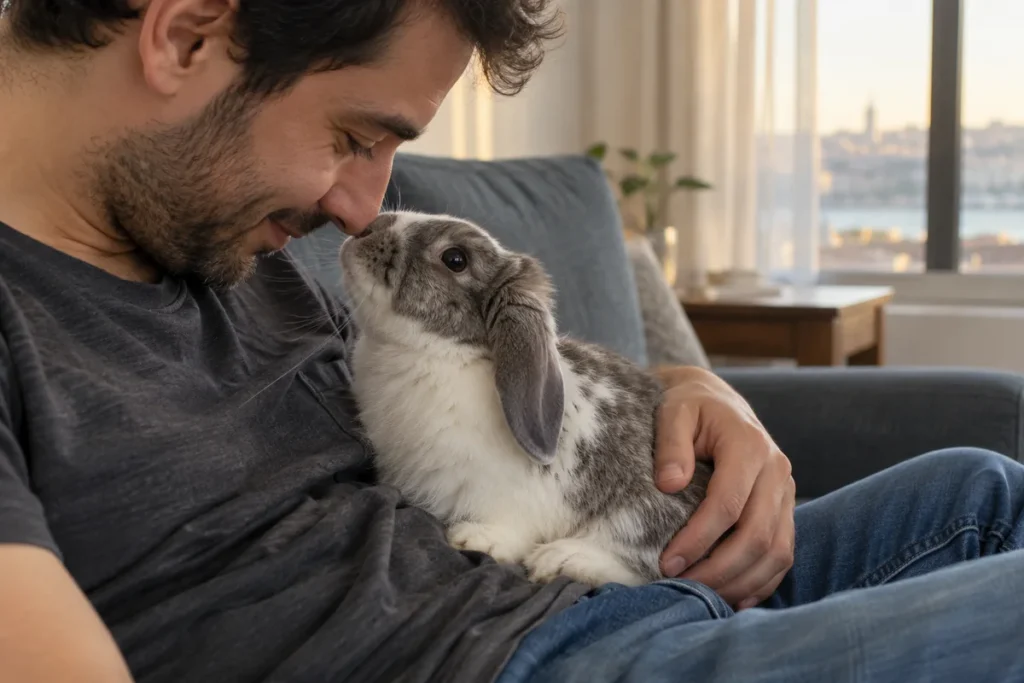
Neutering male rabbits is a surgery in which the testicles are surgically removed, permanently preventing reproduction. In addition to preventing unwanted pregnancies, it is also considered to reduce hormone-related urine spraying and mating behaviors. The appropriate timing for the procedure is determined based on the rabbit's development and examination findings.
At Çeliktepe Veterinary Clinic, we perform neutering for male rabbits under sedation. The clinical workflow described below applies to rabbits that have been examined and deemed suitable for surgery, and whose operation proceeds without complications.
Why is neutering performed in male rabbits?
In households where both male and female rabbits live together, the control of reproduction should be planned in advance if babies are not desired. Rabbits can gain reproductive ability at a young age; being related or coming together for a short time does not eliminate the possibility of pregnancy. After neutering, there remains a possibility of pregnancy for a certain period.
With puberty, urine spraying, more intense marking of their surroundings, mounting people or other rabbits, and defending their territory can be observed. Neutering may help reduce these hormone-related behaviors. However, fear, pain, inadequate living space, or incompatibility between rabbits should also be evaluated. It cannot be said that each behavior will completely disappear with surgery.
The procedure may also be necessary for treating diseases originating from the testicles. If growth, asymmetry, or a different appearance is noticed in the testicles, a check-up should be planned instead of making conclusions at home. The operation and reproductive organ-related risks of female rabbits are discussed separately in our article on spaying female rabbits.
What should be considered before the surgery?
During the examination, the rabbit's general health status, development, and testicles are evaluated. It is important to provide information about appetite, defecation patterns, past illnesses, and medications used. The normal positioning of the testicles may also influence the surgical plan.
Do not starve your rabbit overnight before the surgery. The long fasting instructions given for cats and dogs do not apply to rabbits. Follow your veterinarian's specific guidance for maintaining normal feeding and preparations on the day of the procedure. You may bring its usual hay and feed when coming to the clinic.
If you notice decreased appetite, significant changes in its stool, lethargy, or respiratory issues before the appointment, inform the clinic. The cause of these symptoms will be assessed, and additional examination will be performed if necessary before the operation.
How is the neutering surgery for male rabbits performed?
During the operation, both testicles are removed. The medical term for the procedure is orchiectomy. The positioning of the testicles, the rabbit's anatomy, and examination findings are taken into account when determining the surgical approach.
In our clinic, the surgical phase takes approximately 10–15 minutes. This duration does not include examination, preparation, sedation application, or recovery monitoring after the surgery. The abnormal positioning of the testicles may alter the surgical approach and duration.
The incision is closed using a method that does not require subsequent suture removal in our routine practice. The owner’s responsibility at home is to keep the area clean and observe any changes according to the provided care plan.
How is the sedation and recovery process managed?
In our clinic, sedation and local anesthesia are applied for neutering male rabbits. Non-steroidal anti-inflammatory drugs are used for pain management. Once the procedure is completed, a reversing agent is administered to counteract the effects of the sedative, and the rabbit's awakening is monitored.
Throughout the procedure and recovery, the overall condition of the patient is monitored, and body temperature is maintained. Since sedation also carries risks, pre-operative evaluation and patient follow-up are important.
Discharge and home care
Our rabbits can be discharged approximately four hours after the operation if they awaken and are deemed stable.
In our routine care plan, an Elizabethan collar is not used, stitches do not need to be taken out, and ongoing antibiotic injections are not planned. Pain management and other treatments, if necessary, will be arranged by the veterinarian. The condition of the wound, suspicion of infection, or additional issues may alter this plan.
Prepare a clean, calm, and safe area at home. Monitor its feeding, defecation, mobility, and the surgical area. Follow the movement restrictions and control plan given at discharge. Discuss with your veterinarian when and how to resume contact with other rabbits.
If you notice opening of the wound, bleeding, significant swelling, discharge, or if it is constantly pulling at the area, contact the clinic. Do not apply an Elizabethan collar by your own decision, do not apply products to the wound, or give human medications. Not eating, significant decrease or cessation of defecation, evident lethargy, and signs of pain are conditions that should not be waited out; contact your veterinarian without delay.
When can a neutered male rabbit live with a female rabbit after surgery?
A neutered male rabbit should not be considered to have completely lost the ability to create pregnancy immediately after the surgery. Due to remaining sperm in the reproductive tract, it may still have the potential for a period of time. It should not be allowed to mate with unspayed female rabbits for six weeks after the surgery.
During this time, a physical separation should be ensured with safe areas where they cannot escape. The decision to reunite after six weeks should consider wound healing and the behaviors of the rabbits. Neutering does not make it safe to place two unfamiliar rabbits directly into the same space; controlled introductions are necessary.
Frequently Asked Questions
At what age should a male rabbit be neutered?
Neutering in male rabbits is generally considered from around four months of age. The appropriate time is determined based on its development, condition of the testicles, breed, and overall health. The decision is not made solely by looking at the calendar age.
Does neutering completely eliminate urine spraying and aggression?
Hormone-related behaviors may decrease; changes are not always immediately noticeable. Learned habits, fear, pain, or behaviors resulting from living conditions may continue. In cases of newly emerging aggression, an examination should be conducted without solely blaming hormones.
How long does the surgery and stay at the clinic last?
In our clinic, the surgical phase takes approximately 10–15 minutes. Rabbits deemed stable during awakening can be discharged about four hours after the operation. The preparation and observation periods are separate from the surgical time.
Is an Elizabethan collar or suture removal necessary?
In our routine practice, Elizabethan collars are not used, and suture removal is not required. However, the surgical area should be monitored daily. If the rabbit is pulling at the wound or if there are changes in the area, consult your veterinarian for a solution.
What should I do if it is not eating after the surgery?
Do not consider decreased appetite or significant reduction in stool to be normal and wait; contact the clinic without delay. Pain, digestive slow-downs, and the need for nutritional support should be evaluated. Do not start administering medications or force-feeding at home on your own decision.
What determines the price for neutering a male rabbit?
The fee may vary based on examination findings, necessary evaluations, sedation, surgical, and follow-up requirements. Consult the clinic for the current fee and what it includes.
This content is for general informational purposes; it does not replace a veterinary examination.

