
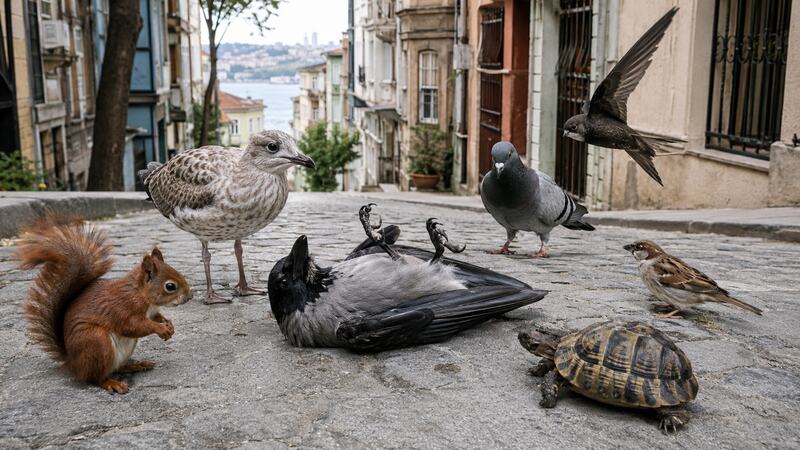
Encountering an injured, immobile, flightless, or fallen animal in the city or nature is especially common during the spring and summer months. Baby sparrows, swifts found on the ground, doves and pigeons attacked by cats, gulls entangled in fishing lines, hedgehogs hit by vehicles, and turtles with cracked shells may require proper initial intervention.
However, not every baby bird seen on the ground is abandoned. Some fledglings wait on the ground or low branches while learning to fly, and their parents continue to feed them nearby. Conversely, waiting may pose a serious risk for animals exhibiting signs of bleeding, drooping wings, difficulty breathing, vehicular collisions, cat attacks, or changes in consciousness.
This guide provides safe and practical answers to questions such as I found an injured bird; what should I do with a fallen baby bird, where to take a flightless pigeon, will a bird attacked by a cat survive, what can be given to an injured hedgehog, and how to intervene for a turtle with a cracked shell?
What to do first when you find an injured wild animal?
- First, check your safety and the area where the animal is located.
- Keep people, cats, and dogs away.
- Observe the animal from a safe distance without chasing it.
- Assess for signs of bleeding, fractures, difficulty breathing, and loss of consciousness.
- If possible, note the location and how the incident occurred.
- If it can be safely transported, place it in a suitable, air-permeable box.
- Contact a veterinary clinic experienced in birds and exotic animals.
Giving human medication, using antibiotics indiscriminately, attempting to set a fracture by hand, or forcibly pouring water into the animal's mouth are not safe first aid practices.
Does a baby bird on the ground need help?
Featherless or sparsely feathered chick
A chick that is not fully feathered, unable to stand, and largely bare should still be in its nest. If it is uninjured and the nest is safely accessible, the chick can be gently returned. The belief that a mother bird will definitely reject its chick if touched by human hands is not correct.
If the nest cannot be found, is destroyed, or if the chick is cold, lethargic, injured, or has come into contact with a cat, professional help should be sought.
Fully feathered but poorly flying fledgling
A fledgling sparrow, crow, magpie, or starling with developed feathers that is hopping and responding to its surroundings may be learning to fly. If it has no visible wounds, it should be observed from a distance so its parents can approach. If there is a risk from traffic or pets, it can be moved to a safe bush or low branch only a few meters away.
When should a flightless or injured bird be taken to a veterinarian?
- One wing hanging down or positioned abnormally
- Bleeding, open wounds, or swelling
- Inability to stand or put weight on its feet
- Inability to hold its head upright, spinning, trembling, or seizures
- Breathing with an open mouth or respiratory effort involving tail movement
- Eyes remaining closed
- Not trying to escape when approached by a human
- Collision with a window, vehicle, or hard object
- A cat or dog attack
- Inability to fly despite resting
Throwing the bird into the air to see if it can fly may worsen fractures, internal bleeding, or head trauma.
Why is it urgent to address a bird attacked by a cat even if there are no visible wounds?
A cat's teeth and claws can create penetrating wounds that are difficult to notice under feathers. The absence of visible blood does not mean the bird is safe. Since bacteria from a cat's mouth can quickly cause a serious infection, doves, pigeons, sparrows, swifts, swallows, or any other birds that have had contact with a cat should be evaluated the same day.
Do not apply cologne, alcohol, hydrogen peroxide, human creams, or random antibiotics to the wound.
How to hold and transport an injured bird?
Small birds can be transported in a cardboard box lined with paper towels or clean cloths that do not slip on the bottom. The bird's field of vision should be obscured with a thin towel, and its wings should be held close to its body, but the chest must not be compressed. Since the movement of the chest is crucial for bird respiration, excessive pressure can hinder breathing.
The box should be kept in a quiet, dim, and warm place. Direct heaters, hairdryers, or very hot water bottles should not be used. Professional assistance should be sought for gulls, herons, and raptors regarding beak and claw injuries.
Can water and food be given to an injured or baby bird?
Water should not be given by syringe to the bird's mouth without veterinary guidance, and force-feeding should not be attempted. Liquids or food may enter the respiratory tract, causing aspiration.
Pigeon and dove chicks, insectivorous swifts and swallows, sparrows, gulls, and crows are not fed the same way. Bread, milk, biscuits, bulgur, and randomly prepared foods are not safe common solutions for all birds.
Common situations by species
Injured pigeon or dove
Collisions with vehicles and windows, cat attacks, wing and leg fractures, crop injuries, and string or hair entanglement are frequently seen. Do not forcibly pull on string or fishing line embedded in tissues. If there is swelling in the crop area, a foul smell, or fluid coming from the mouth, a detailed examination is required. You can also check our guide on crop diseases in birds for more information on digestive problems in birds.
Injured gull
Gulls may experience fishing line entanglement, fishing hook injuries, wing trauma, and vehicle collisions. Visible fishing line should not be pulled, and fishing hooks should not be forcibly removed; they may be attached to a deeper section of the digestive system. Protective gloves and safe handling are required due to their strong beaks.
Crow, magpie, and squirrel chicks
Parent crows and magpies are often nearby. If they are not injured, they should not be taken far away. Adult squirrels may bite strongly when frightened; they should not be handled bare-handed. Cold, bleeding, cat-attacked, or confirmed orphan squirrel chicks should be evaluated by professionals.
Sparrows and other small songbirds
A fully feathered and active sparrow may be a fledgling. However, if it is cold, puffed up, unstable, bleeding, or has come into contact with a cat, it should not be left unattended.
Swift or swallow on the ground
A swift or swallow found on the ground may be weak or injured. The bird should not be thrown into the air; it should be placed in a box with non-slip bottoms and air holes to capture wing symmetry, body condition, and general status.
Hawk, goshawk, kestrel, and owl
The talons of raptors can cause serious injuries even when injured. They should not be approached with bare hands, and assistance should be sought from relevant wildlife units or experienced veterinarians.
What to do if a bird hits a window?
A bird that hits a window should be rested in a quiet, dark, and safe box. Inability to stand, asymmetry in the eyes, bleeding, loss of balance, seizures, drooping wings, difficulty breathing, or a lack of noticeable recovery in a short time will require veterinary examination.
What to do when finding an injured hedgehog?
Hedgehogs are mostly active at night. During the day, a hedgehog that is aimlessly wandering, lying on its side, trembling, has fly eggs or larvae on it, is bleeding, or does not respond when approached by a human may need help.
- Vehicle collision or dog attack
- Lawn mower injury
- Bleeding and open wound
- Inability to stand or stumbling
- Difficulty breathing
- Body feeling noticeably cold
- Finding an orphaned baby hedgehog
The hedgehog should be placed in an air-permeable box, supported from underneath with thick gloves or a towel. Contact with bare hands should be avoided due to the risk of fungi, Salmonella, and external parasites.
Can the hedgehog be given milk or bread?
No. Milk and bread can cause digestive disturbances. If contacting a veterinarian will be delayed and the hedgehog is conscious, able to chew, and has no critical trauma, a small amount of high meat content wet cat or dog food can be offered in a shallow dish. Force feeding should not be attempted.
What should be done for an injured turtle or one with a cracked shell?
A turtle's shell is not a lifeless shield; it is a living structure containing bones, blood vessels, and nerves. Cracks in the shell resulting from vehicle collisions, dog bites, and falls from heights can be painful and may accompany internal organ injuries.
- Cracks, separations, or bleeding in the shell
- Visible internal tissues
- Loss of movement in the legs
- Inability to hold its head up
- Eyes remaining closed
- Bad smell or softness in the shell
The shell pieces should not be pressed back in; no superglue, silicone, tape, or epoxy should be used. Cologne or strong antiseptics should not be poured on the wound. The turtle should be transported in an air-permeable box, on a clean and slightly damp towel, limiting its movement. An aquatic turtle with an open shell wound should not be kept in a water-filled container until a veterinary evaluation.
If a healthy turtle is crossing the road
If it is safe to intervene, the turtle can be moved across the road without changing its forward direction. It should not be taken home, released far away, or turned back in the direction it came from.
Safety with bats, frogs, and unidentified reptiles
A bat found on the ground should not be touched with bare hands due to the risks of rabies and other zoonoses. Children and pets should be kept away; if contact or bites occur, a health organization should be contacted.
Creams or antiseptics should not be applied to the sensitive skin of frogs and salamanders, and contact should be minimized. Keep a safe distance from an unidentified snake, do not make assumptions about whether it is venomous, and seek professional help.
Things that should NEVER be done at home
- Forcing water or food
- Using human medication or random antibiotics
- Trying to set a fracture by hand
- Throwing the bird into the air
- Sticking the turtle's shell
- Showing the injured animal to children or continuously holding it
- Taking healthy wild animals from their natural environment to keep at home
Approach to injured birds and exotic animals at Çeliktepe Veterinary Clinic
At Çeliktepe Veterinary Clinic, doves, pigeons, gulls, crows, sparrows, swifts, swallows, hedgehogs, turtles, squirrels, and other birds, wild or exotic animals are assessed on a case-by-case basis.
Depending on the animal's species and general condition, emergency examination and triage, controlled heat and oxygen support, bleeding control, professional wound care, pain management, digital radiography, ultrasonography, laboratory examinations, evaluation of fractures, surgical and orthopedic interventions, turtle shell stabilization, species and age-appropriate nutritional support, and controlled care may be planned.
The aim is not only the survival of the animal but also the control of pain, assessment of functional recovery, and the preservation of the chance for return to its natural life for suitable cases. For detailed information, you can check our bird veterinary, exotic animal veterinary, and Veterinary Services pages.
Frequently Asked Questions
If I touch a fallen bird, will its mother reject it?
It is not true that many bird species will definitely reject their chick if touched by human hands. An uninjured chick that should be in the nest can be safely returned.
If there are no wounds on a bird attacked by a cat, should it be taken to a veterinarian?
Yes. There may be piercing wounds and a serious risk of bacterial infection that are not visible under the feathers.
Should a swift be thrown into the air?
No. A swift on the ground may be injured, lethargic, or undeveloped. Throwing it into the air may cause further trauma.
Can milk be given to an injured hedgehog?
No. Milk can cause digestive disturbances and diarrhea in hedgehogs.
Should a turtle with a cracked shell be glued?
No; it should not be glued at home. The shell is a living bone structure; an incorrect adhesive can trap infection inside and complicate professional treatment.
Can I take an injured wild animal home and care for it?
Long-term care requires knowledge of species, proper nutrition, disease control, and rehabilitation experience. It should be evaluated by a veterinarian and, when necessary, relevant wildlife units.
Where can I take an injured animal?
You can refer it to a veterinary clinic experienced in birds and exotic animals or a relevant wildlife unit. If possible, inform them in advance about the species, location, and how the injury occurred.
Conclusion
Not every baby bird or wild animal on the ground may need help. However, for animals exhibiting signs of bleeding, fractures, difficulty breathing, vehicle collisions, cat or dog attacks, noticeable lethargy, and changes in consciousness, time should not be wasted.
Rather than force-feeding an animal, giving human medicine, throwing a bird into the air, or gluing a turtle shell at home, the best approach is to transport the bird or exotic animal in a safe and quiet box to a bird and exotic animal veterinarian.
Veterinarian Miraç Gürbüz
Çeliktepe Veterinary Clinic
This content is for general informational purposes; it does not substitute for a veterinary examination.

