
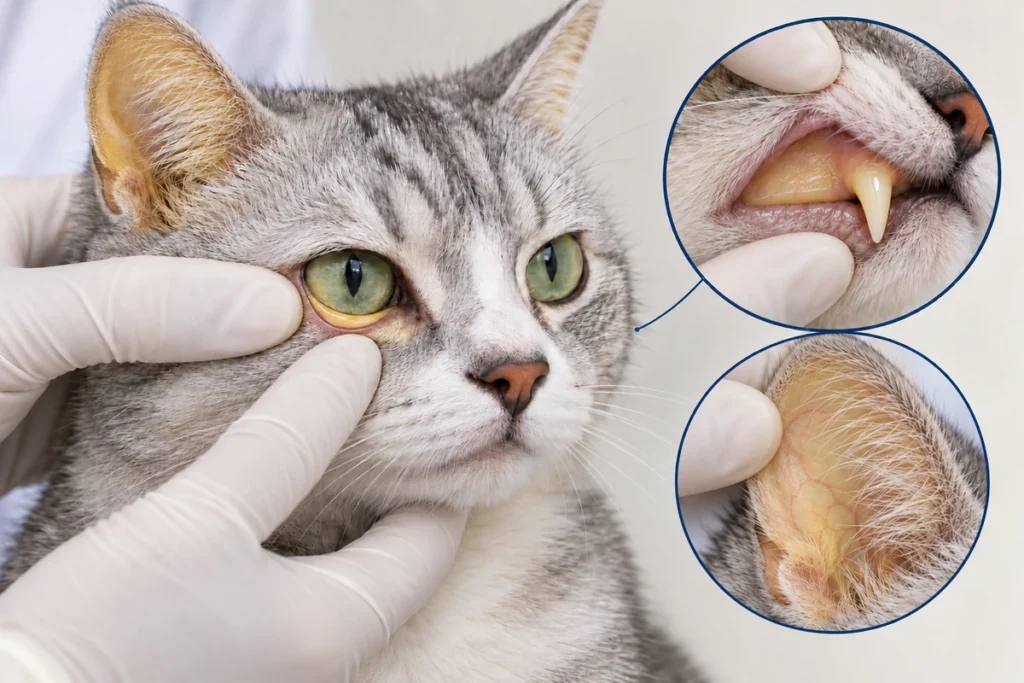
Yellowing of the sclera, gums, or inner ears of a cat suggests the accumulation of a pigment called bilirubin in the blood. In cats, jaundice can develop due to various issues ranging from the destruction of red blood cells to liver diseases and blockages in the bile ducts. To accurately choose the treatment, the cause of the yellowing must be investigated.
If you notice new yellowing in your cat, consult a veterinarian the same day. If jaundice is accompanied by marked lethargy, lack of appetite, repeated vomiting, rapid or labored breathing, collapse, or changes in consciousness, immediate assessment is required. Waiting for the color to improve on its own may lead to the progression of an underlying disease.
What is bilirubin, and why does it increase?
Bilirubin is a yellow substance that forms when aging red blood cells break down. Under normal conditions, it is processed by the liver, transferred to the intestines through bile, and eliminated from the body. Any disruption in this chain can lead to elevated levels in the blood. In blood tests, this condition is termed hyperbilirubinemia, while the yellow discoloration in tissues is referred to as jaundice or icterus.
Sometimes, elevated bilirubin levels can be detected before external yellowing is observed. Conversely, the severity of jaundice in a visibly yellow cat cannot be determined solely by the depth of color. The reason for the bilirubin increase, the overall condition of the cat, and accompanying laboratory findings should be assessed together.
Liver enzymes do not measure the same thing as bilirubin. Some enzymes provide clues about cell damage or changes in bile flow; none alone reveal all liver functions. Therefore, it is important to interpret the results collectively rather than focusing on a single elevated value in a test.
What are the signs of jaundice in cats?
Yellowing is easiest to notice in the sclera, pigmented areas of the gums, and thin skin of the ear flap. Dark-colored skin or oral pigments can make assessment more difficult. A photo taken under yellow light can also be misleading; if in doubt, an examination should be scheduled instead of trying to confirm at home.
Signs that may accompany jaundice include:
- Decreased appetite, refusal to eat, and weight loss
- Lethargy, hiding, and reduced daily activities
- Vomiting, sometimes diarrhea or discomfort in the abdominal area
- Darkening of urine
- Paleness along with yellowing of the gums
- In some diseases, fever, abdominal swelling, or changes in behavior
It is not necessary for all of these signs to be present together. For example, a cat that is simply eating less and has not left its usual spot may be showing early signs of a disease. Approaching the food bowl does not necessarily indicate adequate nutrition; it is essential to monitor exactly how much the cat has eaten.
Primary causes of jaundice
The causes are categorized into three main groups based on their effects on the formation and elimination of bilirubin. Multiple mechanisms may be present simultaneously in a cat.
Excessive destruction of red blood cells
In a condition called hemolysis, red blood cells break down faster than normal. As the bilirubin burden increases, anemia may also develop. Diseases caused by the immune system, certain infections, and toxic substances can lead to this condition. Pale gums, weakness, and rapid breathing are especially significant.
Some medications used for humans can cause severe poisoning in cats. In particular, products containing acetaminophen should not be given to cats. If you think a medication, food containing onion, or a suspicious substance may have been ingested, inform your veterinarian of the packaging and approximate exposure time; do not attempt to induce vomiting at home. You can also review the safe approach regarding first steps in cat poisoning; seeking information should not delay an emergency visit.
Inability of the liver to process bilirubin
Diseases affecting liver cells can disrupt the processing and elimination of bilirubin. Conditions categorized in this group include hepatic lipidosis, known as fatty liver disease in cats, inflammatory diseases of the liver and bile ducts, certain infections, tumors, and toxic injuries.
Hepatic lipidosis can particularly develop in overweight cats following significant loss of appetite and energy. However, it is not solely a disease of overweight cats. The reason the cat is not eating should also be investigated; another problem, such as pain, pancreatic or intestinal disease, may have triggered the process. Therefore, it is not safe to interpret lethargy merely as a matter of being picky with food.
Disruption or blockage of bile flow
When bile formed in the liver cannot reach the intestines as needed, bilirubin can accumulate. Inflammation in the bile ducts, changes in surrounding tissues, pancreatic diseases, or a mass can affect bile flow. In some cats, liver-bile duct, pancreatic, and intestinal diseases occur together.
The suspicion of bile duct obstruction directly affects the treatment plan. Not every jaundiced cat can be treated with the same medications; the location and cause of the obstruction may require intervention or surgical evaluation in some cases.
How does the veterinarian investigate the cause of jaundice?
In the examination, the cat's circulation, respiration, fluid status, pain, and nutritional status are evaluated first. Supportive treatment may begin in a severely ill cat while the cause is being investigated. The veterinarian will ask about when the signs started, recent food intake, weight changes, medications used, and potential exposure to toxic substances.
Blood count and laboratory evaluation help investigate anemia and changes in blood cells. Biochemical tests help evaluate bilirubin, liver-related enzymes, kidney values, and other organ indicators together. Urinalysis and clotting tests may also be added to the plan if necessary.
Abdominal ultrasonography can be used to assess the liver, gallbladder, bile ducts, and surrounding organs. Depending on the findings, infection tests, cell sampling, or biopsy may become relevant. Not every cat requires all tests; examinations are chosen based on the findings and initial results. If further investigations are needed, referral to an appropriate center can be planned.
Initial tests sometimes do not provide a definitive name for the cause. In such cases, the progression of the results, additional imaging, and examination of samples if necessary will clarify the diagnosis. It may be inappropriate to provide a definitive recovery timeline based on a single result on the first day of treatment.
What bilirubin level is dangerous in cats?
It is incorrect to provide a single “danger threshold” for bilirubin that applies to every cat. The method used by the laboratory, the reference range, and the measurement unit may differ. The total, direct, or indirect bilirubin values listed on the result paper should not be interpreted interchangeably.
If a value is above the reference range, it requires an investigation of the cause; the severity of the disease is not determined solely by the number. For example, a cat with severe anemia or changes in consciousness may need more urgent support even if its bilirubin level is lower than another cat with a different disease. Comparisons with previous results also only gain meaning when the date, unit, clinical status, and treatment history are known.
A decline in bilirubin during check-ups can be a positive sign. However, the cat's willingness to eat, weight, hydration status, and other blood values should also be monitored. The reduction of external yellow coloring is not sufficient to discontinue treatment on its own.
How is jaundice treated in cats?
Treatment is tailored based on the underlying cause. Support is provided for fluid loss, electrolyte imbalances, nausea, and pain if present. Blood transfusion may be required in some patients with severe anemia, and intervention or surgery may be necessary in some cases with bile duct obstruction. Medications for infection are selected based on relevant evaluations; antibiotics are not required for every jaundice case.
Nutritional support is particularly an essential part of treatment in cats. Control of nausea and pain may help the cat eat, but if adequate intake is not possible, the veterinarian will plan controlled nutritional support. Some cats may require a feeding tube. This tube is a treatment tool that allows for the safe delivery of food and fluids as needed; its presence does not mean the disease is hopeless.
Refeeding a cat that has not been eating adequately for a long time also requires care. The amount and rate of increase are determined while monitoring for metabolic changes that may require tracking. Forcing food or water into a weak and nauseous cat can cause stress and aspiration risks.
Herbal mixtures, "liver detox" products, or supplements meant for humans do not replace veterinary evaluation. Some products may exacerbate existing diseases or interact with the medications used. Even the name, content, and usage plan of recommended products should be clarified with the veterinarian.
Home care and monitoring process
Having a written feeding and medication plan can make it easier to monitor a cat at home. Whenever possible, record daily food intake by amount. The number of vomiting episodes, changes in stool or urine, mobility, and administered medications can also be monitored with brief notes. Simply appearing more lively does not guarantee that the cat is receiving sufficient calories.
A calm area, easily accessible water and litter box, and offering the recommended food in small, appropriate portions will support the recovery process. If a feeding tube is in place, learn how to care for it and under what conditions to notify the clinic. Do not attempt to reposition the tube if it comes out.
Do not postpone follow-up appointments even if symptoms subside. If appetite decreases again, there is a significant deterioration after medication, new vomiting occurs, or lethargy increases, contact your veterinarian without waiting for the scheduled visit. Recovery time depends on the diagnosis, accompanying diseases, and response to treatment; the same timeline cannot be given for all cats.
Frequently asked questions about jaundice in cats
Is jaundice fatal in cats?
Some diseases that lead to jaundice can be life-threatening; others can be controlled with proper treatment. The outcome is not determined solely by the yellowing. The cause, the level of disease progression, the cat's nutrition, and accompanying issues should be assessed together.
Does jaundice resolve on its own?
It is not safe to expect spontaneous resolution without knowing the cause of the yellowing. Even a reduction in color may not indicate that the underlying problem has completely resolved. A veterinary evaluation is necessary when it is first noticed.
Can jaundice be transmitted to other cats?
Jaundice is a sign and is not contagious on its own. The risk of transmission depends on the underlying cause; special precautions may be necessary in some infections. The approach toward other animals in the home is determined once a diagnosis is confirmed.
Can jaundice in cats be transmitted to humans?
The observation of yellowing in a cat does not mean that one of the viral hepatitis diseases in humans is present. If there is a risk of transmission, the assessment is made based on the identified cause. Routine measures such as litter cleaning and hand hygiene should be maintained until a diagnosis is made.
My cat is eating but looks yellow; should I still have it examined?
Yes. Retaining appetite does not exclude liver, bile duct, or blood diseases. Especially when new yellowing is noticed in the sclera and gums, the veterinarian should be consulted on the same day, even if the cat appears fine.
Is jaundice only seen in old cats?
No. It can occur in kittens, adults, and older cats for various reasons. Age changes the likelihood of certain diseases; it does not independently indicate the cause of jaundice.
Why should overweight cats be monitored more closely?
Overweight cats can have a higher risk for hepatic lipidosis during marked loss of appetite. Prolonged fasting for weight loss is not appropriate. Weight loss programs should be conducted with controlled calorie management and veterinary supervision.
My cat hasn’t eaten for a day; should I seek help regardless of jaundice?
Yes. Not eating for about a day is a reason to consult a veterinarian; especially for kittens, overweight cats, or those with other diseases, action should be taken sooner. If vomiting, marked lethargy, or yellowing occurs, do not wait for this time.
Does dark urine definitely indicate high bilirubin levels?
No. Darkening of urine can be related to concentration, blood, or other pigments. The presence of bilirubin in the urine of cats should be investigated, but it's essential to evaluate urine and blood results together to identify the cause.
What does light-colored stool suggest?
A decrease in the delivery of bile to the intestines can lighten stool color; nutrition can also affect color. Report very light or gray stools, especially when accompanied by jaundice and loss of appetite, to your veterinarian. Color alone does not diagnose obstruction.
Does a cat with jaundice experience pain?
Depending on the cause, abdominal pain or discomfort may be present. Cats may show pain through behaviors such as hiding, hunching, avoiding touch, and reduced activity. Human pain relief medications should not be given.
Can liver enzyme levels be normal while bilirubin is high?
In some cases, yes. The source of bilirubin elevation is not always liver cell damage; tests reflect different aspects of the disease. A single normal enzyme result does not negate the significance of elevated bilirubin.
Does switching to liver food treat jaundice?
A diet may be part of treatment, but the same food is not suitable for every cat with jaundice. Priorities include the diagnosis and ensuring adequate nutrition for the cat. Food selection and transition should be planned by the veterinarian.
Can I give my cat water or food with a syringe?
Do not force oral feeding unless your veterinarian has specifically instructed you to do so. If there is difficulty swallowing, nausea, or lethargy, there is a risk that the contents may enter the respiratory tract. Safer support methods can be evaluated for inadequate intake.
Is serum always necessary for jaundice treatment?
The need for fluid therapy is determined based on fluid loss and overall condition. Not every cat receives fluids the same way or in the same amounts. Accompanying heart and kidney issues may also alter the plan.
Do antibiotics lower bilirubin levels?
Antibiotics can be part of treatment only if there is a suitable bacterial disease. Elevated bilirubin alone is not a reason to initiate antibiotics. Unnecessary medication use can lead to side effects and delays in diagnosis.
Does the placement of a feeding tube indicate a critical stage?
No. It can be used early to support recovery in cats that are not eating adequately. The necessary duration, amount of food, and time for removal are determined based on the cat's ability to eat on its own and the course of the disease.
Can I stop medications if the yellow color fades?
No. Although a reduction in visible yellowing is positive, it does not indicate that treatment is complete. Reductions or discontinuations of medications should be planned by the veterinarian based on examinations and follow-up test results.
Can jaundice recur?
If the underlying disease persists or reoccurs, jaundice can recur. Therefore, monitoring the cause as well as treating the initial attack is important. Reporting new loss of appetite and weight changes early can be helpful.
What should I bring with me to the examination?
Bring previous blood results, a list of medications and supplements used, notes on recent feeding, and packaging of any potential toxic substances. Photographs may help show changes; preparing them should not delay the emergency visit.
This content is for informational purposes only; it does not replace veterinary examination.

