
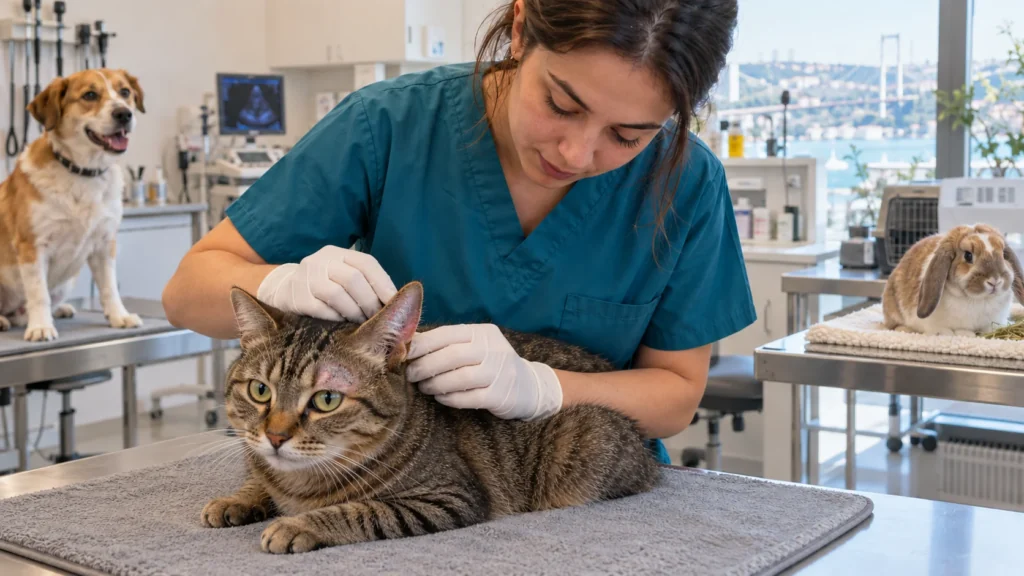
Dermatophytosis in cats, dogs, and rabbits is an infectious skin disease that can manifest with hair breakage, localized hair loss, flaking, and crusting. These symptoms can also be seen in other skin diseases, and fungal lesions can appear in various forms. A thorough examination and tests made from appropriate samples, if necessary, are required for a definitive assessment.
This article addresses the superficial fungal infection known as dermatophytosis. The goal of treatment is to control the infection, reduce the risk of transmission to other animals and humans, and prevent recurrences.
What is dermatophytosis?
Dermatophytes are fungi that affect keratin-containing tissues such as the skin surface, hair, and nails. One of the significant agents in cats is Microsporum canis. In dogs, different species of dermatophytes can cause disease. In rabbits, the Trichophyton mentagrophytes group is prominent. Other agents may also be present.
The English term "ringworm" derives from the ring-like appearance of some lesions. Another issue commonly referred to as a fungal infection, especially in dogs, is Malassezia-related yeast dermatitis. The underlying causes, tests, and treatment approaches for these two diseases may differ. Medication selection is made based on the diagnosis.
What symptoms suggest fungi?
- Limited or multiple areas of hair loss
- Brittle, short, and irregular-looking hair
- Flaking, scaling, and crusting
- Redness or changes in skin color
- Variable intensity of itching and excessive licking
- Changes around the nails in some patients
The absence of itching does not rule out fungi. Flea allergies, mites, bacterial infections, and other skin diseases can also appear similar. For signs of external parasites in cats, see our guide to fleas in cats.
Dermatophytosis in cats
Hair loss around the head, face, and ears can be noticeable. The disease can also be seen in other areas of the body. In some cats, infection or the presence of spores in the fur may occur without evident lesions.
In kittens and in crowded, unsuitable living conditions, evaluations should be conducted with greater care. Investigations for accompanying diseases are decided based on examination findings.
Dermatophytosis in dogs
In dogs, localized hair loss may be accompanied by redness, scaling, or crusting. In some dogs, a swollen and inflamed nodule known as kerion may form.
Especially in puppies, fungal lesions may resemble skin issues caused by mites such as Demodex. Examination and testing, if needed, are performed to differentiate these diseases.
Dermatophytosis in rabbits
In rabbits, hair loss starting around the head and potentially spreading to other areas, along with flaking and crusted lesions, can be observed. Asymptomatic carriers may also be present.
The skin structure, care requirements, and approach to medications in rabbits differ from those in cats and dogs. Consult an exotic animal veterinarian before applying any products meant for another animal to your rabbit.
How is transmission done?
Transmission can occur through direct contact with an infected animal or through contaminated objects that have come into contact with infected hair and skin particles. Combs, bedding, carriers, and shared grooming tools can play a role in spreading the infection.
spores can remain in the environment for extended periods. Therefore, the treatment plan considers not only the animal but also its environment. The likelihood of contact leading to disease varies according to the animal, the person, and the conditions of contact.
If a new animal has joined the household, if grooming tools are shared, or if there are skin findings in other animals, please share this information during the examination.
Can it transmit to humans?
Yes. Dermatophytosis can be transmitted from animals to humans. In humans, red, itchy, and sometimes ring-shaped skin lesions can develop. The scalp and nails can also be affected.
If a suspicious lesion appears on a person in the household, seek medical advice and inform your veterinarian about the suspected or confirmed fungal infection in the animal. Do not use the medication given to the animal on humans, or vice versa.
Extra caution is especially needed for individuals with suppressed immunity. During treatment, follow your veterinarian's and medical doctor's recommendations to manage contact safely.
How is the diagnosis made?
The veterinarian will first evaluate the patient's history, the distribution of lesions, and the general health status. Based on the need, they may utilize the following methods.
- Wood's lamp helps in detecting some infected hairs and selecting samples. Since some agents do not fluoresce, a negative result does not definitively rule out fungi.
- Microscopic examination allows the investigation of structures compatible with fungi in hair and skin samples.
- Fungal culture enables the reproduction of live fungi and the evaluation of the agent. It may require waiting for results, and the quality of samples and previously applied products can affect the outcome.
- PCR examines fungal DNA. A positive result is interpreted alongside clinical findings. It does not, on its own, prove the presence of live fungi or an ongoing active infection.
- Additional examinations may be necessary for unusual-looking, nodular, or lesions that do not respond as expected to treatment. A biopsy may be evaluated in some cases.
The necessary tests are determined based on examination findings. You can find information about our clinic's approach on the laboratory and advanced diagnostics page.
How is treatment planned?
Treatment is organized based on the species of the animal, its age, the extent of lesions, general health status, and the risk of transmission at home.
The veterinarian may utilize topical antifungal products applied to the skin and fur, as well as orally administered medications, in suitable patients. In widespread disease, applying cream to a single location might be inadequate. The treatment plan aims to control the active infection and reduce the spread from the fur to the environment.
Medication selection and duration of use are determined based on the individual patient. Additional evaluation is needed for animals that are young, pregnant, have comorbidities, or are using different medications. If there are changes in appetite or overall condition during treatment, notify the veterinarian.
Why is a separate approach needed for rabbits?
Do not apply a bathing regimen designed for cats or dogs to rabbits. Rabbits do not need routine baths. Unnecessary wetting poses risks such as stress, injury due to struggling, and lowering body temperature.
If a medical procedure is necessary, the veterinarian treating the rabbit will determine the product, application area, and care method.
How long does treatment last?
Treatment for dermatophytosis often lasts several weeks. Some cases may require longer follow-up. The duration varies based on the animal's condition and its response to treatment.
Regrowth of hair or reduction of redness may indicate recovery. The decision regarding when to terminate treatment is made by evaluating clinical improvement and necessary control tests together.
If the response is inadequate, the accuracy of the diagnosis, adherence to the regimen, other animals in the household, and environmental contamination will be reevaluated.
How should home care and cleaning be done?
The purpose of home care is to remove infected hairs, reduce transmission, and maintain the animal's welfare.
- Wear gloves and long-sleeved clothing when necessary during grooming. Wash your hands with soap afterward.
- Avoid sharing combs, bedding, and grooming equipment with other animals.
- Regularly remove shed hair from the areas where the animal is located.
- Clean washable textiles on the appropriate program.
- First, remove dirt and hair from surfaces. If necessary, use appropriate disinfectants according to product instructions.
- Do not mix cleaning products or apply them to the animal's skin.
- Evaluate the examination needs of other animals in the household with your veterinarian.
It may be necessary to temporarily restrict the area where the animal is located. During this time, allow for type-appropriate movement, play, hiding, and safe human interaction.
What practices should be avoided?
Avoid using human cream, random antifungal products, or mixtures containing cortisone before a diagnosis is made. The safety and efficacy of "natural" products vary according to their content and the species of the animal.
If shaving is necessary, the veterinarian determines the extent and method. Uncontrolled shaving at home can cause skin damage and spread infected hairs.
When should I seek consultation without delay?
If you suspect dermatophytosis, schedule an examination. Do not delay evaluation if there are spreading lesions, painful swellings, discharge, significant lethargy, or loss of appetite.
If your rabbit has stopped eating or significantly reduced its feces, urgent veterinary evaluation is needed.
To schedule an examination at Çeliktepe Veterinary Clinic, you can reach our clinic from our contact page.
Frequently Asked Questions
Is cat fungal infection definitely transmissible to humans?
It can be transmitted, but not every contact results in illness. Hygiene, proper treatment, and cleanliness of the environment help reduce risk.
Can it be transmitted from a dog to a cat or rabbit?
Some dermatophytes can affect different animal species. Inform your veterinarian about the contact history of all animals in the household.
My animal never goes outside. Can it still have fungi?
Yes. There can still be contact in the home through other animals or contaminated objects that have come into contact with infected hair and skin particles.
Could it be fungi even if it is not itchy?
Yes. The intensity of itching can vary, and some patients may not exhibit noticeable itching.
Is round hair loss definitely fungi?
Similar appearances can occur in different skin diseases. Examination and, if necessary, appropriate tests are performed to distinguish them.
If a region does not fluoresce under a Wood lamp, is it fungus-free?
No. Some dermatophytes do not fluoresce. Results are interpreted together with other examination and test findings.
Can a definitive diagnosis be made from a photo?
Photos can aid in tracking changes in lesions over time. Examination is necessary to reliably differentiate between similar diseases.
Can antifungal cream used for humans be applied?
Do not use it unless recommended by a veterinarian. The product's ingredients, the likelihood of licking, and the species of the animal affect safety.
Can fungi resolve on their own?
In some healthy animals, the infection may diminish over time. Since transmission can continue during this period, do not delay evaluation and treatment planning.
If the hair has regrown, can I stop the medication?
Hair regrowth does not always indicate that the treatment is complete. Clarify when to stop the medication during a control examination.
Is a fungal vaccine a definite solution?
No. A vaccine-based approach for prevention or treatment of fungi in cats is not recommended. Diagnosis, appropriate antifungal treatment, and control of transmission are the main considerations.
Should I wash my rabbit with antifungal shampoo?
Do not start on your own. Bathing and product selection in rabbits carry special risks. Follow the procedure determined by the veterinarian who evaluates your rabbit.
Is it necessary to medicate all animals in the household?
Medication needs are evaluated separately for each animal. The veterinarian assesses infection, carrier status, and exposure through examination and, if necessary, sampling.
Does an animal with fungi necessarily need to be shaved?
The decision to shave is made based on the hair structure, extent of lesions, and treatment needs.
Should I throw away all bedding and belongings?
Generally, the first step is proper cleaning. Items that cannot be cleaned will be evaluated separately.
Can fungi reappear?
Yes. Reinfection, ongoing infection, or a different skin disease may occur. Consult a veterinarian before reusing any old prescriptions.
What determines the cost of fungal treatment?
The examination, necessary tests, the species and weight of the animal, the extent of the disease, medications, and follow-up needs affect the cost. The fee is finalized after the patient is evaluated.
What should we do if a household member has a lesion?
Seek medical advice and report the suspicion of fungal infection in the animal. Treatment plans for humans and animals are evaluated separately.
Veterinarian Miraç Gürbüz
Çeliktepe Veterinary Clinic
This content is for general informational purposes. It does not replace a veterinary examination.

