
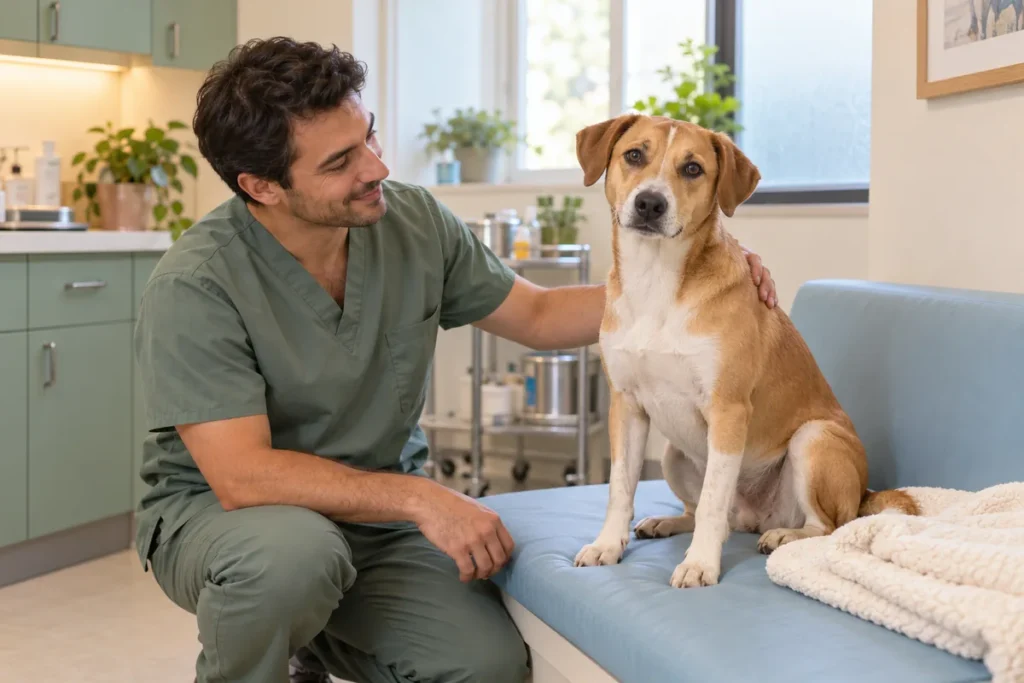
Male dog neutering is a surgical procedure in which both testicles are removed. It provides permanent reproductive control, plays a role in the prevention or treatment of diseases originating from the testicles, and may help reduce some hormone-related behaviors. Factors such as the dog’s age, breed, adult size, development, the positioning of the testicles, and current health status are also part of this decision.
At Çeliktepe Veterinary Clinic, we plan male dog neutering as a process that includes a detailed examination, patient-specific anesthesia, tissue-respecting surgery, pain management, and safe recovery. It is important to address questions such as “Will he calm down after neutering?”, “At what age should it be done?”, and “Can he go home the same day?” alongside the benefits and limitations of the procedure.
What is Neutering and What Changes Does it Bring?
In neutering, the procedure also known as orchiectomy involves the removal of both testicles. The testicles are the primary source of sperm production and testosterone. Their removal provides permanent reproductive control; the aim of the surgery is not just to ligate the spermatic ducts.
Vasectomy is a different procedure: it prevents reproduction by cutting or ligating the sperm-carrying ducts while leaving the testicles in place. Therefore, the effects of vasectomy and neutering on hormones and mating-related behaviors are not the same. This article describes our clinic's surgical neutering practice.
Your dog’s habits, training, and environment will continue to influence behavior independent of the testicles. When discussing what neutering can change, it is important not to focus solely on hormones.
What are the Benefits of Neutering a Male Dog?
Preventing unwanted matings and unplanned puppies is the primary benefit. Removal of both testicles eliminates tissue where testicular tumors can develop. If testicular disease already exists, surgery may also be part of the treatment plan; further examination of the removed tissue may be necessary.
Neutering is also an important option in benign prostate enlargement related to testosterone. However, it should not be construed as “preventing all prostate diseases or prostate cancer.” If there is difficulty urinating or defecating, bloody urine, or pain, the cause needs to be determined through examination and necessary tests.
A reduction in behaviors such as escaping to mate, urine marking, and mounting may be observed. The degree of this change depends on the dog’s age, the cause of the behavior, and how long it has persisted. The decision for surgery should not be based on the guarantee that a behavior will definitely improve.
At What Age Should a Male Dog be Neutered?
It is not appropriate to neuter all male dogs at the same month of age. The developmental timeline differs between small breeds and large or giant breeds. In small breeds, evaluation can occur around the sixth month, while in large breeds, completion of growth may receive more emphasis. This general approach does not imply a surgery date without an examination for your dog.
During the timing consultation, the following topics are addressed:
- Breed and expected adult body size
- Skeleton development, weight, and body condition
- Predisposition to joint diseases or specific health conditions
- Whether the testicles are in the normal position
- The nature and cause of behavior change
- Living conditions and risk of unwanted mating
Breed-specific studies have reported various relationships between the age of neutering and certain joint issues and cancers. These are not the same in every breed and do not provide definitive outcomes for all dogs. A meaningful assessment considers individual risks, the need for reproductive control, and any existing illness.
If One Testicle is Visible: Cryptorchidism
The failure of one or both testicles to descend into the scrotum is called cryptorchidism. The testicle may be located in the inguinal area or within the abdomen. The visible single testicle does not mean the other testicle is absent.
This condition should not be viewed merely as a cosmetic difference. The undescended testicle is treated differently concerning disease risk and surgical access. The position is assessed through examination and, if necessary, imaging; the surgical plan is developed accordingly.
During neutering, simply removing the outside visible testicle is not a sufficient approach. The status of both testicles must be known. A testicle located within the abdomen may change the scope of the procedure, the incision site, and follow-up requirements. Therefore, the brief process described for routine neutering should not apply to a cryptorchid dog without examination.
How Does Neutering Affect Behaviors?
First, it should be determined which behavior occurred and when. Escaping to reach females in heat and scratching at the door due to separation anxiety are not the same behavioral issue. Similarly, urine marking should be distinguished from frequent urination due to a urinary tract disease.
Testosterone-related behaviors may decrease after neutering. However, issues stemming from fear, pain, resource guarding, inadequate socialization, or learned habits may not be resolved solely through surgery. Mounting behavior does not always indicate a desire to mate; it may arise from excitement or stress, among other reasons.
It cannot be guaranteed that aggression will completely disappear. For new or escalating aggression, a health evaluation should be conducted first, followed by an appropriate behavioral management plan. Even after neutering, safe leash use, environmental management, and training should continue. Do not consider the surgery alone as a safety measure, especially if issues occur with other animals or people.
Pre-Operative Examination and Preparation
During the general examination, heart and respiratory sounds, body temperature, fluid status, weight, mouth and teeth, and the surgical site are evaluated. The size, symmetry, and position of the testicles are checked. Previous illnesses, anesthesia experiences, and regularly used medications are also recorded.
In older dogs, those with chronic illnesses, or those in which risks are identified during examination, laboratory tests and imaging may be planned as needed. The purpose of these tests is not just to say “he can undergo surgery”; it is to recognize conditions that may affect anesthesia and monitoring in advance.
Adhere to the preparation times given for food and water. Do not determine fasting duration based on information given for another animal instead of specific instructions for your dog. Preparation may vary, especially in puppies, very small breeds, or dogs with chronic illnesses. Clarify in advance whether regular medications should be given on the morning of surgery.
If there has been vomiting, diarrhea, cough, loss of appetite, or noticeable lethargy in the last few days, inform the clinic before the appointment. Any new swelling, pain, or discoloration in the testicular area should also be reported.
How is Male Dog Neutering Performed at Our Clinic?
In our gold standard neutering approach, we aim for minimum anesthetic risk, minimally invasive techniques, and minimal traumatic impact. The surgical technique is chosen based on the dog’s anatomy and the positioning of the testicles; unnecessary intervention on healthy tissues is avoided.
The surgical site is prepared, the testicles are surgically accessed, and vessel connections are checked as both testicles are removed. Following bleeding control, the surgical area is assessed and the procedure is completed. A tissue-respecting approach is essential at every stage of the surgery, regardless of incision size.
We do not provide the same operation minute or incision size for all dogs. Weight, breed, age, the position of the testicles, and accompanying health issues impact the scope of the procedure. Preparation, transition to anesthesia, and recovery monitoring should also be evaluated separately from the surgical time.
How is Anesthesia and Pain Control Administered?
The anesthesia plan is determined based on the patient’s health status and the surgical procedure to be performed. Sedation, local anesthesia, and gas anesthesia are applications used for different purposes. They may be used together as necessary; the mere appearance of the dog being calm does not necessarily mean adequate surgical pain control has been achieved.
At our clinic, heart rate, respiration, oxygenation, and body temperature are monitored throughout the procedure. Proper airway management, oxygen support, venous access, and maintenance of temperature balance are parts of anesthesia safety. The goal is not just the completion of the surgery but to ensure the dog wakes up in a controlled and comfortable manner.
Full pain control and a high welfare goal mean that pain management starts before the operation and is evaluated after recovery as well. The choice of medications, administration method, and any follow-up plan are organized by the veterinarian.
The awakening application aims to reverse the effects of the drug used and having an antagonist present. It is not a process that eliminates all anesthetics or zeroes out all risks. Monitoring does not stop upon awakening; the dog’s respiration, temperature, movements, and interactions with its environment are assessed.
Discharge and the First Day at Home
In our clinic's routine male dog neutering protocol, the patient is discharged no later than four hours after the awakening application, fully awake. An Elizabethan collar and continuation of antibiotics are not required. This flow is for patients deemed suitable for examination and who follow the routine surgical process. If there are additional illnesses, cryptorchidism, or unexpected findings, a care and monitoring plan is determined separately.
At home, provide a clean, calm, and non-slippery resting area. Do not allow difficulty on stairs, jumping from heights, or rough play with other animals. Conduct short, controlled leashed outings for bathroom breaks. Being fully awake does not mean the surgical area has fully healed.
Adjust the return to food and water according to the instructions given at discharge. Do not force-feed; if vomiting recurs or if the dog cannot retain water, contact the clinic. Not leaving the dog alone for long periods on the day of surgery helps in noticing any changes in behavior.
How Should the Surgical Site be Monitored?
Examine the area daily; check for any new swelling, bleeding, discharge, or opening. In routine protocols where an Elizabethan collar is not used, constant licking or pulling at the wound is not considered normal. If your dog is continually attending to the area, consult the clinic for an appropriate solution.
Unless recommended by the veterinarian, do not apply creams, powders, antiseptics, or home-prepared mixtures. Follow the guidelines given for returning to bathing, swimming, and exercise. The absence of a need for a continuation of antibiotics does not mean monitoring the wound or assessing pain is unnecessary.
Pain relievers and antibiotics are not used for the same purpose. Do not give human medications or products prescribed for another animal. The timing of the planned follow-up and any situations requiring a return visit will be explained at discharge.
In Which Situations is Emergency Evaluation Necessary?
If there is difficulty breathing, fainting, noticeable decrease in response, pale gums, or uncontrollable bleeding, seek veterinary assistance without delay. The following changes also require quick communication with the clinic:
- Rapidly growing swelling or opening at the surgical site
- Foul-smelling discharge with marked redness and increasing pain
- Recurrent vomiting or worsening overall condition
- Constant whining, restlessness, or inability to lie comfortably
- Inability to urinate or repeated straining to urinate
- Failure to return to normal feeding and functions within the timeframe indicated by the veterinarian
If you are unsure whether a symptom is normal, report your observations to the clinic instead of waiting to see how it progresses.
Weight Control After Neutering
Energy requirements may change after neutering. Continuing the same amount of food and reward habits can lead to weight gain in some dogs. This outcome is not inevitable; feeding and exercise plans can be adjusted according to the new needs.
When determining portions, do not rely solely on the amount on the package or the name of the food. The dog’s age, activity level, current weight, and body condition should all be evaluated together. Treats also count as part of the daily energy intake. After recovery is complete, returning to regular exercise and weighing periodically helps detect weight gain early.
Frequently Asked Questions
Does a Male Dog Need to Mate Before Neutering?
No. A dog does not need to have mated or had puppies before neutering. The decision for surgery is made based on the dog’s development, health status, and living conditions.
Will a Neutered Dog Definitely Calm Down?
Some hormone-related behaviors may decrease; however, it cannot be said that overall activity, excitement, or anxiety will completely end. Instead of expecting calmness, it is more beneficial to assess which behavior arises for which reason.
Will Urine Marking Completely Stop?
It may decrease, but it does not disappear entirely in every dog. Learned habits and environmental factors may persist. Do not interpret new frequent urination, pain, or bloody urine solely as marking; an examination is needed.
Does Neutering Resolve Aggression?
It varies depending on the cause. Factors such as fear, pain, and resource guarding require separate evaluation. Neutering does not replace training and safety measures; it cannot be presented as a definitive solution for aggression.
Can a Dog with One Testicle be Neutered?
Yes, but the placement and condition of the other testicle need to be examined. The surgical plan may change due to a testicle remaining in the inguinal area or the abdomen. It should not be assumed that the procedure is completed by merely removing the visible testicle.
Does Neutering Prevent All Prostate Diseases?
No. It may provide benefits in benign prostate enlargement related to testosterone; it does not offer protection against all prostate diseases. Reasons for symptoms like difficulty urinating or defecating should be investigated further.
Is an Elizabethan Collar and Daily Antibiotic Injection Necessary?
In our routine dog neutering protocol, an Elizabethan collar and continuation of antibiotics are not required. If there are wound issues or other clinical needs, the plan will be reassessed. Do not start antibiotics on your own decision.
Can They Go Home the Same Day?
In our routine protocol, dogs are discharged fully awake no later than four hours post-operation. Returning home does not mean unrestricted movement; recovery period restrictions continue according to the care plan.
Is it Mandatory to Change Food After Neutering?
Not every dog automatically requires the same food change. Energy requirements, age, current feeding, and body condition are assessed. In some dogs, adjusting portions may be sufficient; others may require a different feeding plan.
What Factors Determine the Cost of Male Dog Neutering?
Weight, breed, age, necessary tests, and the surgical plan affect the pricing. Cryptorchidism or accompanying diseases may change the scope of the procedure. For current prices and services included in the fee, you can contact our clinic. The final plan is confirmed after the examination.
This content is for general informational purposes; it does not replace a veterinary examination.

