
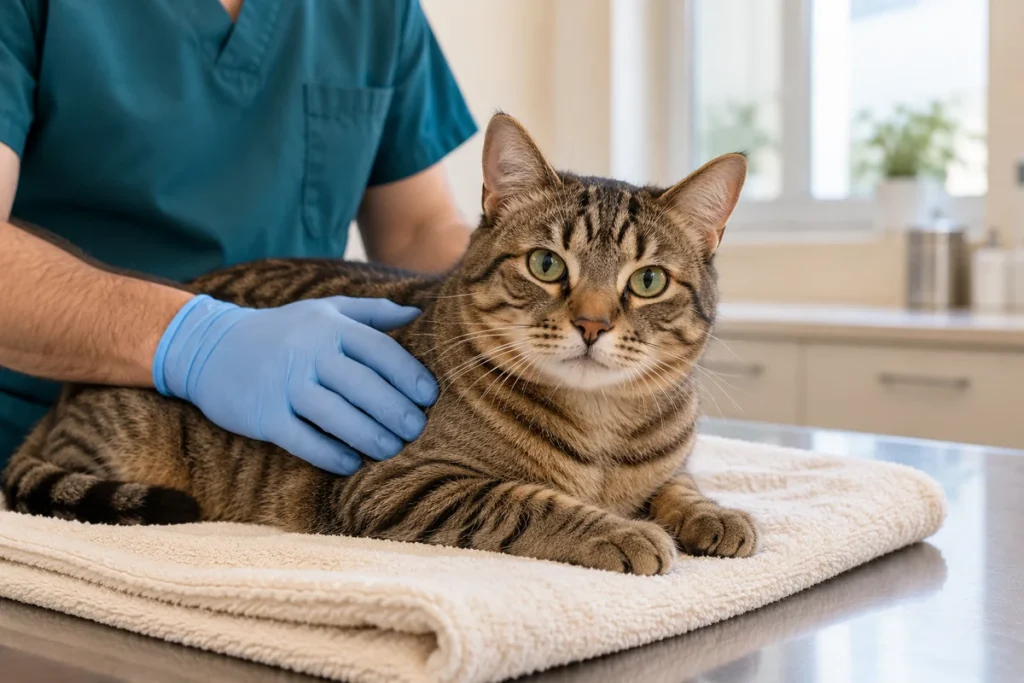
Male cat neutering is the procedure in which the testicles are surgically removed, permanently ending the ability to reproduce. The medical term for this procedure is castration. Pet owners often research this operation due to issues such as urine odor, running away from home, a desire to mate, or fighting with other cats. The cat's overall health, development, and living conditions should also be considered when making a decision.
At Çeliktepe Veterinary Clinic, we address male cat castration with an examination, a patient-specific medication plan, surgical pain control, monitoring during the operation, and controlled awakening. In our standard male cat protocol, the procedure is performed under sedation, without general anesthesia; stitches and protective collars are not used. After awakening administration, the patient, who is fully awake in uncomplicated cases, is discharged within 2 hours.
Benefits of Neutering Male Cats
The testicles are involved in sperm production as well as testosterone production. While reproduction is controlled through castration, a decrease in some behaviors associated with this hormone is expected:
- The tendency to stray from home and escape for mating purposes may decrease.
- Fighting behavior associated with seeking a partner among other male cats may lessen.
- There may be a reduction in urine marking and the sharp smell of urine.
- Removal of the testicles helps prevent diseases that can originate from these organs or contributes to the treatment of existing diseases.
- Unplanned matings and unwanted litters are prevented.
The degree of behavioral change depends on the cat's age, previously acquired habits, and home environment. If there are issues such as stress, conflicts with other cats, or litter box problems, these should be evaluated separately. Neutering does not solve all behavioral issues by itself; play, a safe space, and appropriate environmental arrangements remain important.
When Should a Male Cat Be Neutered?
It is not necessary to wait for the cat to start spraying urine or mating to discuss neutering. Cats can reach reproductive maturity at 4-5 months of age. International feline veterinary organizations support planning the procedure in healthy cats without breeding purposes by the age of 5 months. The individual operation date is determined by evaluating the cat's development, weight, and examination findings.
In our clinic, we do not make decisions based solely on calendar age. A very underweight kitten, a cat with an active infection, or a patient with heart, kidney, and liver diseases may require different preparations. The previous mating of an adult cat does not prevent it from being neutered. Evaluation can also be made in older cats; in this case, investigating accompanying diseases becomes more important.
If only one testicle is visible or if neither testicle can be felt in the scrotum, it should be addressed separately. In the case of cryptorchidism suspicion, the location of the testicle is determined, and the surgical plan is prepared accordingly. Such a case is not evaluated within the same scope as standard male cat castration.
What Do We Check Before the Operation?
The first step of preparation is general examination and internal medicine assessment. Heart and respiratory sounds, body temperature, fluid balance, weight, mouth and teeth, skin, and the operation area are examined. The cat's previous illnesses, medications used, and past responses to sedation or anesthesia are recorded.
Depending on the examination findings, blood tests and additional evaluations may be requested. Especially in older cats or those with chronic diseases, ultrasonography, color Doppler, and other imaging methods may be utilized if deemed necessary. The aim is to identify potential risks that may be encountered during the procedure in advance and to organize preparations according to the patient.
It is helpful to share the following information before the appointment:
- Your cat's age, approximate weight, and known illnesses
- Regular or recently used medications and supplements
- Any vomiting, diarrhea, coughing, sneezing, or loss of appetite recently
- Any difficulty urinating, swelling, or pain in the genital area
- Previous operations and any unwanted drug reactions
The preparation instructions regarding food and water are given according to the cat's age, health status, and the time of the procedure. Do not apply a fasting period that you see online on your own; especially in kittens or cats with metabolic diseases, extended fasting may not be appropriate. Bringing your cat in a securely closed transport carrier with a clean cover will facilitate both the journey and the admission to the clinic.
How Do We Perform Male Cat Castration at Our Clinic?
In our gold standard neutering approach, our goal is to minimize anesthetic risk and tissue trauma, provide pain control, and ensure the patient's well-being. The minimal invasive approach is meaningful when surgical tissues are handled carefully and unnecessary trauma is avoided.
Male cat castration at our clinic is performed under sedation, without general anesthesia. Sedation and surgical pain control are planned as separate components. A calm appearance does not alone indicate that the patient does not feel pain; pain prevention starts before the procedure and continues throughout the operation and awakening.
After surgical preparation, the testicles are removed, and bleeding control is performed. In our standard protocol, stitches and protective collars are not applied. Heart rate, respiration, oxygenation, and body temperature are monitored throughout the operation. Medication selection and dosing, airway and oxygen support management, intravenous access needs, and heat loss prevention are assessed according to the patient.
At the end of the procedure, awakening agents are administered according to the used protocol, also known as anti-anesthetics. During awakening, respiration, body temperature, and general condition are monitored. The decision for discharge is made when the cat has fully awakened and is deemed suitable for home care. The use of sedation does not mean that the procedure does not require medical follow-up or is risk-free.
Sutureless Procedure, Depot Antibiotic, and Discharge
In our clinic's male cat protocol, there is no process for suture removal or the use of a collar. Antibiotics are administered as depot; the smoothly healing patient does not need to return for daily antibiotic administration or routine check-ups. This practice is the protocol set forth by our clinic; you should not add other antibiotics at home.
Antibiotics and painkillers are medications used for different purposes. It should not be assumed that the application of antibiotics also alleviates pain. Pain management is additionally organized; if there is a need for medication at home, the veterinarian will explain which product to use and how.
Our standard protocol for male cats is to discharge the patient fully awake within 2 hours. It is expected to be in a condition to adapt to daily life upon returning home. This duration does not mean that the surgery alone took 2 hours; preparation, procedure, and awakening are different stages. If an unexpected finding occurs, the priority is not to meet the time requirement, but rather the safety of the patient.
First Day at Home and Recovery Period
When you return home, prepare a quiet, clean, and safe resting area for your cat. On the first day, avoid rough play with other animals, jumping to high places, and going outside; follow the discharge recommendations regarding how to regulate activity. Being fully awake does not mean that the operation area has completely healed at the same time.
You will be informed about when and how much to provide food and water. If there is vomiting, do not force-feed or force-water; inform the clinic. The litter box should be easily accessible and clean, and the cat's urination should be monitored.
Visually check the operation area. Do not perform actions such as squeezing, peeling off scabs, applying alcohol, or random antiseptics. Even in our protocol where no collar is used, continuous licking, biting, or excessive interest in the area should be reported. If necessary, a patient-specific protection or monitoring plan will be created.
Do not use medications given to another animal at home or human painkillers. The written care recommendations provided at discharge constitute your cat's own recovery plan.
When Should You Not Wait to Contact Us?
Contact the clinic without delay in the following situations:
- Active bleeding, opening of the incision, rapidly growing swelling, or foul-smelling discharge
- Repeating vomiting, noticeable lethargy, collapse, or difficulty breathing
- Continuous restlessness, noticeable pain, or unusual response to touch
- Lack of eating, drinking, or defecating within the time indicated by the veterinarian
- Repeatedly going to the litter box but unable to urinate
Especially do not wait for the last symptom to pass as a temporary condition or constipation after surgery. Urinary blockage in male cats requires urgent evaluation; trying medications at home or pressing on the abdomen is not appropriate.
Weight Control and Long-Term Life
After neutering, energy requirements and appetite may change. Weight gain is not inevitable; rather than maintaining the existing portion out of habit, a nutrition plan should be adjusted according to the cat's body condition. The daily amount of food, treats, and food given by others in the household should be considered together.
Proper food selection, measured portions, access to water, regular weighing, and daily play after recovery are also important. Dietary needs differ in growing kittens compared to adult cats. Simply having "neutered cat" printed on the packaging does not mean that a food is suitable for all ages and health conditions.
Frequently Asked Questions
Does a Male Cat Need to Mate Once?
No. There is no need for it to mate first for health or behavioral development. The decision for the procedure is made based on overall health, development, and living conditions rather than reproductive history.
Will Urine Smell Completely Stop After Neutering?
Hormone-related marking may decrease; however, established habits, tension among cats in the home, or environmental stress may continue. It should not be expected that the behavior will stop immediately and definitively. If the urine problem persists, medical causes should first be evaluated.
Can a Neutered Male Cat Exhibit Mating Behavior?
Yes. The effects of hormones and learned behaviors may not disappear suddenly. Observing mounting or mating-like behaviors does not alone indicate that the procedure was unsuccessful. Ongoing intense behaviors should be shared during the examination.
How Many Days Will It Take for a Male Cat to Recover After Neutering?
A fully awake male cat at our clinic can return home within 2 hours. However, healing of the incision area continues. The return to activity is determined by the cat's overall condition and the operation area; complete recovery cannot be guaranteed for every patient on the same day.
Is It Normal for the Area to Be Licked Without Stitches and a Collar?
In our standard protocol, stitches and collars are not used. However, continuous licking or biting can harm the tissue. If such behavior occurs, visit the clinic instead of self-applying cream or covering the area.
Will I Need to Administer Antibiotics After the Operation?
At our clinic, antibiotics are given as depot, and daily antibiotic continuation is not required in the standard process. If additional treatment needs to be identified, separate instructions will be provided. Do not use antibiotics left over from home.
Will Neutering Make My Cat Lazy or Unhappy?
A decrease in the search for mating does not mean the need for play disappears. The cat's temperament, environment, and daily interactions affect its behavior. If there is a persistent lack of interest, hiding, or loss of appetite, do not attribute it to changes in personality without having a health check-up.
Will Every Neutered Male Cat Develop Urinary Stones?
No. There are different causes of urinary tract diseases; it cannot be said that every neutered cat will develop stones. Weight, water consumption, nutrition, and stress management are important. Inability to urinate is an emergency whether neutered or not.
If My Cat Has Only One Testicle, Can It Be Neutered?
Yes, but first, the presence and location of the other testicle must be investigated. A testicle remaining in the groin or abdominal cavity may change the surgical approach. Therefore, the standard procedure duration and care plan are not automatically applied.
What Is the Cost of Male Cat Neutering Determined By?
The fee is determined by the cat's weight, necessary tests, medications, and surgical plan, along with accompanying illnesses. Special cases such as cryptorchidism may change the scope. You can contact our clinic to inquire about the current price, what is included, and to share your cat's age, weight, and known health information for an appointment. The final plan is confirmed through examination.
This content is for informational purposes only and does not replace a veterinary examination.

