
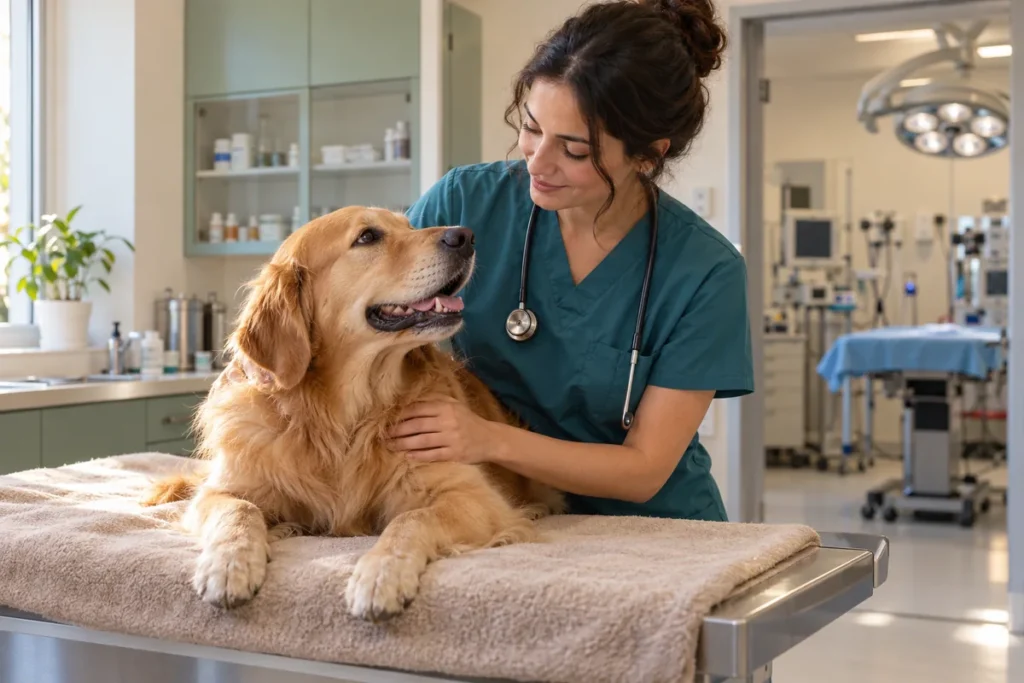
Female dog spaying is the surgical removal of the ovaries and uterus, a procedure known as ovariohysterectomy. It prevents unwanted pregnancies, ends heat cycles, and offers protection against serious reproductive system diseases such as uterine infections. The timing of the decision is not determined solely by a dog's age; the breed, adult size, development, heat history, and health status are all considered together.
At Çeliktepe Veterinary Clinic, we approach this process as a whole, from examination to anesthesia monitoring, tissue-respecting surgery, pain control, and safe discharge. In this article, you can find out both what the operation provides and what you need to know in terms of preparation, returning home, and the recovery period.
What is Ovariohysterectomy and Which Organs are Removed?
Ovariohysterectomy involves the removal of two ovaries and the uterus. The removal of the ovaries eliminates the primary hormone source that sustains heat cycles. This way, the dog will not become pregnant again, and normal heat cycles will not continue.
Ovariectomy, where only the ovaries are removed, is another surgical option. The details of both procedures are not the same. The female dog spaying procedure we discuss in this article at our clinic is ovariohysterectomy. “Tying the tubes” or merely removing the uterus does not create the same hormonal outcome as the removal of the ovaries.
Breast tissue is not removed during the surgery. If there is a previously formed mass in the mammary glands, spaying does not eliminate the need for further evaluation of that mass.
What are the Benefits of Spaying a Female Dog?
The most direct benefit is the prevention of unplanned pregnancies and associated birthing risks. The bloody discharge and mating-related behaviors during the heat period also cease with the end of the cycles.
Another significant issue is pyometra, a serious infection characterized by the accumulation of pus in the uterus. This disease can threaten the life of unspayed female dogs. The removal of the uterus and ovaries eliminates the reproductive tissues where this disease develops. A planned preventive operation for a healthy dog is not evaluated under the same conditions as the emergency surgery for a patient with pyometra who has deteriorated health.
Spaying is also considered in terms of reducing the risk of mammary tumors, especially when performed at an early age. However, there are limitations to the studies regarding the magnitude of protection and the optimal timing. Rather than giving a single percentage that applies to every dog, mammary health, breed-specific risks, and development are all taken into account.
At What Age Should a Female Dog be Spayed?
There is no single ideal month for all female dogs. In small breeds, it is a common approach to evaluate before the first heat. In large and giant breeds, factors such as skeletal development, susceptibility to joint diseases, reproductive system risks, and the opportunity to prevent unwanted mating are discussed in more detail.
The following information is important when making a decision:
- The expected adult body size of the breed or mixed breed dog
- Growth and body condition
- The timing of the first and last heats
- Orthopedic issues and existing diseases
- Previous experiences of pseudopregnancy or reproductive system problems
- The presence of unspayed male dogs at home and the conditions for preventing mating
In certain breeds, a relationship has been reported between the spaying age and specific joint diseases and cancers. These findings cannot be universally applied to all dogs; a definite outcome cannot be inferred from a correlation for each patient. The likelihood of urinary incontinence in female dogs is also part of the timing discussion. The aim is to create a balanced plan that does not overlook other needs by focusing on a single disease.
Why is Heat, Pseudopregnancy, and Birth History Important?
The date of the last heat cycle in a female dog must be shared during the appointment. During heat, the blood supply to the reproductive organs increases, and the characteristics of the tissues change. Therefore, the timing of the planned surgery is assessed based on which stage of the cycle the dog is in. Heat information pertaining to cats should not be directly applied to dogs.
Growth in the mammary glands, milk production, toy possession, or nest preparation can be related to pseudopregnancy. If these signs are present, please inform us before the surgery; pregnancy or pseudopregnancy cannot be diagnosed solely based on behaviors.
It is not necessary for a female dog to have given birth before being spayed. If there is a possibility of pregnancy due to recent mating or ongoing nursing, these will also be assessed separately. The decision for surgery in a pregnant dog requires specific and explicit communication, as it will end the pregnancy, differing from a routine spaying discussion.
How Should You Prepare Before the Surgery?
The first step is general examination and internal medicine assessment. Heart and respiratory sounds, body temperature, fluid status, mouth and teeth, weight, skin, and the surgery area are evaluated. Previous anesthesia experiences, medications used, and known allergic reactions are also included in this assessment.
If necessary, laboratory tests and imaging will be planned. Particularly in older age, chronic illness, or a risk identified during examination, the scope of preparation may change. A normal blood test does not mean that the anesthesia risk is zero; findings are interpreted in conjunction with the examination.
The timing for withholding food and water will be specifically communicated for your dog. Do not apply a single fasting period you see on the internet to a puppy, a very small breed, or a dog with a chronic illness. Do not discontinue regular medications or give extra doses without the veterinarian's instructions.
If vomiting, diarrhea, coughing, decreased appetite, or marked lethargy begins shortly before the appointment, inform the clinic in advance. Having the last feeding and watering time, medications used, and heat dates available when coming for the surgery will facilitate the evaluation.
Our Gold Standard Surgical Approach at Our Clinic
Our gold standard spaying approach is more comprehensive than just creating a small incision. The minimum anesthetic risk, minimally invasive approach, and minimum traumatic impact are aimed for. Surgical access is determined according to the dog's anatomy and the requirements of the operation; unnecessary intervention to the tissues is avoided.
In ovariohysterectomy, access is obtained to the ovaries and uterus, and the vascular connections of these organs are safely controlled before the reproductive organs are removed. The surgical area is evaluated before the operation is completed. It is not accurate to provide a single measurement that applies to all dogs for the incision size or operation duration; the needs of a small dog may differ from those of a large breed, an overweight dog, or a patient with uterine disease.
The term “minimally invasive approach” does not automatically mean laparoscopic surgery on this page. The specific surgical approach to be applied will be explained in your dog’s operational plan after the examination.
Anesthesia, Pain Control, and Awakening
Sufficient surgical anesthesia and pain control are provided together for the abdominal surgery of the female dog. Sedation, local anesthesia, and gas anesthesia are not applications that perform the same job; they create different components of the anesthesia plan based on the needs of the patient. Sedation alone should not be presumed to provide sufficient pain control for every surgical procedure.
At our clinic, anesthetic choice is made based on the dog’s age, weight, breed characteristics, and health status. During the operation, heart rate, respiration, oxygenation, and body temperature are monitored. Management of the airway, oxygen support, intravenous access, and prevention of heat loss are also parts of a safe process.
To achieve complete pain control and high welfare, pain management begins before the operation and continues throughout surgery and awakening. A dog laying quietly does not solely indicate painlessness; its posture, movements, and overall behavior are also evaluated.
The awakening application supports controlled awakening by terminating the effect of the used and reversible medication. It is not an application that exclusively neutralizes all anesthetics. During awakening, monitoring of respiration, body temperature, and overall condition continues.
How Many Hours Until Discharge?
In our clinic's routine female dog spaying protocol, the patient is discharged fully awake no later than four hours after the administration of the awakening application. A collar and continued antibiotics are not required. This flow is for patients whose examination is deemed suitable for surgery and follow the routine surgical process; if there is any additional illness or unexpected condition, monitoring and treatment will be adjusted according to the needs of the patient.
Being fully awake does not mean that the abdominal tissues have healed. The vitality upon returning home should not be interpreted as permission to run and jump that same day. Instructions regarding feeding, movement, and monitoring the surgery area are explained at discharge. The necessary monitoring plan is also determined according to that patient's condition.
Home Care, Feeding, and Activity
Prepare a clean, calm, and secure resting area on the first day. Avoid slippery surfaces, jumping off couches or beds, and rough play with other animals. Make controlled short bathroom breaks; continue the exercise resumption schedule according to the discharge plan.
Provide water and food at the times and in the manner indicated by your veterinarian. Follow the instruction given for the first meal; do not force-feed if your dog does not want to eat. Do not wait in cases of repeated vomiting or inability to keep water down.
Examine the surgery area daily. A routine protocol not requiring a collar does not mean that the dog can continually lick or tug at the wound. In such a case, please reach out to the clinic. Do not apply cream, antiseptic, or any other product to the area yourself; follow the guidance regarding bathing and wetting.
The absence of the need for continued antibiotics does not mean that pain control is unnecessary. Follow the treatment plan outlined by the veterinarian; do not give pain relief medications intended for humans or leftover antibiotics.
After recovery, energy requirements may change. Evaluating portions, treats, and activity level together helps facilitate weight control. Weight gain is not inevitable; a nutrition plan is updated as needed with regular weighing and monitoring of body condition.
Which Signs Require Immediate Contact?
Difficulty breathing, fainting, noticeable decrease in response, pale gums, or active bleeding require urgent assessment. Additionally, contact the clinic without delay in the following situations:
- Repeated vomiting or progressively increasing lethargy
- Incision opening, rapidly growing swelling, or foul-smelling discharge
- Continuous restlessness, noticeable pain, or inability to find a comfortable position
- Inability to urinate or significant straining while urinating
- Failure to return to feeding and normal functions within the specified time set by the veterinarian
If the appearance or behavior of your dog concerns you, do not wait for the hour to pass. Sharing when you noticed the change and, if possible, a brief video may assist in evaluation.
Frequently Asked Questions
Should a Dog be Spayed Before or After the First Heat?
The decision is made according to breed, development, and individual health risks. The potential benefits of a pre-first heat operation, especially in large breeds, are evaluated alongside issues like growth and urinary incontinence. A single timing does not hold true for all dogs.
Can Surgery be Performed During the Heat Cycle?
The heat cycle affects the surgical plan; it does not automatically mean that surgery cannot be performed under any condition. The last heat date and current symptoms are evaluated during the examination. The appropriate timing for a planned operation differs from that required due to emergency illness.
Does a Female Dog Need to Give Birth Once?
No. It is not necessary for a female dog to have mated or given birth before spaying. There is no medical necessity to plan a pregnancy solely for the purpose of surgery preparation.
Can an Older Female Dog be Spayed?
Yes, it can be performed in suitable patients. The decision is not made solely based on age; the condition of the heart, lungs, kidneys, and other organs is evaluated. In cases such as pyometra, surgery may be more a part of treatment than a preventive option.
Will There be Heat Bleeding After Spaying?
Normal heat bleeding is not expected in a dog from which the ovaries and uterus have been removed. If there is subsequently bloody discharge or evident signs of heat, the cause should be investigated. Not every bloody discharge originates from the reproductive system; the urinary tract may also be included in the evaluation.
Will Urinary Incontinence Occur After Surgery?
This may occur in some female dogs; it does not develop in all dogs. Factors like breed, body size, and timing of spaying may play a role. If you notice urination during sleep or wetting the bed, an examination is required; other causes, such as infections, should also be differentiated.
Does Spaying Definitely Prevent Mammary Cancer?
No, it does not provide absolute protection. Timing is important in assessing the risk of mammary tumors, but mammary masses can also develop in spayed dogs. Any new swellings or lumps in the mammary tissue should be evaluated.
Is a Collar and Home Antibiotics Needed?
In our routine dog spaying protocol, a collar and continued antibiotics are not required. If there are concerns about the wound being tampered with, suspicion of infection, or if another issue arises, the care plan will be re-evaluated. Do not start any medications without a veterinarian's recommendation.
Will It be Completely Healed After Returning Home Within Four Hours?
No. Discharge indicates that the dog is ready to return home regarding awakening and overall condition. Healing of internal tissues continues; limitations regarding movement, bathing, and play should be maintained according to the personal care plan.
How is the Price for Spaying a Female Dog Determined?
The price is determined based on weight, breed, age, necessary tests, anesthesia, and surgical plan. Uterine disease or another additional issue may alter the scope. For current fees and included procedures, you can contact our clinic and provide your dog's age, weight, and known health status. The final plan will be confirmed after the examination.
This content is for general informational purposes; it does not replace a veterinary examination.

